Product Overview
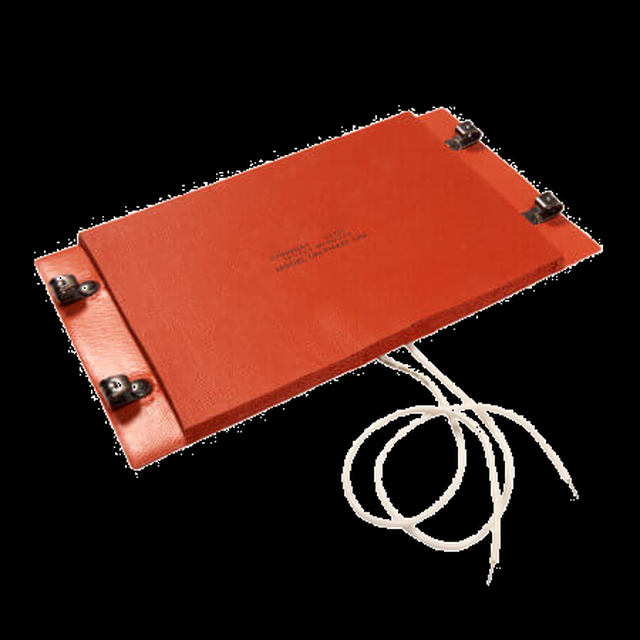
A wire-wound flexible heater uses a resistance wire laid in a pattern as the heating element, laminated into the substrate — it reaches the highest watt densities and is economical for many shapes, with faster prototype turnaround and lower engineering cost than a photo-etched circuit. That makes it the choice when you need maximum watt density or the lowest cost. The wire is laminated into the substrate the application needs — silicone rubber for rugged, moisture-tolerant duty or polyester film for cost-effective low-temperature work — and the heater is built to your drawing and/or specifications. Choose wire-wound for maximum watt density or lowest cost; when uniformity, tight tolerance, or a complex pattern matters, the etched-foil element is the answer.
Key Features & Benefits
- Conforms to the part, so the heat goes where it is needed — a thin, bendable element wraps or adheres directly to the surface, putting the heat into the part rather than the surrounding air — and following irregular shapes a rigid heater cannot. The answer when the heater has to take the shape of the thing it heats.
- Built to your drawing — not adapted from a catalog part — the heated area, shape, watt density, cut-outs, sensors, lead exits, and attachment are all specified per job, so the heater fits the part instead of the part being forced to fit the heater. Engineered to your surface, your temperature, and your environment.
- Control and safety built into the assembly — the temperature sensor and an optional integral thermostat are part of the heater, and an independent high-limit guards against a control fault — so the loop and the safety ship as one assembly. The control designed in, not bolted on afterward.
- A recognized component for a UL-Listed end product — the line is UL Recognized and can carry a customer-specific UL file number, and it is built under an ISO 9001:2015 quality system — the documentation an OEM needs to drop the heater into a Listed product. Third-party-audited build, recognized-component paperwork ready.
Specifications
- Operating principle
- Electric resistance (Joule) heating — current passes through a resistance element laminated into a thin, bendable substrate, so the heater conforms to the part and conducts heat directly into it rather than into the surrounding air. Built to your drawing and/or specifications, so virtually every heater is engineered to its part.
- Substrate
- The wire-wound element is laminated into silicone rubber (rugged, moisture-tolerant) or polyester film (cost-effective, low-temperature) — the substrate is selected for the part temperature and environment alongside the element.
- Maximum operating temperature
- Set by the chosen substrate: silicone rubber serves to about 200°C (392°F), polyester film to about 105°C. Run within the maximum temperature and watt density for long service life.
- Resistance element
- Wire-wound — a resistance wire laid in a pattern and laminated into the substrate. It reaches the highest watt densities and is economical for many shapes, with faster prototype turnaround and lower engineering cost than an etched circuit. Choose wire-wound when you need maximum watt density or the lowest cost.
- Watt density
- Specified in watts per square inch and set to what the substrate and the part can take without a hot spot — the value to get right: too high scorches the substrate or the part, too low cannot reach temperature. Sized from the heated area, the target temperature, and the heat losses from the part.
- Shape & sizing
- Built to your drawing and/or specifications — the heated area and shape are laid out to the surface, including irregular and three-dimensional parts a straight heat-trace cable cannot follow (valve bodies, pump housings, instrument enclosures, small tanks). Use the input form to send a drawing or sketch of the surface, the target temperature, and the voltage, and the heater is laid out to it.
- Cut-outs, sensors & lead exits
- Cut-outs, sensor pockets, and lead-exit locations are placed per the drawing — lead wires, connectors, and exit positions are specified per job.
- Attachment method
- Three common methods: pressure-sensitive adhesive (PSA) — a factory-applied adhesive backing that bonds to a clean, smooth surface (the quickest field install); factory vulcanizing or bonding to a plate or component at build time, for the best thermal contact and durability; and mechanical clamping or strapping for pipes, drums, and removable installations. Intimate, gap-free contact is the goal in every case — an air gap is thermal resistance that makes the heater run hotter than it should.
- Voltage
- Wound to the order — the operating voltage is specified per job with the watt density and shape; standard line voltages are accommodated.
- Integral temperature sensing
- A temperature sensor — thermistor, RTD, or thermocouple — is bonded into or next to the heater for the control loop. For compact installs a snap-action thermostat can be laminated right into the heater so the control is integral to the assembly.
- Control & safety
- Like any electric heater, a flexible heater needs a control loop and an independent safety: a thermostat for simple on/off duty or a PID controller with an SCR or solid-state relay for tight control, plus an independent high-limit cut-out so a control fault cannot overheat the part. Specified to the target temperature and tolerance.
- Certifications & listings
- UL Recognized Component — the UL category for a component installed inside a larger UL-Listed end product; customer-specific UL Recognized file numbers are available for OEMs whose end product is itself UL-Listed. The silicone-rubber line is UL-rated for continuous operation to 200°C (392°F). Manufacture is ISO 9001:2015 certified (Perry Johnson Registrars, ANAB-accredited). Use the input form to tell us if a customer-specific UL file is required when you request a quote.
- Build & ordering
- Custom build-to-drawing-and-specification, quote-only — no published price list. Authorized-distribution line: Prater Technical Partners is the vendor of record and the heater is drop-shipped from the factory, with optional Prater kitting. Submit a drawing or sketch of the surface with the target temperature, the voltage, and the quantity for a quotation.
Common Applications
- Freeze protection — holding tanks, pipes, valves, pumps, and instrument enclosures above freezing (or a minimum maintain temperature) in cold ambient
- Medical and laboratory instruments and analyzers — conformable heat for instruments and reagent / sample blocks
- OEM equipment heating built into a larger assembly — food service, security, and process equipment
- Battery and telecom enclosure heating in cold environments
- Condensation control and pre-heat on plates, housings, and components that must stay above dew point
Design & Selection Considerations
- Watt density is the make-or-break spec — a flexible heater lives or dies on watts per square inch — over-drive it and the substrate or part scorches, under-drive it and the part never warms. Get us the surface, the temperature, and the losses and we work the safe density backward from there. This is the No. 1 reason a flexible heater fails early.
- An air gap is the enemy of thermal contact — any void behind the heater is thermal resistance — it forces the element hotter to drive the same heat into the part, shortening its life. Whether to bond, vulcanize, or clamp comes down to the surface and whether the install is permanent or removable. Decide the attachment up front; it governs how hot the element has to run.
- Pick the element to the job, not by default — wire-wound reaches the highest watt density and is economical for many shapes; etched-foil spreads heat very uniformly, holds a tight resistance tolerance, and routes around cut-outs and sensors with fine control. Choose wire-wound for maximum density or lowest cost; etched-foil when uniformity or tolerance matters.
- Stay inside the substrate’s maximum temperature — every construction has a maximum operating temperature and a maximum watt density, and running within them is what gives the heater a long service life. The substrate sets that ceiling — match it to the part temperature with margin. Over-spec the substrate before you over-drive the element.
- Give the heater its own independent high-limit — the operating control holds the set point; a separate high-limit cut-out is what protects the part when the control fails or the sensor debonds. Tie it into the same loop and a single fault can defeat both. Two independent devices, not one doing double duty.
To spec the right Hi-Heat wire-wound heater:
Use the input form to send a drawing or sketch of the surface with the target temperature, the voltage, and the quantity, and we’ll spec the substrate, element, watt density, shape, sensors, and attachment to your part and quote it.
Electric Heating Application Sheet ›Talk to an engineer directly — Scott Prater, Principal · 917-580-0878 · scott@pratertechnical.com
Specifications compiled by Prater Technical Partners from Hi-Heat Industries published product specifications.