About this category
Environmental Test Chambers covers temperature and humidity reach-in and benchtop chambers, HALT/HASS highly accelerated testing including CV & AV AGREE series for larger loads, two-zone thermal shock, altitude, battery testing, walk-in and drive-in chambers, ICH Q1A/Q1B stability and photostability for pharmaceutical work, industrial freezers, and specialty / custom-engineered configurations from Cincinnati Sub-Zero (CSZ). Prater Technical Partners is the authorized representative for CSZ on an exclusive basis across New York (NYC, Long Island, Westchester and Rockland counties) and Northern and Central New Jersey.
Applications
Temperature & Humidity — Reach-In & Benchtop — CSZ
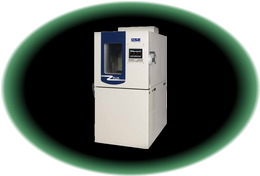
Z-Plus Reach-In Temperature/Humidity Chambers
Seven sizes, 8 to 96 cu ft — ZP / ZPH / ZPB / ZPRC variants
▼
Seven workspace sizes — 8, 16, 32, 44, 64, 80, and 96 cu ft (ZP-8 through ZP-96); over 150 factory configurations
Three refrigeration systems — Single Stage (−34°C to +190°C), patented Tundra® (−45°C), Cascade (−70°C)
Temperature-only (ZP) or temperature/humidity (ZPH) — 10% to 98% RH; optional low 5% RH
ZP Benchtop (ZPB-8) — 8 cu ft benchtop variant, stackable with cart accessory, single-stage or Tundra®
RC-Series Remote Conditioner (ZPRC) — same Z-Plus chassis delivering temperature-conditioned air to an insulated remote enclosure through ducts; also functions as an independent test chamber. Ideal for conditioning moving devices, oversized fixtures, or equipment-cooling-air (ECA) for other chambers. Available 8 to 64 cu ft.
EZT-570S touchscreen — 99-step × 1000-cycle profiling, LAN/VNC remote, Ethernet TCP/IP, EIA-232/485, optional IEEE-488, email and text alarms
Option catalog — LN2 and CO2 boost, explosion-proof, extended to +250°C, reinforced floor, glove ports, chart recorder, EZ-View multi-chamber PC software
Cincinnati Sub-Zero (ZP, ZPH, ZPB, ZPRC series)
View product line ›
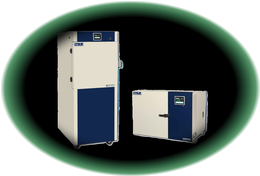
MicroClimate® Compact Chambers
Small-footprint reach-in — MCB-1.2 benchtop, MC-3 upright
▼
Two sizes — 1.2 cu ft benchtop (MCB-1.2) and 3 cu ft upright on casters (MC-3)
MCB-1.2 temperature — Single-stage −30°C to +190°C, or Cascade −68°C to +190°C
MC-3 temperature — Cascade −65°C to +190°C (115V) or −68°C to +190°C (230V)
Optional humidity — 10% to 95% RH on both sizes
115V single-phase base units — plug into standard laboratory outlets
MC-3 performance packages — 0.33, 0.50, and 1 HP cascade configurations for faster ramp rates
Stackable benchtop — MCB-1.2 supports manual thermal-shock tests when stacked
EZT-430S controller — programmable profiles, RS-232 interface, access port, water demineralizer on humidity models
Cincinnati Sub-Zero (MCB-1.2, MC-3)
View product line ›
Highly Accelerated Testing — CSZ
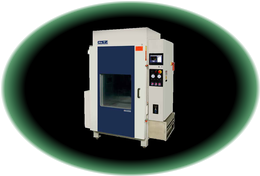
HALT/HASS Time Compressor® Chambers
Rapid thermal cycling plus all-axis vibration — TC-2.0 / TC-2.5 / TC-3.0 / TC-4.0
▼
Co-developed with Dr. Greg Hobbs — vibration table designed by the inventor of HALT and HASS methodology
Four table sizes — 24″×24″ (TC-2.0), 30″×30″ (TC-2.5), 36″×36″ (TC-3.0), 48″×48″ (TC-4.0)
Temperature range — −100°C to +200°C with LN2 cooling
Thermal ramp rates — +70°C to +100°C per minute
Vibration levels — 1 to 90 GRMS on TC-2.0/2.5/3.0; 1 to 80 GRMS on TC-4.0
Simultaneous stress application — broadband all-axis vibration during rapid thermal cycling, tuned for both precipitation and detection of product defects
Efficient LN2 and utility consumption — lower cost-per-cycle than earlier-generation HALT systems
EZT-570S touchscreen — 99-step × 1000-cycle profiling, audit trail, TCP/IP, email and text alarms
Optional VibTrak™ software — Windows-based single-PC control of chamber and vibration table in one combined profile; Power Spectrum Density (PSD) curve generation, real-time spectrum analysis, virtually unlimited temperature and vibration monitor channels with signal-conditioning hardware, CSV data export for Excel, trend charting, PNG export of real-time graphs, alarm monitoring and acknowledgement — drives HALT/HASS Time Compressor chambers, TCB benchtop tables, and standard CSZ chambers from one interface
Cincinnati Sub-Zero (TC-2.0, TC-2.5, TC-3.0, TC-4.0)
View product line ›
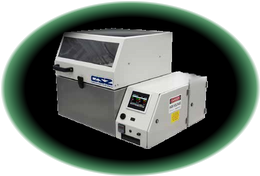
Benchtop Vibration Table — TCB-1.3
Stand-alone or in-chamber six-degree-of-freedom vibration
▼
Dual-purpose design — operates stand-alone, or the lift-off base drops into an existing 16 cu ft or larger reach-in for combined temperature-and-vibration
Six-DOF all-axis motion — four pneumatically actuated hammers produce random X, Y, Z, roll, pitch, and yaw
Vibration level — 1 to 60 GRMS, 3 Hz to 10 kHz on an unloaded table
Table base — 22″W × 23″D × 12″H (fits common CSZ reach-ins)
Workspace — 16″W × 16″D × 10″H
Temperature range when in-chamber — −70°C to +163°C
Two accelerometers included — one control channel and one monitor channel
Utilities — 115 V or 220 V single-phase; under 20 SCFM compressed air at 100 psi
Optional VibTrak™ software — PSD curve generation and combined table + chamber control from one interface
Cincinnati Sub-Zero (TCB-1.3)
View product line ›
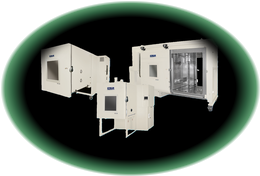
AGREE Temperature/Humidity/Vibration Chambers
Combined environments for shaker integration — AV(H)L and CV(H) series
▼
AGREE-style combined environments — Advisory Group on Reliability of Electronic Equipment test profiles for commercial and military qualification
Workspace — 32 to 81 cu ft standard; custom sizes available
Temperature range — Single-stage to −34°C, Tundra® to −45°C, Tundra® II to −50°C, Cascade to −70°C; all to +190°C
Humidity range — 10% to 98% RH standard; low 5% RH option
Shaker interface — compatible with customer-selected electrodynamic or mechanical shakers
AV(H)L horizontal or vertical coupling — rear door for horizontal shaker, vertical sliding door for vertical shaker
Applications — MIL-STD-810, RTCA/DO-160, avionics, defense electronics, automotive electronics qualification
Cincinnati Sub-Zero (AV(H)L, CV(H) series)
View product line ›
Thermal Shock, Altitude & Battery Testing — CSZ
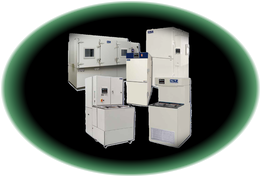
Vertical air-to-air (VTS), horizontal batch (HTS / DTS), and liquid-to-liquid (TSB)
▼
VTS vertical air-to-air — separately controlled hot and cold zones with product transfer between zones; cold zone operates as an independent environmental chamber when not shocking
VTS workspace — 1 to 11 cu ft (28 to 311 L)
VTS temperature ranges — hot chamber +50°C to +210°C (VTS-9 to +115°C); hot/cold chamber −75°C to +190°C
HTS horizontal batch — three-zone (hot / ambient / cold) with carrier-basket transfer; sized for component and board-level ESS
DTS double-duty horizontal — two baskets and three zones (hot / cold / hot) move simultaneously, doubling batch load per system
HTS / DTS workspace — 16 to 45 cu ft per zone
HTS / DTS temperature — hot zone to +200°C (HTS) or +210°C (DTS); cold zone to −75°C
TSB liquid-to-liquid bath — 2-lb and 5-lb specimen capacity; hot bath +35°C to +160°C, cold bath −75°C to +25°C; vapor-tight construction
EZT-570S controller — 99-step profiling, audit trail, email and text alarms, data logging
Cincinnati Sub-Zero (VTS-1, VTS-3, VTS-9, HTS, DTS, TSB-2, TSB-5, custom)
View product line ›
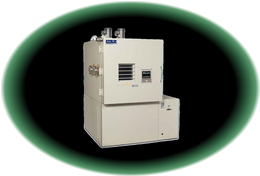
Altitude Chambers — CA-Series
Altitude + temperature + optional humidity — RTCA/DO-160 capable
▼
Standard altitude range — sea level to 100,000 ft (8.2 Torr)
Optional extended altitude — to 175,000 ft (0.37 Torr)
Dual-purpose operation — altitude chamber and independent temperature/humidity cycling chamber
Temperature range — Single-stage −34°C, Tundra® −45°C, Tundra® II −50°C, Cascade −68°C; all to +190°C
Optional humidity — 10% to 98% RH; low 5% RH option
Workspace — 18 to 55 cu ft standard; custom sizes
RTCA/DO-160 rapid-decompression capable — dive-valve design for decompression-profile testing
Vacuum system — heavy-duty high-capacity pumps with regulated rate-of-ascent and rate-of-descent; flexible vacuum-line sections isolate pump vibration
Cincinnati Sub-Zero (CA-Series)
View product line ›
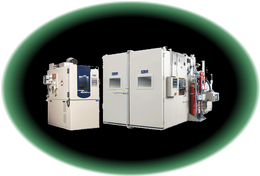
Configurable safety package — Li-ion, NiMH, lead-acid cell / module / pack
▼
Built on proven CSZ platforms — Z-Plus reach-in, AGREE, or Walk-In chassis configured for battery-testing duty with application-matched safety options
Hazard-tiered safety engineering — features selected against EUCAR hazard levels 0–5 for the chemistry and abuse-test scope
Safety door interlock — prevents door opening during a test event
Custom pressure-relief vent — protects chamber from sudden pressurization during cell venting
Fresh-air exchange system — removes vented gases from the workspace before personnel entry
Temperature-limited sheath heaters — heater surface temperature capped below the ignition point of expected vent gases
Intrinsically safe barriers — isolate high-voltage test fixturing
Gas monitors interlocked to the controller — O₂, H₂, CO (and others) for automatic shutdown
Non-sparking fan blades and blower wheels — specified where arc risk is a concern
LN2 device-surface cooling — quick-cool the DUT if overheating is detected
GN2 purge — inert-atmosphere option for outgassing flush
Reinforced chamber floor — for heavy pack loads at extreme temperature
Cycler and DAQ integration — interfaces with customer-specified battery cyclers and data-acquisition systems
Standards coverage — IEC 62660-2, SAE J2464, UL 1642, UL 2054, UN lithium, IEC 60086-4, IEC 61960, IEC 62133, IEEE 1625, IEEE 1725
Fire suppression supplied separately by you — the CSZ chamber is built to integrate with your chosen suppression package; CSZ does not supply suppression
Cincinnati Sub-Zero (custom-configured on Z-Plus, AGREE, or Walk-In platforms)
View product line ›
Walk-In & Drive-In Chambers — CSZ
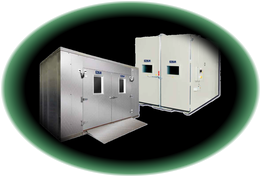
Modular & Welded Walk-In Chambers
WM-Series modular panel and WW-Series welded — 200 to 8,000+ cu ft
▼
WM modular-panel construction — 4″ polyurethane-foamed panels lock together, stainless interior, aluminum or white embossed exterior; installable, relocatable, expandable
WM temperature range — Single-stage −30°C, Tundra® −45°C, Tundra® II −50°C, Cascade −70°C; all to +85°C; 10% to 95% RH option
WW welded one-piece construction — zinc-coated exterior, Type 304 stainless interior, 6″ fiberglass-insulated continuously-welded seams
WW temperature range — Single-stage −34°C, Tundra® −45°C, Tundra® II −50°C, Cascade −70°C; all to +190°C; 10% to 95% RH
Choosing modular vs. welded — modular for economical cold/ambient storage and standard stability; welded when the application requires high temperature (to +190°C), fast ramp rates, wider humidity, altitude, or other combined environments
Modular Plenum Conditioning System — exterior-mounted refrigeration and conditioning package preserves all workspace inside the chamber
Combined-environment integrations — solar simulation, altitude, freezing-rain, vibration
EZT-570S controller — standard; remote instrument consoles optional
Size envelope — 200 to 8,000 cu ft standard; larger quoted as projects
Cincinnati Sub-Zero (WM-512, WM-800, WM-1152, WW-Series, custom)
View product line ›
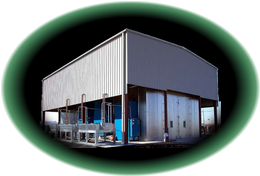
Drive-In Chambers
Full-vehicle and large-assembly testing — road simulator and solar-simulation integration
▼
Designed for full-vehicle scale — small cars through full semi-trucks
Test capabilities — temperature, humidity, NVH, squeak and rattle, suspension loading, solar simulation, infrared lighting, altitude, vibration via four-post road simulator
Construction choice — modular panelized or fully welded, selected to match performance envelope and site
Temperature range — Single-stage −34°C, Tundra® −45°C, Tundra® II −50°C, Cascade −70°C; +190°C available on welded construction
Humidity range — 10% to 95% RH
Size envelope — 200 to 8,000 cu ft standard; project-scale installations much larger (one CSZ semi-truck chamber was 33,750 cu ft with six 30–30 cascade systems)
Fully custom-engineered — tailored to your vehicle platforms, test articles, and instrumentation integration
Cincinnati Sub-Zero (Drive-In Series, custom)
View product line ›
Specialty & Custom-Engineered Chambers — CSZ
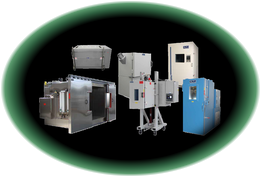
Specialty Chambers
Custom-engineered for unusual environments and combined conditions
▼
BioStore freezer rooms — hallway-and-compartment cold-storage facilities for DNA, donor tissue, and allograft storage; −40°C to −75°C; replaces banks of upright freezers with one managed facility
Solar panel test chambers — temperature and humidity cycling configured to IEC 61215, IEC 61646, IEC 61208, UL, and ASTM photovoltaic test specifications; damp-heat and humidity-freeze cycles
Sand and dust chambers — concentrated airborne-particulate exposure for automotive and electronic seal-integrity validation
Rain and ice chambers — outdoor-exposure simulation for weight-bearing, insulation, and ingress-protection testing
Tensile test chambers — combined temperature and humidity with destructive and non-destructive tensile-test equipment interfaces
Wire-bender chambers — sub-zero exposure combined with coil-bending fixtures for wire-coating and hose cold-bend specifications
Explosion-proof chambers — Class 1 Division 1 or Division 2, Group D; CT-Series base platforms adapted to hazardous-environment installations
Conveyor-integrated cycling — test-cycle chambers designed to interface with automated production conveyors, electronics handlers, and disk-drive test systems
CT-Series custom temperature/humidity platform — high-HP, LN2-cooled, fast-change-rate reach-in chassis that underlies many specialty and custom builds
CSZ engineering backing — CSZ is a brand of Weiss Technik, the world's largest manufacturer of environmental simulation systems (80+ years of custom-design experience)
Cincinnati Sub-Zero (BioStore, CT-Series, custom-engineered)
View product line ›
Stability & Photostability
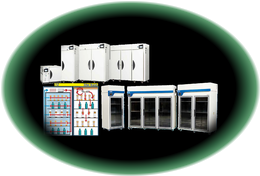
PharmaEvent & StableClimate® II Stability Chambers — ICH Q1A
Reach-in stability — PharmaEvent Benchtop C/280 to C/2000, StableClimate II ST/STH-24/52/82
▼
PharmaEvent by CSZ — selected by pharma, nutraceutical, biotech, cosmetics, and life-science labs that require the accuracy and documentation its specifications provide
PharmaEvent temperature control — ±0.1°C to ±0.2°C in time; ±0.3°C to ±1°C spatial uniformity
PharmaEvent humidity control — ±0.2% to ±1% RH in time; ±0.5% to ±2% RH spatial uniformity
Continuous 5°C operation — designed to hold 5°C indefinitely without defrost cycles
PharmaEvent sizes — 10, 21, 46, and 71 cu ft (C/280, C/600, C/1300, C/2000); benchtop through three-door upright
Uni-Flow airflow — up to 40% more usable shelving area per door than typical competitive designs (six wire shelves per door standard on uprights)
Patented Sterile Steam System (SSS) — demineralized water evaporated at 140°C kills microorganisms; direct-injection design prevents the sludge buildup seen in tank humidifiers; 10–15% higher efficiency
Integral humidity water tank — 3.4 gal (C/280) or 4.9 gal (larger) — continues humidification if facility water pressure is lost
Quiet operation — 52 dBA at 3 ft (many competitive units exceed 60 dBA)
30–60% lighter construction — one person can reposition within the lab
Energy-efficient design — up to 50% lower power draw and heat rejection than comparable units, reducing operating cost and lab cooling load
Compact overall height under 79″ — passes standard laboratory doorways without tipping; controls accessible below 6 ft
Type 304 stainless interior — safe contact with food and drug substances; no air chases, straightforward cleaning and disinfecting
Standard features others charge extra for — analog 0–10 VDC outputs, user access port, independent high/low limit, door-ajar switch
S!MPAC with 7″ WEBSeason touchscreen — up to six simultaneous remote users, audit trail, GAMP-compliant alarms, TCP/IP Ethernet, 28-language interface
Optional S!MPATI pharma software — 21 CFR Part 11 compliant per manufacturer's declaration; up to 99 units networked
StableClimate® II — Value ICH Q1A Alternative
StableClimate II — value ICH Q1A alternative — US-built reach-in in 24, 52, and 82 cu ft (ST/STH-24, -52, -82); single, double, triple door
StableClimate II operating range — +2°C to +70°C, 20% to 95% RH
StableClimate II features — horizontal airflow, slide-out stainless shelves, data logging, text and email alarm, audit trail, digital signatures; 115V single-phase on the smallest model
Cincinnati Sub-Zero · PharmaEvent (C/280, C/600, C/1300, C/2000) · StableClimate II (ST/STH-24/52/82)
View product line ›
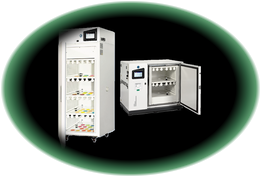
PharmaEvent Photostability Chambers — ICH Q1B
Q1B Option 2 photostability testing — C/250/L benchtop, C/500/L upright
▼
ICH Q1B Option 2 compliant — cool-white fluorescent plus UV-A lamps matched to the ICH spectral reference
Two sizes — 9 cu ft benchtop (C/250/L, two light tiers) and 18 cu ft upright (C/500/L, four light tiers)
Automated exposure dosing — setpoints entered in lux-hours and Wh/m² (typical 1.2 million lxh plus 200 Wh/m²); full exposure in under 3 days
Light equalization filters (EEF) — flatten naturally non-uniform lamp emission; uniformity ~±8% cool-white and ~±12% UV-A across the shelving area
Calibrated cool-white and UV-A sensors — separate feedback channels drive an integration calculator for automated dose tracking
Operating range (lights on) — +5°C to +50°C (C/500/L minimum +10°C lights-on), 20% to 90% RH
White reflective interior — maximizes light uniformity; GMP-compliant design
Patented Sterile Steam System (SSS) — same humidification platform as the Q1A line; integral water tank
Factory light calibration — at +25°C / 60% RH and +40°C / 75% RH
Optional LED lamps — replicate modern illumination where pharmacopoeial reference sources are not required
Optional IQ/OQ qualification — protocol templates and on-site execution available
Cincinnati Sub-Zero · PharmaEvent (C/250/L, C/500/L)
View product line ›
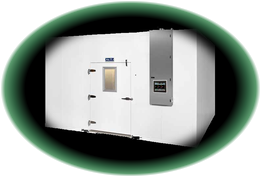
Stability Walk-In Rooms — WMST Series (ICH Q1A)
Walk-in-scale stability — WMST / WMSTH-512, -800, -1152
▼
Walk-in-scale ICH Q1A stability — for product volumes beyond reach-in capacity
Temperature range — −20°C to +60°C (−4°F to +140°F)
Humidity range — 20% to 95% RH (WMSTH models)
Ceiling-mount conditioning — refrigeration and conditioning package above the walk-in preserves workspace floor area
Modular panel construction — stainless interior, white embossed or optional aluminum embossed exterior
Standard sizes — 512, 800, and 1152 cu ft; custom sizes quoted
IQ/OQ/PQ validation — available as a factory service with on-site execution, or as a documentation-only protocol template for customer self-qualification
EZT-570S controller — 99-step profiling, audit trail, email and text alarms, LAN access
Cincinnati Sub-Zero (WMST / WMSTH-512, -800, -1152, custom)
View product line ›
Industrial Freezers — CSZ
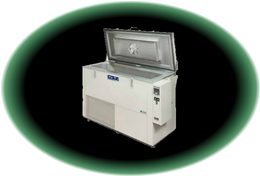
Light-duty storage — 6 to 11 cu ft, −84°C mechanical / −184°C optional LN2
▼
Top-loading chest configuration — designed for storage rather than cycling duty
Workspace — 6 to 11 cu ft (170 to 312 L)
Temperature range — −40°C to −84°C mechanical refrigeration
Optional liquid-nitrogen cooling — to −184°C (−300°F) for ultra-low applications
Representative applications — dry-ice pellet or block storage, biological sample staging, cold-chain buffering, low-temperature soak-testing of small components
Sizing guideline — V-11 holds approximately 500 lb of dry-ice pellets (verify for each application)
Industrial build — engineered for long service life; not a consumer chest-freezer retrofit
Cincinnati Sub-Zero (V-Series)
View product line ›
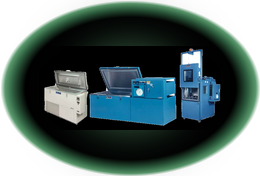
TF-Series & T-Series Heavy-Duty Freezers
Heat-treat and austenite-to-martensite conversion — TF front-loading, T top-loading
▼
Heavy-duty industrial duty — built for decades of service in heat-treating and production-scale cold processing
TF-Series front-loading — 23 to 84 cu ft; side-by-side operation with batch heat-treat furnaces; heavy-duty rollers and guides interface with charge-car load/unload mechanisms and common part baskets and trays
T-Series top-loading — 13 to 96 cu ft; high-capacity for heavy loads
Temperature range — −40°C to −84°C mechanical; −184°C (−300°F) with LN2 boost
Heat-treat application — chilling steel to −84°C transforms retained austenite to martensite, relieving internal stress and increasing hardness and durability
Additional applications — age-hardening, stress relieving, expansion-fit assembly, heavy-industrial cooling
Custom sizes available — on both TF and T series
Applications — industrial metalworking, heat-treating, and high-duty-cycle environments
Cincinnati Sub-Zero (T-Series, TF-Series)
View product line ›
FAQ: environmental test chambers
What does an environmental test chamber do, and how does it work?
An environmental test chamber creates and holds a controlled environment — usually temperature, often humidity, sometimes also vibration, altitude, or light — around a test article, so you can see how a product behaves under conditions it will face in service or under accelerated stress. Configured with the chamber, a refrigeration system removes heat, electric heaters add it, a humidity system adds or removes moisture, and a circulation fan keeps the air uniform; a programmable controller runs all of it to a temperature/humidity (altitude and vibration) profile and logs the result. The performance of a chamber comes down to how cold and hot it can go, how fast it can change, how tightly it holds a setpoint, and how uniform the air is across the workspace, as well as how it can safely operate based on chamber weight and vibration capacity, for dead load and live load requirements — which is what the rest of these questions are about.
Which chamber type do I need?
Match the chamber to the test:
- Temperature, or temperature/humidity — the general-purpose workhorse for cycling, soak, and conditioning.
- Thermal shock — moves the product between hot and cold zones in seconds (see below).
- HALT/HASS (Time Compressor) — combined rapid thermal cycling plus all-axis vibration, for ruggedization and production screening (see below).
- AGREE — combined temperature/humidity with a separately sourced shaker, for MIL-STD-810, DO-160 qualification and other use cases (see below).
- Altitude — low pressure plus temperature, for avionics and aerospace.
- Stability / photostability — tight, steady conditions for pharmaceutical, personal care and medical device shelf-life testing per ICH protocols (see below).
- Walk-in / drive-in — chamber sized for large assemblies up to full vehicles (see below).
- Battery test — temperature/humidity built with thermal-runaway safety (see below).
- Industrial freezers — deep-cold storage and heat-treat cold processing.
- Cold storage (BioStore® freezer rooms) — walk-in ultra-low storage for vaccines, biologics, and tissue, replacing banks of upright freezers (storage, not testing; see below).
Tell us the test standard or the question you're trying to answer, and the type follows.
Reach-in, walk-in, or drive-in — how do I decide?
It's a question of what you're putting inside. Reach-in chambers — roughly 1 to 96 cubic feet on the CSZ line — suit circuit boards, battery cells and small modules, components, and small assemblies; you load them by hand through a front door. Walk-in chambers (200 to 8,000+ cu ft) are sized for larger physical loads, full battery packs, automotive modules, large aerospace components, and batch stability storage — you walk in to load racks or carts. Drive-in chambers are built around full vehicles, from cars to semi-trucks, often with a four-post road simulator for NVH and squeak-and-rattle work. The simple test: if the article and its fixturing fit through a reach-in door with 50% (stability) or 66% (performance) of airflow clearance around them, use a reach-in; if it needs to be rolled or driven in, or you're testing many units at once, go walk-in or drive-in.
How do I size a chamber — what workspace volume do I need?
Start with the test article plus its fixturing and cabling, then add clearance for air to circulate around it — a chamber can't condition a load that's packed wall to wall. A common guideline is that the test article should occupy no more than about a third of the workspace volume, so the airflow can reach every surface and hold uniformity. Two more factors: the thermal mass of the load (a heavy load slows ramp rates and may need a higher-capacity refrigeration package to hit your transition times), and any heat the product dissipates i.e. 'Live Load' if it's powered during the test, which the chamber has to remove on top of everything else. Oversizing wastes energy and slows ramps; undersizing crowds the airflow. One more check: the article-plus-fixturing static weight — the dead load — has to be within the chamber's rated floor and structural capacity; a heavy battery pack or vehicle assembly can exceed a standard reach-in and points to a reinforced-floor or walk-in build. Give us the article dimensions, weight, and powered heat load, and we size from there.
What controls a chamber, and how do I get data and alarms out?
CSZ chambers run on touchscreen controllers — the EZT-570S on most test chambers, the S!MPAC on pharma stability units — that store multi-step temperature/humidity profiles (99 steps, up to 1,000 cycles), log data, keep an audit trail, and send email and text alarms if a parameter strays. They connect over Ethernet/TCP-IP for remote monitoring, and PC software (EZ-View, VibTrak, S!MPATI) extends that to multi-chamber dashboards and combined chamber-plus-vibration control. For regulated pharmaceutical work, the S!MPATI software is optionally 21 CFR Part 11 compliant per the manufacturer's declaration — with audit trail and electronic signatures — though validating it in your GxP environment remains the end user's responsibility. Optional on-site IQ/OQ/PQ is available. If you need a specific data system or fieldbus integration, specify it up front. Let us know what is needed, and we will guide the recommended configuration.
What drives the cost of an environmental test chamber?
CSZ chambers are quote-only — there is no published price list — because almost every chamber is configured or custom-engineered to the application. Cost is driven by workspace size, how deep the cold goes (each refrigeration tier down adds cost — single-stage to cascade in multiple available capacities, to LN2), whether humidity and how wide a range, combined environments (vibration, altitude, light), the controller and software package, and any qualification documentation. A benchtop reach-in and a custom drive-in vehicle chamber are very far apart. A custom or large chamber also carries a meaningful build lead time.
What maintenance does a chamber need, and how long does it last?
An environmental chamber is built to run for decades — CSZ heavy-duty and heat-treat chambers are engineered for that kind of service life. The maintenance is mostly the refrigeration system and the moving and wearing parts: keep the condenser clean and the refrigeration system serviced, replace door gaskets as they age (a leaking seal wrecks uniformity and loads the refrigeration), keep the humidity water system clean and the demineralizer fresh, review solenoid valves, compressor, contactors, fan motors, boilers, condenser coils, temperature and humidity sensors and filters on your quality interval. Chambers running deep-cold or fast-ramp profiles work their compressors harder and need closer attention. With routine service the chamber outlasts several generations of the products tested in it.
What utilities and installation does a chamber need?
Plan the site before the chamber arrives. Typical requirements: electrical power sized to the refrigeration and heater load (often three-phase); cooling water or adequate space and airflow for an air-cooled condenser; a floor drain for humidity condensate; and, where the chamber uses LN2 or CO2 boost cooling, a bulk supply and safe venting with oxygen monitoring for personnel. Check floor loading — walk-ins and loaded chambers are heavy — and doorway and ceiling clearance for getting the chamber in; CSZ designs pharma reach-ins under 79 inches specifically to pass standard lab doorways. Walk-ins can place the refrigeration package on the roof or outside to preserve interior workspace. CSZ 'top of chamber' components can be removed after factory testing and shipped for on-site reattachment via certified CSZ service personnel. We can run an installation checklist with you during specification.
HALT and HASS — what's the difference?
Both use the same Time Compressor platform — rapid thermal cycling plus all-axis vibration — but they answer different questions at different points in a product's life. HALT — Highly Accelerated Life Test — is a development tool: you push a new product with escalating thermal and vibration stress, well beyond its specification, deliberately to find its weak points and design margins, so you can fix them before launch. HASS — Highly Accelerated Stress Screen — is a production tool: a tuned, repeatable stress profile run on units coming off the line to catch latent manufacturing defects that would otherwise fail in the field. HALT is run once per design, hard, in order to break things on purpose; HASS is run on every unit (or a sampling), gently enough not to consume useful life. Same chamber, opposite intent. One limit to size against: the Time Compressor's vibration table has a rated payload and GRMS capacity, so the article's mass has to fit within it — heavier articles need a larger table and use the CV or AV AGREE style chamber with separately sourced shaker table.
What chamber do I need for pharmaceutical stability testing?
Pharmaceutical stability work is governed by ICH protocols, and CSZ builds chambers specifically for them. For ICH Q1A shelf-life testing — long-term 25 °C/60% RH, intermediate 30 °C/65% RH, accelerated 40 °C/75% RH — the reach-in options are the PharmaEvent (C/280 through C/2000) and StableClimate® II (ST/STH 24, 52, 82); for volumes beyond reach-in capacity, the WMST/WMSTH walk-in stability rooms. For ICH Q1B Option 2 photostability testing, the PharmaEvent photostability chambers (C/250/L, C/500/L) carry calibrated cool-white fluorescent and UV-A lamps matched to the ICH spectral reference. These hold very tight tolerances (on the order of ±0.1–0.2 °C). The chamber is specified from your stability protocol, and IQ/OQ/PQ qualification documentation and on-site execution are available.
Does CSZ offer cold storage as well as test chambers?
Yes — alongside the test chambers, CSZ builds BioStore® freezer rooms: walk-in ultra-low cold storage, not testing. A BioStore room holds bulk material at consistently low temperature — vaccines, pharmaceuticals, genetic material (DNA), donor tissue, allografts — in individual compartments running −40 °C to −75 °C, off a −20 °C storage room with a 2–8 °C ante room for entry. It replaces a bank of upright freezers with one managed room: redundant (single or dual) backup cooling with an optional LN2 backup, far less floor space and power per cubic foot, lower maintenance, door-ajar and over-temperature alarms, and the same EZT-570S 21 CFR Part 11 controller used across the CSZ line. Sizes and compartment counts are custom-configured.
What temperature and humidity range do I actually need?
Specify the range your test standard or product environment requires — not the widest range available — because reaching deeper cold costs money and energy. CSZ chambers use tiered refrigeration: single-stage to about −34 °C, Tundra® to −45 °C, Tundra® II to −50 °C, cascade to roughly −70 °C, and LN2 liquid nitrogen for ultra-low and very fast ramps (down to −100 °C in HALT & HASS). Most reach a high of +190 °C. Humidity typically covers 10% to 98% RH, with a low-humidity option to 5% RH. For marginal dew point humidity control and to prevent condensation, use the dry air purge or GN2 which additionally prevents frost flash, and helps to suppress combustion risk. Bring the test standard's required extremes and we match the refrigeration tier to it.
Thermal shock or thermal cycling — what's the difference?
Both expose a product to hot and cold extremes; the difference is how fast the transition happens. In thermal cycling, the chamber air ramps from hot to cold over minutes — the product follows the air temperature gradually. In thermal shock, the product is moved physically between a pre-heated zone and a pre-chilled zone, and the transition is rapid (as little as 10 seconds) — the product experiences a near-instant temperature jump. That speed is the point: thermal shock imposes severe mechanical stress at material interfaces (solder joints, bonded assemblies, dissimilar materials) that a gradual ramp does not. Thermal-shock testing is what standards like MIL-STD-883 Method 1011 and JESD22-A104 call for. If your spec says "shock," a cycling chamber will not satisfy it.
How do I test to MIL-STD-810 or RTCA/DO-160?
These standards define environmental qualification for military and avionics equipment, and they call for combined environments that a single-purpose chamber can't deliver alone. AGREE chambers combine temperature and humidity with a customer-selected electrodynamic or mechanical shaker, coupled horizontally or vertically, to run simultaneous thermal and vibration stress — the standard answer for MIL-STD-810 and DO-160 electronics qualification. Altitude chambers add controlled low pressure (to 100,000 ft standard, higher optional) plus temperature, with rapid-decompression capability for DO-160 work. Many DO-160 and MIL-STD-810 programs need both. Bring the specific standard, the test methods called out, and the article, and the chamber is designed to match the separately sourced shaker table.
How is a battery test chamber different from a standard temperature/humidity chamber?
A battery test chamber is a temperature/humidity chamber re-engineered around the assumption that a cell may vent, ignite, or go into thermal runaway during the test. It adds explosion-relief panels, gas-detection interlocks (O₂, H₂, CO) wired to automatic shutdown, exhaust ducting and fresh-air exchange, a reinforced thermal-runaway containment structure, a safety door interlock, temperature-limited heaters kept below vent-gas ignition point, and often a GN2 inert-purge option. The build is hazard-tiered to the cell chemistry and abuse scope (EUCAR levels 0–5) and references standards such as IEC 62660-2, SAE J2464, and the UL battery series. The key point: this is a distinct class of chamber, specified as such from the start — you do not retrofit a standard chamber for battery abuse testing. Fire suppression is integrated with your chosen package.
Who invented the environmental test chamber?
There's no single inventor — the environmental test chamber grew out of a need rather than one invention. Climatic and environmental simulation became a serious discipline during and after World War II, when military equipment was failing in the field from heat, cold, humidity, altitude, and vibration faster than from enemy action. That drove formal reliability testing: the U.S. military's AGREE report of 1957 (Advisory Group on Reliability of Electronic Equipment) gave its name to the combined temperature/humidity/vibration chamber still called an AGREE chamber today. CSZ — Cincinnati Sub-Zero, now part of Weiss Technik — has built environmental simulation equipment for over 80 years, and the field has expanded from simple temperature boxes to HALT/HASS, thermal shock, altitude, and full drive-in vehicle chambers.
Chamber spec or test-protocol question? Talk to Scott — sent directly to Scott Prater at sales@pratertechnical.com.
Industries Served
Battery & Energy Storage
Defense & Aerospace
Electronics & Semiconductor
Pharmaceutical & Life Sciences
Automotive
Universities & Research Labs
Medical Devices
Power Generation