About this category
Dynasonics is Badger Meter's ultrasonic flow brand — transit-time and Doppler meters that read flow through the pipe wall with no moving parts. The meter is set by how it mounts and what the fluid is, not by model number: the clamp-on TFX-5000 straps onto an existing pipe (1/2 to 48 in) with no cutting and doubles as a heating/cooling energy meter, the cost-effective TFX-500w covers 1/2 to 10 in potable and chiller water, and the DXN-5P portable runs hybrid transit-time/Doppler with Bluetooth SoloCUE; the DFX Doppler suits sewage, slurries, and aerated fluids. Inline, the lead-free bronze E-Series G2 is the primary water meter (NSF/ANSI 61, AWWA C715) — the successor the stainless U500w is transitioning to — and the RS-900w is the irrigation flow sensor (±2%, IP68, no straight-run). For open channels the IS-4000 reads level over flumes and weirs while the IS-6000 measures submerged area-velocity; and for thermal-energy sub-metering the UHC-120 is an all-in-one ultrasonic heat/cool meter and the FC-215 a standalone BTU calculator (both EN1434). Outputs cover 4–20 mA, pulse/frequency, Modbus RTU, M-Bus, and AquaCUE cellular. Prater Technical Partners works with you to spec the right meter from your pipe and fluid and ships it through our Brooklyn facility as an authorized Badger Meter distributor — with programming and commissioning available as an optional, quoted service.
Dynasonics Series
Click any Series box for details →
 Badger Meter — ultrasonic flow
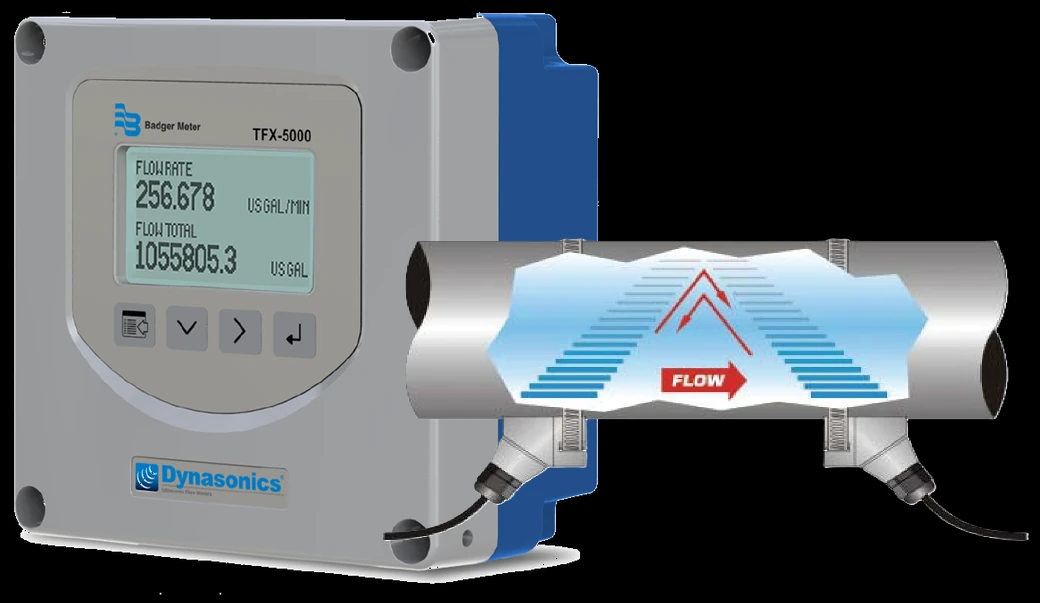
TFX-5000 Clamp-On
Fixed‑mount, 1/2–48 in — flow & energy
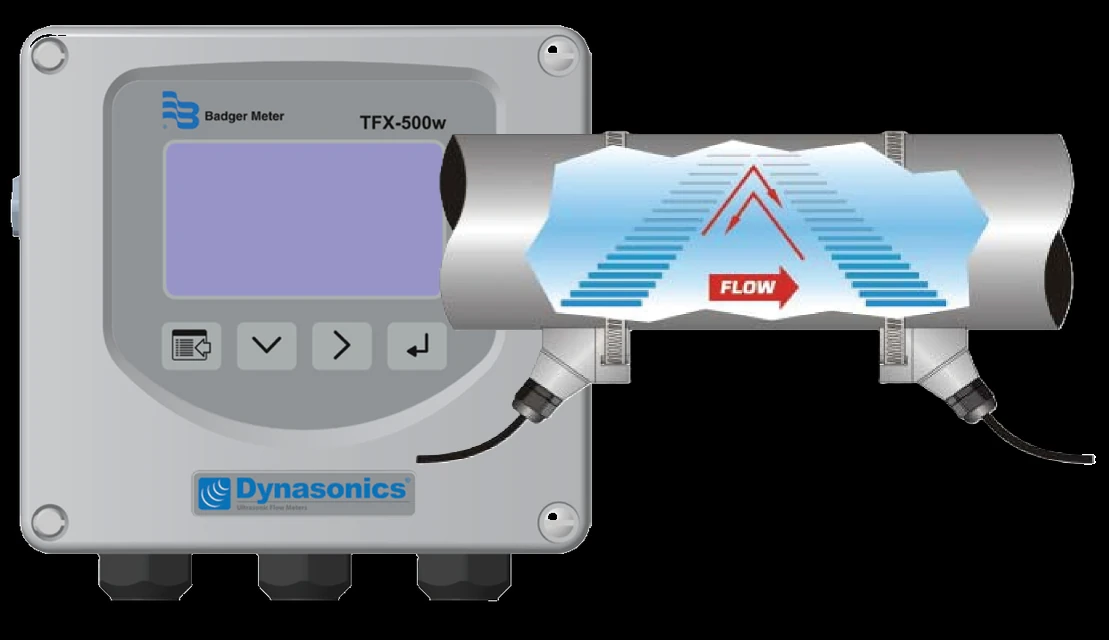
TFX-500w Clamp-On Water
Cost‑effective, 1/2–10 in potable/chiller
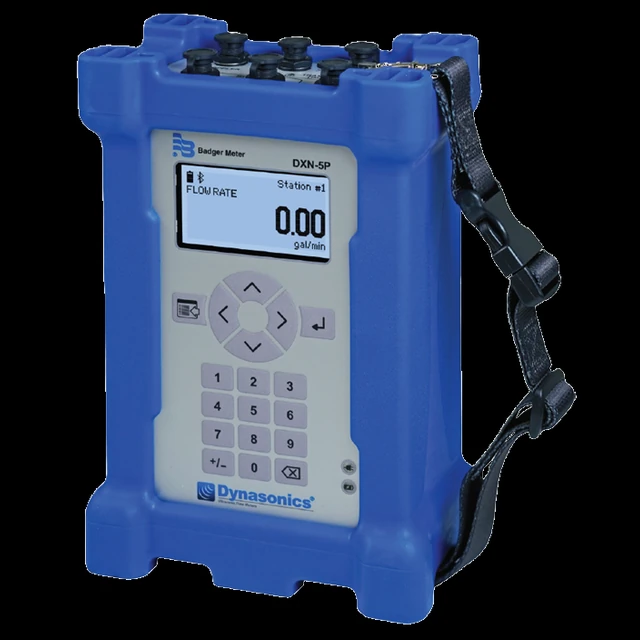
DXN-5P Portable
Hybrid transit‑time/Doppler · Bluetooth SoloCUE
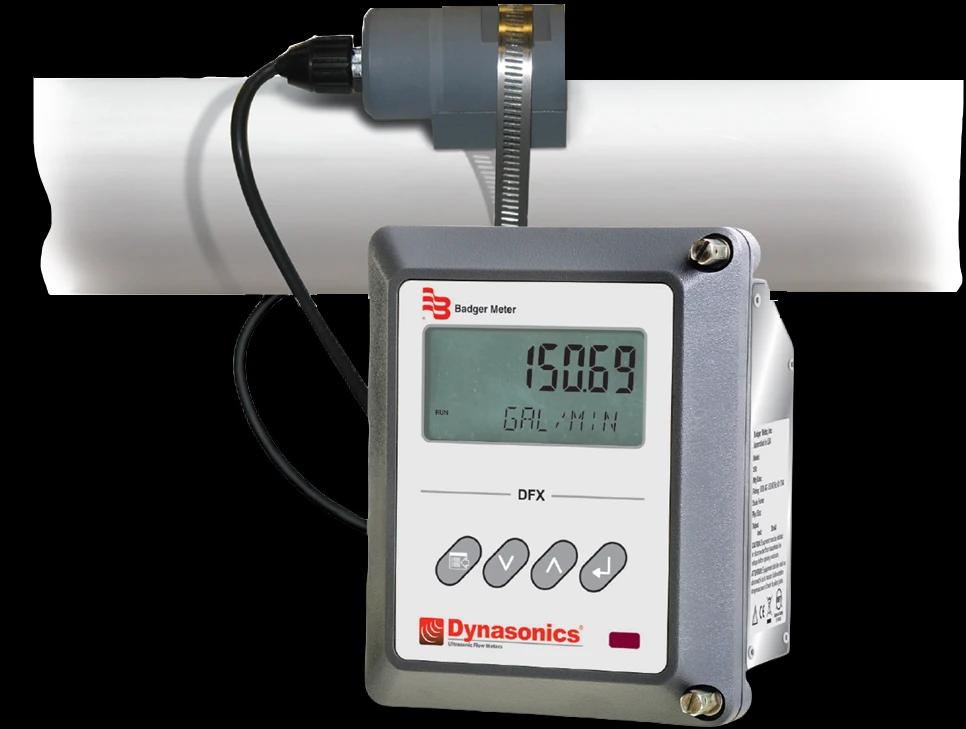
DFX Doppler
Sewage, slurries & aerated fluids
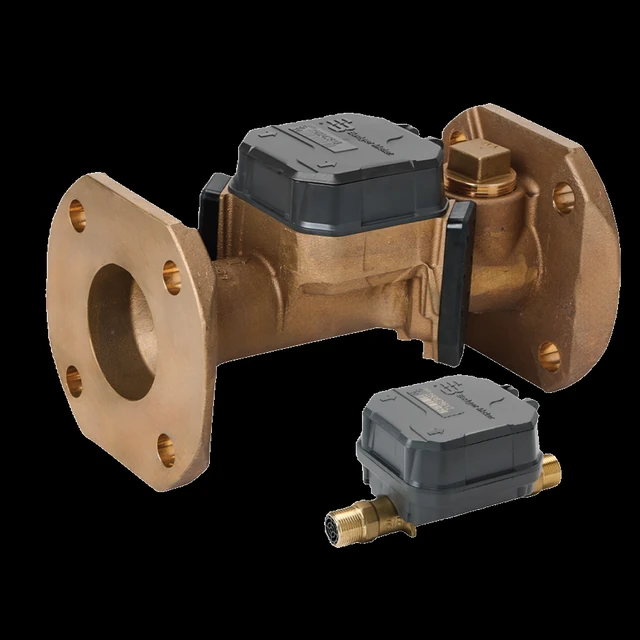
E-Series G2 Inline
Lead‑free bronze transit‑time, 5/8–8 in · NSF 61
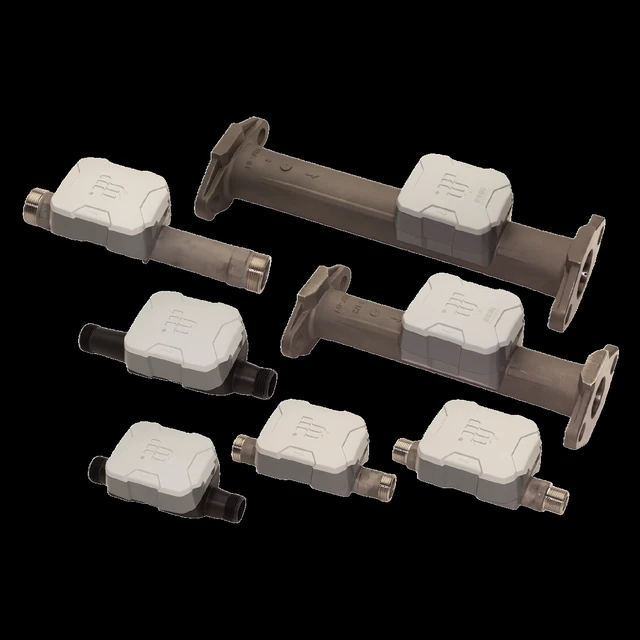
U500w Inline
Polymer 5/8–1 in · stainless to 2 in · SS transitioning to E‑Series G2
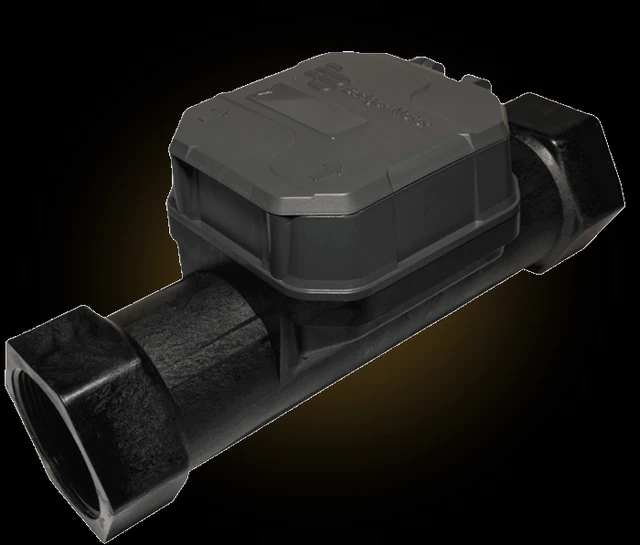
RS-900w Irrigation
Low‑flow irrigation sensor · ±2%, IP68, no straight‑run
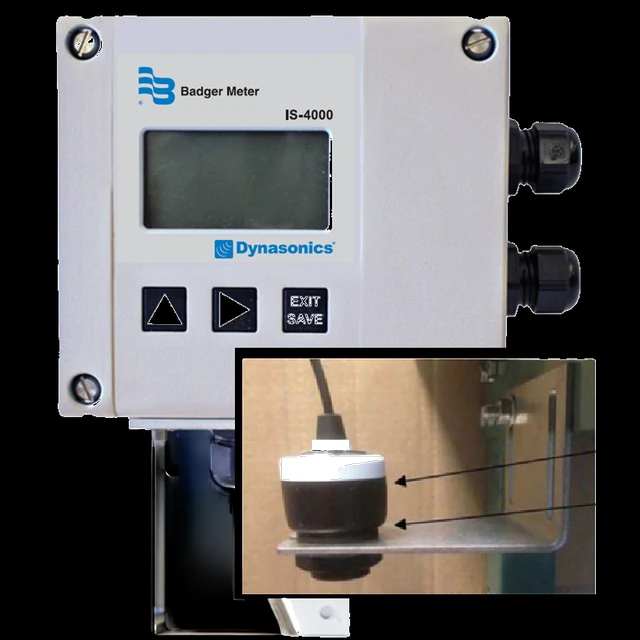
IS-4000 Open Channel
Non‑contact level — flumes & weirs
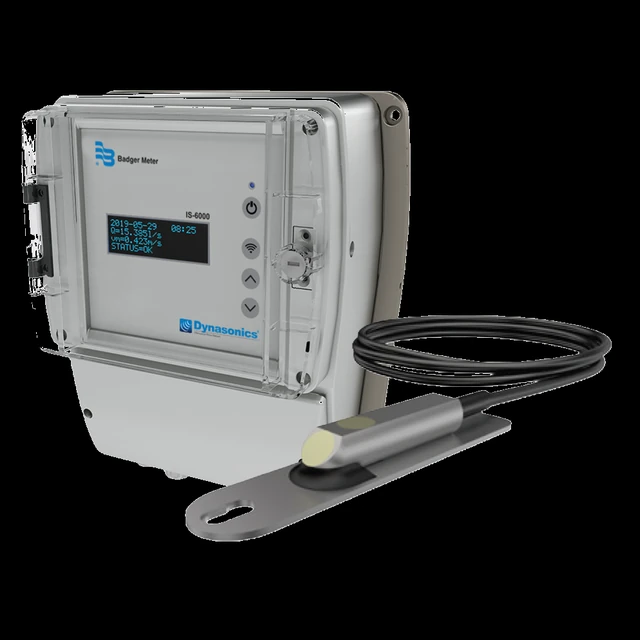
IS-6000 Area-Velocity
Submerged Doppler for open channels
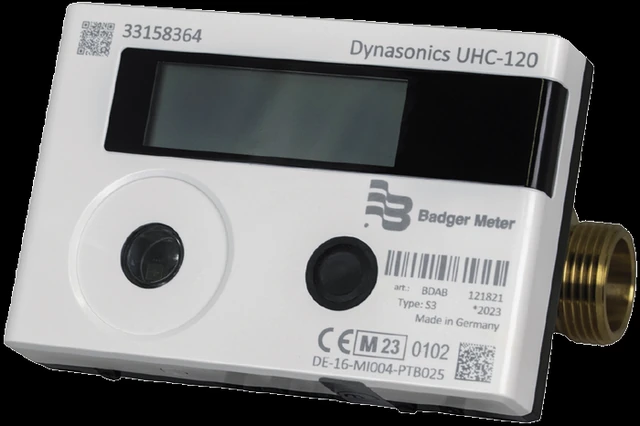
UHC-120 Energy Meter
Ultrasonic heat/cool energy meter · EN1434 · tenant billing
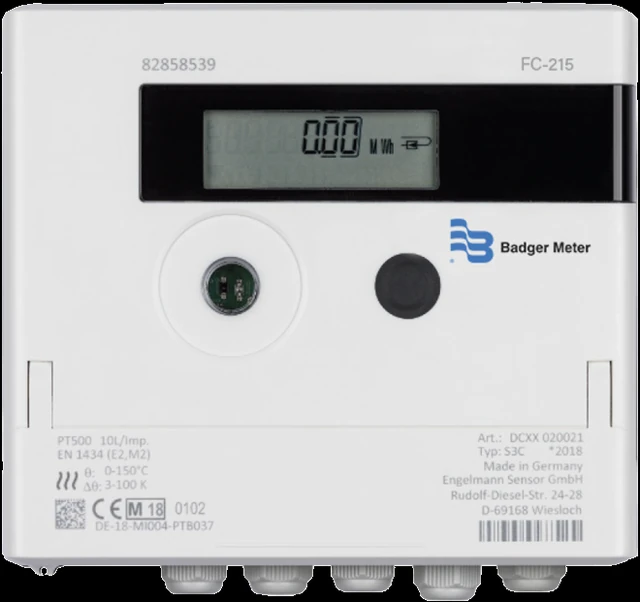
FC-215 BTU Calculator
Thermal‑energy calculator · flow + RTD pair · EN1434
Industries Served
Water & Wastewater
Building
Sub-Metering
Irrigation & Agriculture
Power Generation
Chemical Processing
Food & Beverage
Semiconductor
FAQ: Ultrasonic Flow Meters
Transit-time or Doppler — which clamp-on meter do I need?
It comes down to how clean the liquid is. Transit-time meters (the TFX-5000 and the water-focused TFX-500w) time an ultrasonic signal sent with and against the flow, and they want a reasonably clean liquid — potable water, treated water, chilled or hot water, light process fluids. Doppler (the DFX) instead bounces the signal off particles or bubbles in the stream, so it is the one for the dirty work: sewage, slurries, and aerated fluids that defeat transit-time. If you measure both kinds of fluid, or just want one tool for surveys, the DXN-5P portable runs hybrid transit-time and Doppler and pairs with the Bluetooth SoloCUE app.
Clamp-on or inline — do I have to cut into the pipe?
Not with a clamp-on. The TFX transducers strap onto the outside of an existing pipe, so there is no cutting, no shutdown, and no wetted parts — ideal for retrofits, energy audits, and temporary surveys, on lines from 1/2 to 48 in. An inline meter is the wetted, spool-piece alternative for a permanent water-metering point where you want a fixed install and a tighter, NSF-listed water meter: the E-Series G2 (lead-free bronze) is the primary inline line, and the RS-900w is the inline sensor for irrigation. Clamp-on for non-intrusive or temporary, inline for a permanent dedicated meter.
I have a Dynasonics U500w — what is the E-Series G2 transition?
Badger Meter is transitioning the stainless-steel U500w to the E-Series G2 lead-free bronze meter, and the U500w stainless sizes are rolling closed for new orders. The E-Series G2 is the enhanced replacement — expanded flow ranges, faster sampling, and 4–20 mA and pulse output options — over 5/8 x 3/4 through 8 in, with the residential range expanding (1-1/2 and 2 in hex sizes planned for later in 2026). The engineered-polymer E-Series continues. If you are repeat-ordering a U500w or speccing a new inline point, tell Prater Technical the size and we map it to the right E-Series G2 (or polymer) equivalent.
Is there a Dynasonics meter for irrigation?
The RS-900w is the one — a polymer ultrasonic flow sensor built for mixed-zone irrigation: drip, rotors, and spray heads. It reads a wide flow range down to very low flows at ±2% of reading, installs as a single-piece threaded body (three sizes, NPT or BSP) with no straight-run requirement, and is submersible to IP68 with fully potted electronics and no moving parts to wear. It gives the same two-wire power/pulse output as an impeller flow sensor, so it drops into existing irrigation controllers — including the FC-5000 flow display — for commercial turf, golf course, and agricultural irrigation and pump stations.
Open channel — IS-4000 or IS-6000?
Both meter flow in open channels, partially full pipes, flumes, and weirs, but they sense it differently. The IS-4000 is non-contact: it reads liquid level from above a flume or weir and converts head to flow, so nothing sits in the stream to foul. The IS-6000 is a submerged area-velocity meter — it measures both level and velocity by Doppler in the channel itself, which is the answer where there is no primary device, where the channel surcharges or runs full, or where backwater makes a level-only reading unreliable.
How do I meter heating or cooling energy — UHC-120 or FC-215?
For thermal-energy (BTU) sub-metering, pick by whether you are buying the flow meter too. The UHC-120 is the all-in-one ultrasonic heat and cooling energy meter — flow tube, a matched pair of RTDs, and the calculator in one sealed unit, EN1434 and Measurement Canada Class 2 approved, for residential and commercial tenant billing (DN15–DN40). The FC-215 is the calculator on its own: pair it with a flow meter that has a pulse output and a pair of RTDs to compute energy across a zone — the retrofit path when a flow meter is already in place. Both log totals, run ten years on internal battery (or external power), and speak M-Bus, Modbus RTU, or pulse. For a clamp-on energy audit instead of a permanent sub-meter, the TFX-5000 Energy reads BTU with strap-on RTDs.
Can I run a Dynasonics meter at a remote or off-grid site?
Yes — and a remote clamp-on on a solar supply is a live Prater Technical project. There are three paths by what the site needs. For a self-contained thermal-energy point, the UHC-120 runs about ten years on internal battery, logging on board — no external power at all. For remote water sub-metering, pair an AquaCUE-ready meter (TFX-500w or E-Series G2) with AquaCUE, Badger’s cellular endpoint and cloud, so the reads reach a dashboard with no wiring back. And for an industrial remote point that needs a live signal — a TFX-5000 clamp-on draws only about 8 W on its 9–28 V DC supply — power it from a SunWize solar system and backhaul its 4–20 mA or Modbus output through a Telog cellular RTU to the Telog RM cloud. As the factory-authorized SunWize distributor and your Badger source, Prater Technical scopes the meter, power, and telemetry together.
How accurate are they, and do they need straight pipe runs?
Clamp-on and inline transit-time meters do want some straight run — a typical 10 diameters upstream and 5 down for the best accuracy — because they read the velocity profile across the bore; the TFX-5000 holds about ±0.5% of reading on medium and large pipes (±1% on small pipes) installed within spec. The RS-900w irrigation sensor is the exception, with no straight-run requirement. Every Dynasonics meter ships factory-calibrated; tell us the pipe size, wall, liner, and fluid and we program the meter to your line so it reads right from start-up.
How do I buy Dynasonics, and what does Prater Technical handle?
Dynasonics is a regional Badger Meter line — Prater Technical is the authorized distributor for Northern and Central New Jersey and New York. It is configured to your pipe and fluid and quoted to the application, not sold on the webstore; we spec the meter and transducers, ship through our Brooklyn facility, with programming and commissioning available as an optional, quoted service. Contact us for a quote, current availability, or lead time — or to scope a remote or sub-metering package.
Have an application question? Talk to Scott — send directly to Scott Prater at scott@pratertechnical.com, or call him directly at 917-580-0878 during business hours.
Territory Coverage
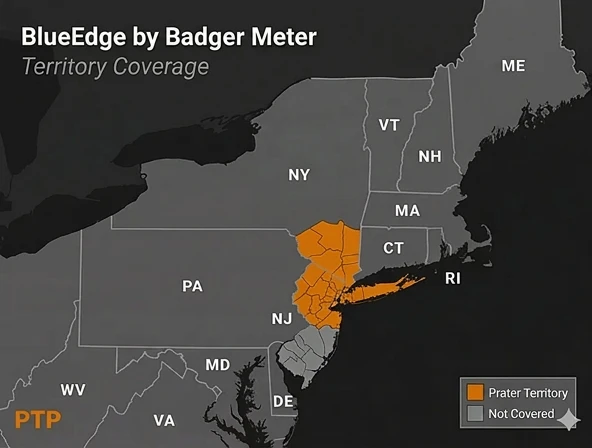
New York: New York City (all boroughs), Long Island, and the Hudson Valley — Westchester, Rockland, Putnam, Orange, Ulster, Dutchess, and Sullivan (ZIP 10000–11999 and 12400–12799). And Greene and Delaware counties that fall within ZIP 12400–12799
New Jersey: Northern NJ (07000–07999) and Central NJ (08500–08999)
New Jersey: Northern NJ (07000–07999) and Central NJ (08500–08999)
Territory above applies to Dynasonics as a regional Badger Meter line. Other Badger lines have their own coverage — see the Badger Meter family page.
Specifications compiled by Prater Technical Partners from Dynasonics product datasheets.