About this category
Solar Products — the Aspeq Infrared Division and the largest supplier of medium-wave infrared panel heaters in the U.S. market, building custom radiant panels for over 60 years. Prater Technical works with you to spec the right Solar Products panel series, face construction, wavelength, and watt density from your substrate, process temperature, and line speed.
Solar Products Infrared Panel Series
Click any Series box for details →
 Aspeq Infrared Division · Custom IR-OEM panels
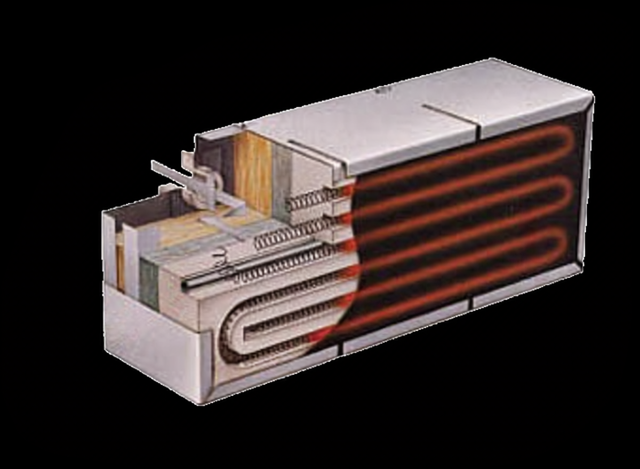
F Series Quartz-Composite Face
Thermoforming top & bottom zones — The workhorse
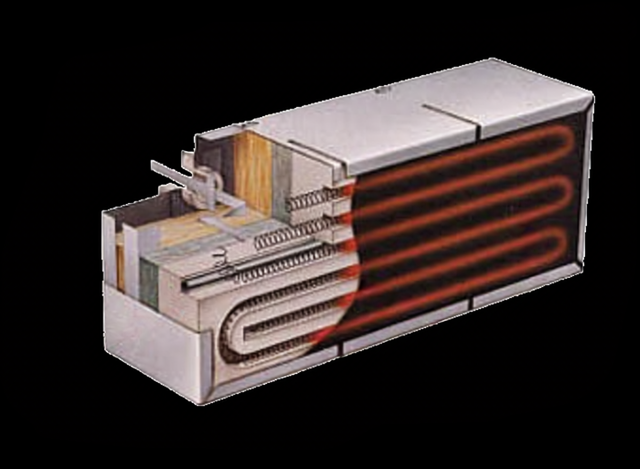
FBA Series Forced-Air Face
F face drilled for forced‑air flow through the heater
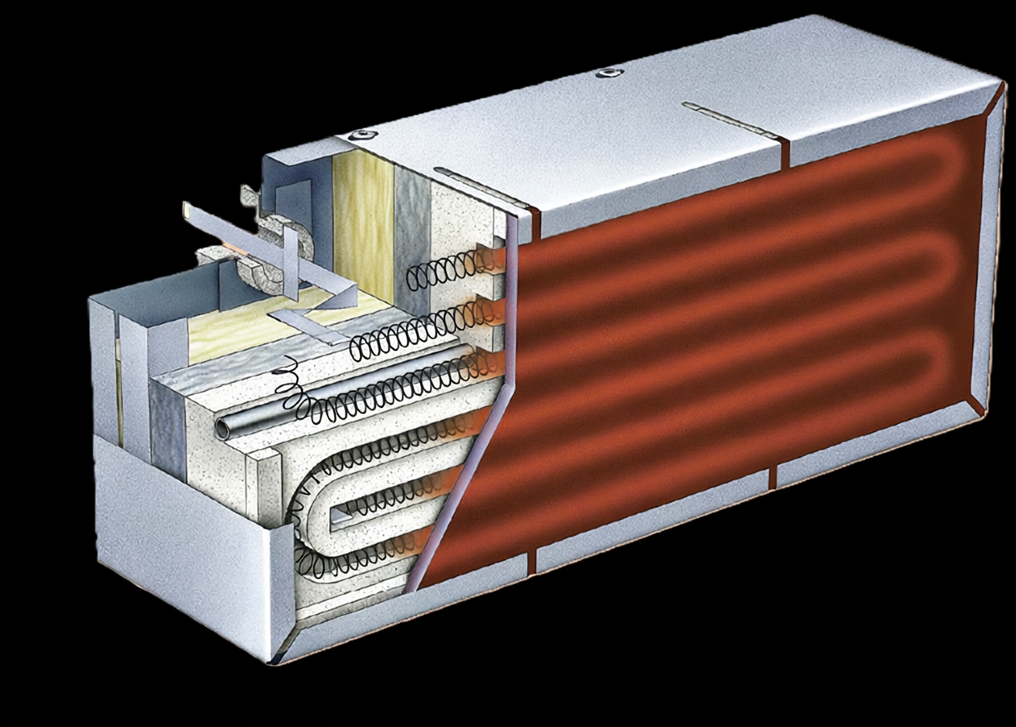
M Series Metal Face
Cleanable metal face — durable, falling‑material & grueling‑duty zones
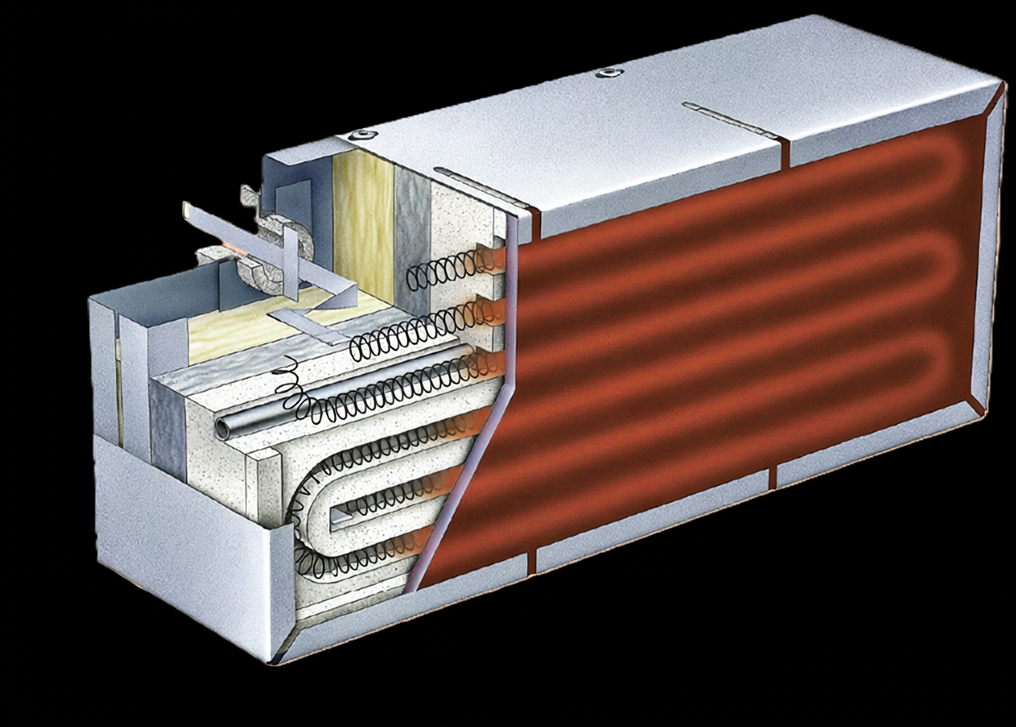
G Series Black-Glass Face
Cleanable glass face to 1202°F — thermoforming & wave‑solder bottom zones
Legacy Panel Retrofit & Replacement
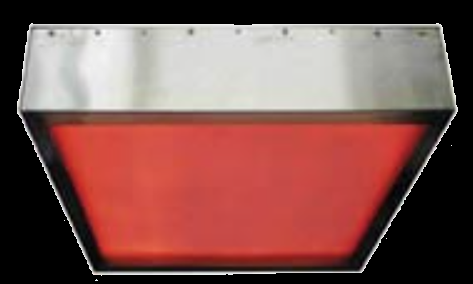
Drop‑in replacement of panels in existing oven banks
Custom OEM IR Panels
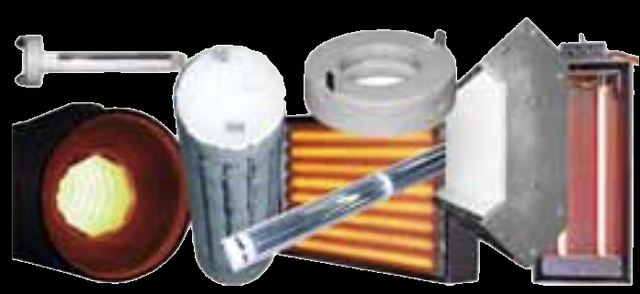
Built to drawing — Dimension, wattage & wavelength
Custom Options
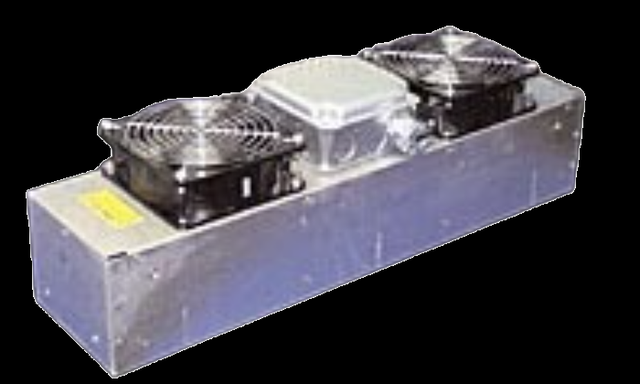
SCR zone controls, Back‑mounted fans, Multi‑zone, Pyrometer view port, Thermowell thermocouple, Cool‑down/drying air holes, Parallelogram wide‑web modules
V Series High-Power Medium-Wave
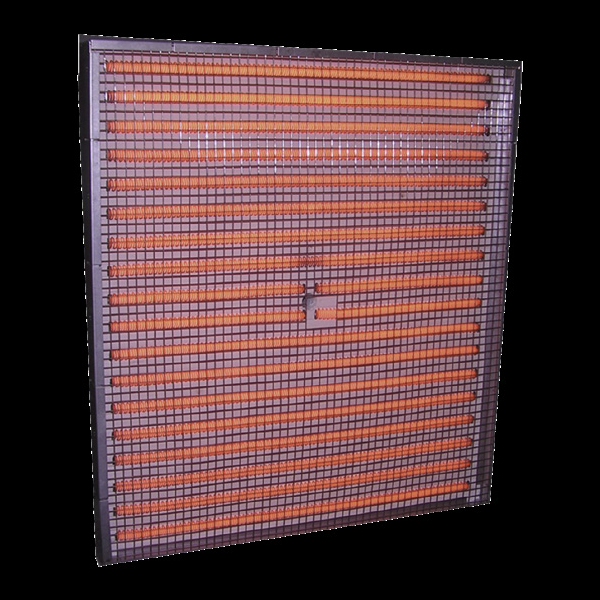
Short‑wave‑rivaling power & response in durable medium‑wave construction
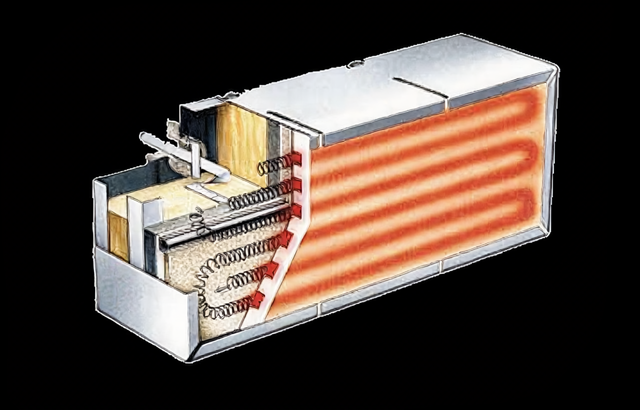
Q Series Opaque Quartz Face
Fast response — Paint & powder curing
Industries Served
Plastics & Thermoforming
Paint & Powder Coating
Glass
Semiconductor
Automotive
Printing & Packaging
Composites
Electronics
FAQ: Solar Products medium-wave infrared panels
What is a medium-wave infrared panel heater, and how is it used?
It is an electric radiant heater: a panel with a heated emitter face that radiates medium-wave infrared energy directly onto the product, rather than heating the air around it the way a convection heater does. Because the energy lands on the surface, processes such as drying, curing, laminating, thermoforming, and preheating run faster and more controllably — which is why these panels are built to order and integrated into OEM machinery, production lines, and process retrofits rather than sold off the shelf. Solar Products, the Aspeq Infrared Division, has manufactured custom infrared heaters for over 60 years and is the largest supplier of medium-wave infrared heaters in the U.S. market. Panels are made to order in the F, FBA, G, M, Q, and V series, sized to the wattage, wavelength, watt density, footprint, and mounting your application needs. The target material, process temperature, line speed, and area are what we need to specify one.
How is radiant infrared heating different from convection heating?
A convection heater warms the air, and the air warms the product — so the oven walls and the bulk air have to come up to temperature first, which is slow and spreads energy everywhere. A radiant IR panel sends energy straight to the workpiece as infrared radiation; the part absorbs it directly while the surrounding air stays comparatively cool. The result is faster heat-up, energy concentrated where it counts, and tighter, more responsive control — turn the panel down and the radiant output drops almost immediately. IR is the better fit when you are heating a defined surface or web that passes in front of the panel; convection still suits heating a large enclosed volume of air uniformly.
Which Solar Products series do I need — F, FBA, G, M, Q, or V?
The series letter identifies the heater face construction, each tuned to a different combination of wavelength, watt density, response time, and durability. F Series (models FB and FBA) — quartz-composite-face panels, the best-selling workhorse, with watt densities to 25 W/in² (39 kW/m²), a typical 25,000-hour life, and 78.5% radiant efficiency. FBA — the F panel with air holes drilled through the face so forced air can flow through the heater for combination IR/convection, moisture removal, or cool-down. G Series — glass-face panels (the GB model uses high-temperature black glass to 1202°F / 650°C), to 20 W/in² (31 kW/m²); the cleanable glass face suits bottom oven zones and wave-solder where material can fall on the heater. M Series — metal-face panels (hard-coated aluminum or porcelainized steel), to 10–15 W/in² depending on the face, more durable than glass for grueling environments. Q Series (QH model) — opaque fused-quartz-face panels, the highest power density in the line at up to 60 W/in² (93 kW/m²) and 82% radiant efficiency, for high-intensity drying and curing; high-purity 99.998% quartz is offered for semiconductor work. V Series — a high-power medium-wave design with response times that rival short-wave heaters, to 100 W/in² with element temperatures to 2100°F (2-micron peak) and a typical 12,000-hour life. Across the line, panels carry any voltage or phase and flexible sizing. Tell us the substrate, the process temperature, the line speed, and the oven zone, and the series and panel layout follow.
What is wavelength, and why does it matter for IR heating?
Infrared energy — a narrow band of the electromagnetic spectrum just beyond the visible-light range — is emitted across a spread of wavelengths set by the emitter temperature, and materials absorb some wavelengths far better than others. Wavelength is inversely proportional to temperature: as the emitter gets hotter, the peak wavelength shortens. Solar Products panels output across roughly 2.3 to 6 microns, with the medium-wave band (about 2 to 4 microns) dominating at higher watt densities and temperatures; below about 900°F (482°C) the output shifts into the long wavelengths. Medium-wave IR is well matched to many plastics, coatings, paints, and organic materials, so the energy is absorbed at the surface and converted to heat efficiently rather than passing through or reflecting away. Matching the emitter wavelength to the target material absorption is what makes radiant heating fast and efficient; the wrong wavelength wastes energy heating the air or the oven instead of the part. A panel below about 500°F (260°C) has little use in industrial process heating. The series and emitter type are chosen with this in mind — give us the material and the panel is tuned to it.
How do I size an IR panel system?
An IR panel installation is sized by the radiant energy the process needs and the area to cover: the wattage to raise the product to temperature at the required line speed, and the watt density (watts per square inch of panel face) the substrate can take without scorching, and the panel footprint that matches the oven zone or fixture. Reflective and convective losses, the standoff distance from panel to product, and the number of zones all factor in. The drivers are the target material type and size, the process temperature, and the line speed or dwell time. Give us those plus the available voltage and phase, and the panel count, wattage, and layout are specified from there.
How are Solar Products IR panels controlled?
Radiant panels respond quickly, which makes them well suited to proportional control. A typical scheme pairs an SCR power controller proportioning each zone continuously with a temperature loop reading panel or product temperature, and a panel can be divided into multiple independently controlled zones so the heat profile can be tuned across the oven width and length. Solar Products fixed-resistance heaters track applied voltage by a squared relationship (W = V²/R), so a power or temperature controller is what holds true, constant output. Temperature is sensed by a quartz or ceramic thermowell-mounted thermocouple, a face-reading bayonet thermocouple, or an optical pyrometer through a view-port hole in the panel — increasingly the product temperature rather than the heater temperature is the control point. Give us the zone count, the control points, and whether you are reading panel or product temperature, and the heater and its sensing are built to match; control-panel build and commissioning are available as a quoted service.
What materials and processes suit IR panel heating?
Medium-wave IR panels are at home wherever a defined surface or web needs fast, controllable heat: thermoforming oven top and bottom heating zones; paint, powder-coating, and e-coat curing ovens; screen-printing curing and drying systems; glass tempering furnace banks; semiconductor and electronics process heating; and automotive fiberglass and composite curing. The common thread is a part or web that passes in front of the panel and absorbs the radiant energy directly. If your process currently uses a slow convection oven to heat a surface, it is often a candidate for IR.
Can Solar Products retrofit or replace legacy IR panels in an existing oven?
Yes — replacing aged or failed panels in an existing oven bank is a common order. Because the panels are built to drawing, a replacement can match the dimensions, wattage, wavelength, and mounting of the panels it replaces, so it drops into the existing fixture and controls. It is also an opportunity to re-tune: if the original panels were the wrong wavelength or watt density for the substrate, or if the material or process properties have changed, the replacement can be re-specified. Send us the existing panel dimensions, wattage, and mounting — and the substrate and process if you want it re-optimized — and we match or improve on it.
Are Solar Products panels custom-built, and what is the lead time?
Yes — Solar Products is a custom IR-OEM & Retrofit manufacturer, so virtually every panel is built to the application: the dimensions, wattage, wavelength, watt density, emitter type, and mounting are specified per job, and panels are arranged to the oven zone or fixture. There is no published price list, and pricing is quote-only. Lead times typically run about 3 to 14 weeks depending on configuration. The more complete the data up front — substrate, process temperature, line speed, oven dimensions, voltage — the faster and tighter the quote.
How long do IR panels last, and why do they fail?
Kept within their design conditions, the F, FBA, G, M, and Q panels carry a typical 25,000-hour life expectancy; the high-power V Series runs hotter and is rated for a typical 12,000-plus hours. The common life-limiters are running the panel above its watt-density rating (which shortens emitter life), mechanical damage to the emitter face, contamination or overspray baking onto the panel, and thermal-cycling stress at the connections — Solar Products welds its stainless-steel terminal-to-element connection partly to resist that last one. Most are manageable with the right watt density for the duty, a relatively clean operating environment, and proper standoff and ventilation. A panel that fails early is usually being run above its rating or is the wrong construction for the process — which is what re-specifying on replacement fixes.
Is Solar Products a solar-energy company?
No. Solar Products as referenced here is the industrial infrared heater manufacturer — the Aspeq Infrared Division and the largest supplier of medium-wave infrared heaters in the U.S. market — not a solar-energy (photovoltaic) company. If you are looking for off-grid solar power systems, that is a different Prater line (SunWize, on the Remote Solar Power page); this page is electric medium-wave infrared process heating.
Who discovered infrared, and where did radiant heating come from?
Infrared radiation was discovered by astronomer William Herschel in 1800, when he measured a temperature rise just beyond the red end of a prism's spectrum — the first evidence of energy we cannot see. Turning that into industrial heat took electric resistance heating (James Prescott Joule's 1840s work on Joule heating) and, in the 20th century, durable emitter constructions — nichrome, tubular, and quartz elements — that radiate medium-wave IR efficiently. Solar Products's panels are the modern industrial form: an emitter face engineered to put that radiant energy onto a specific material at a specific wavelength.
Need a custom IR panel or oven-zone spec? Talk to Scott — Contact Scott directly at scott@pratertechnical.com, or call his cell / direct line 917-580-0878 during business hours.
Territory Coverage
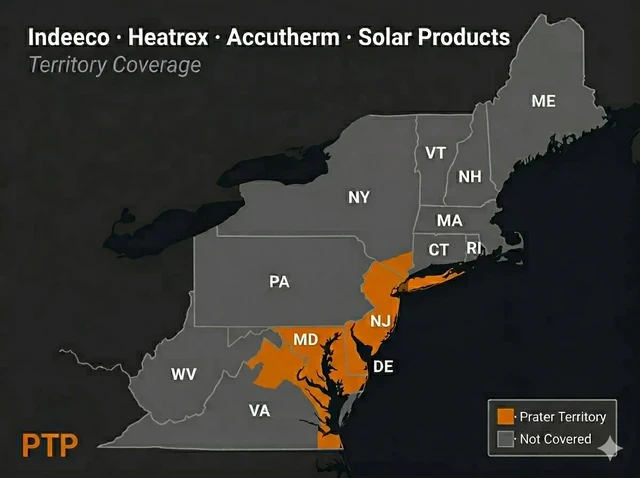
New York: NYC and Long Island
New Jersey: Full state
Maryland: Full state
Delaware: Full state
Virginia: Northern VA
New Jersey: Full state
Maryland: Full state
Delaware: Full state
Virginia: Northern VA
Territory detail above applies to Solar Products and the other Aspeq Heating Group brands (Indeeco, Heatrex, Accutherm). Hi-Heat and other manufacturer lines have their own coverage — see each brand’s page.
Specifications compiled by Prater Technical Partners from Solar Products product datasheets.