About this category
Flo-tech is Badger Meter's hydraulic test-and-diagnostics line — turbine-based testers that read flow, pressure, and temperature simultaneously from a single line break in hydraulic oil and compatible liquids (±1% of reading at 32 cSt on the electronic/IFC instruments — MC4000, Activa, IFC Classic/F6100 — and ±1% of full scale on the gauge and frequency instruments — PFM6/PFM6BD, Ultima, Quad, frequency Classic), so one system connection diagnoses a circuit instead of three. Selection follows the job: for field troubleshooting, the MC4000 handheld analyzer (five inputs, 2.5 MB datalogger, dual fast-transient recorders, automatic HP/kW calculation) or the self-contained PFM6 and PFM6BD portable testers (to 6,000 psi, bi-directional on the larger sizes); for permanent stands, the F6100 array with its integrated load valve, or the compact Activa and Ultima arrays for OEM and test-stand integration; the Classic single-rotor sensors set body and range (FSC aluminum, FSB flanged aluminum, FSD Stressproof steel; 0.4 to 350 gpm), and the bi-directional Quad reads flow in both directions; hazardous areas take the F5162 ATEX/IECEx/CSA intrinsically-safe pickup; and the F6600/F6650 and F6700/F6750 panel-mount displays carry the comms cards your stand needs. Prater Technical works with you to spec the tester, sensor array, and display to your hydraulic system and test plan, and ships this Badger line nationwide through our Brooklyn facility, configured to your build.
Flo-tech SeriesSold on our webstore →
Click any Series box for details →
 Badger Meter — hydraulic test & diagnostics
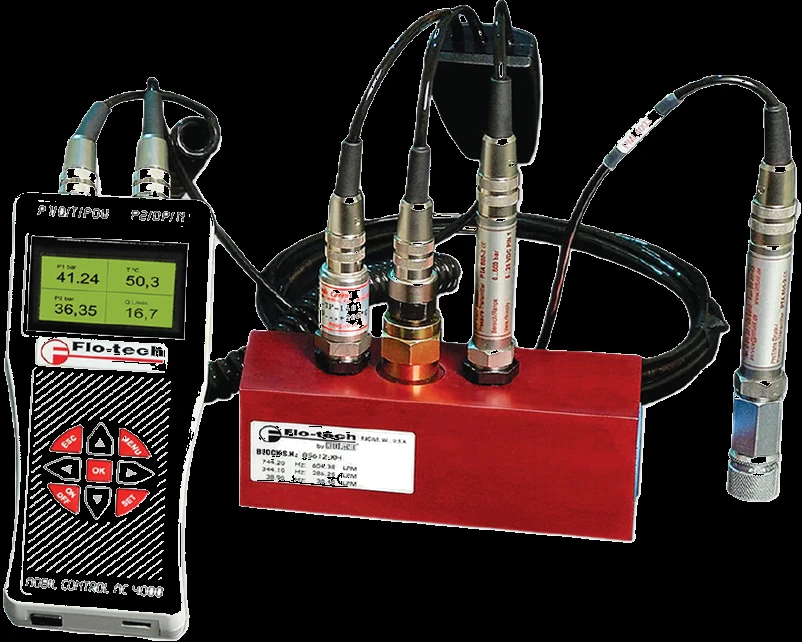
MC4000 Handheld Analyzer
Five inputs, datalogger, HP/kW calc
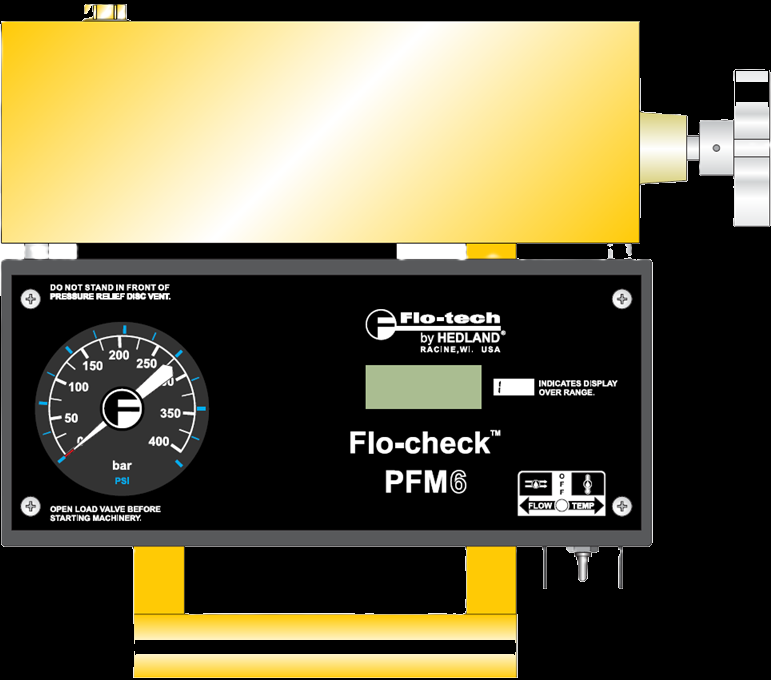
PFM6 & PFM6BD Portable
Self‑contained, to 6,000 psi, bi‑directional
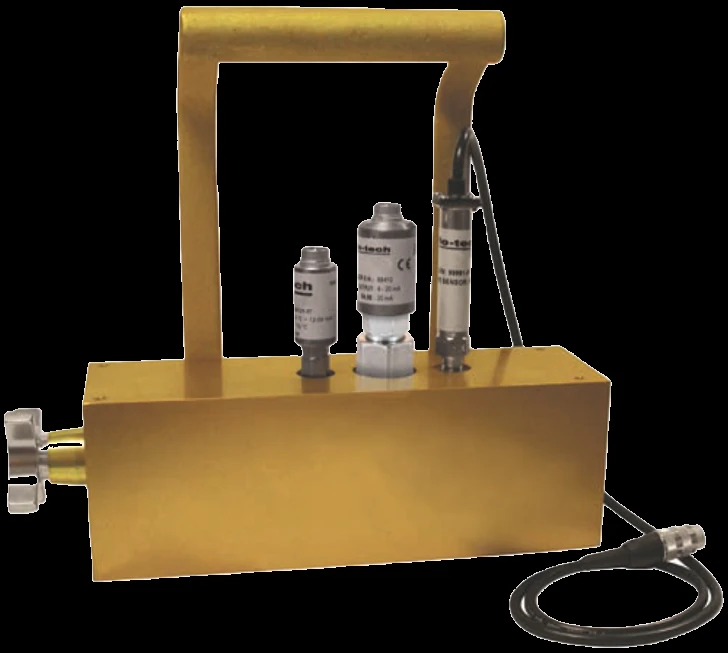
F6100 Sensor Array
Fixed‑mount with integrated load valve
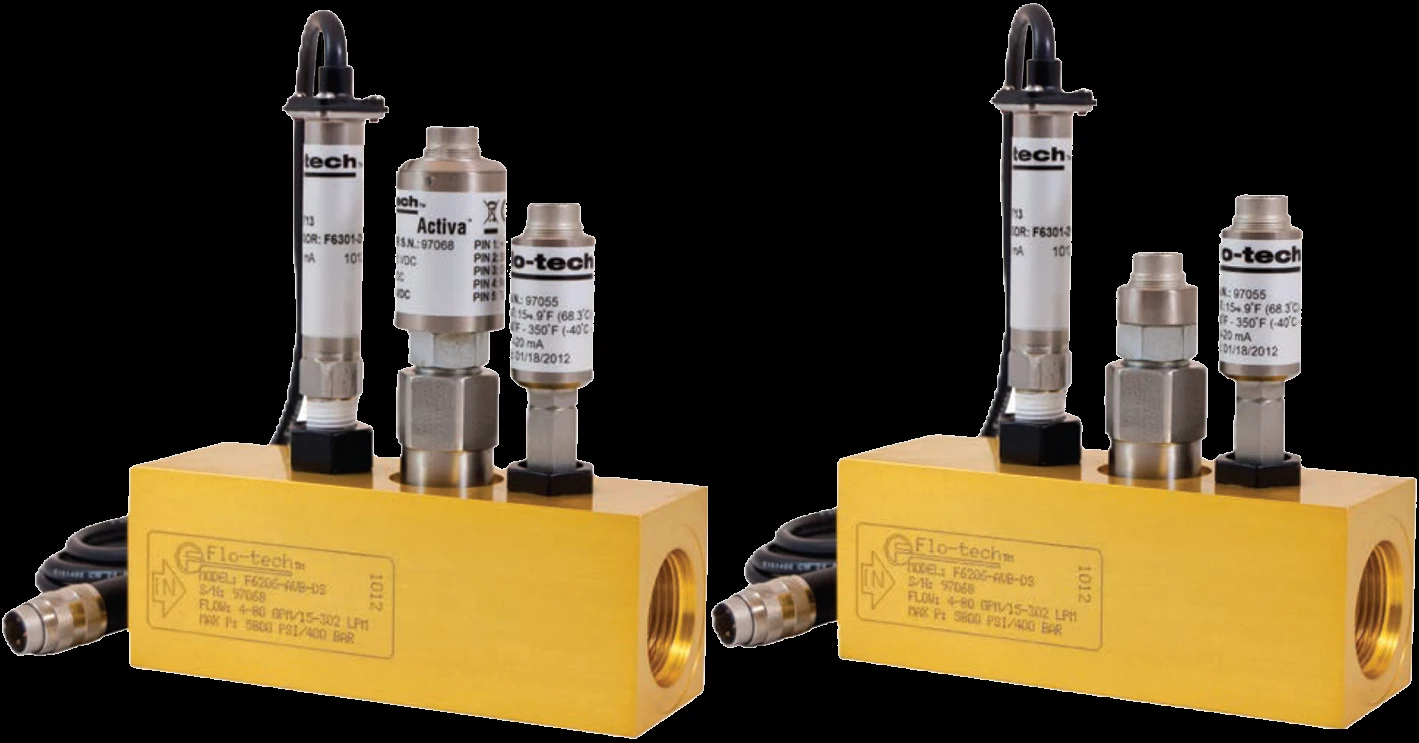
Activa & Ultima Arrays
OEM/test‑stand flow + pressure + temp
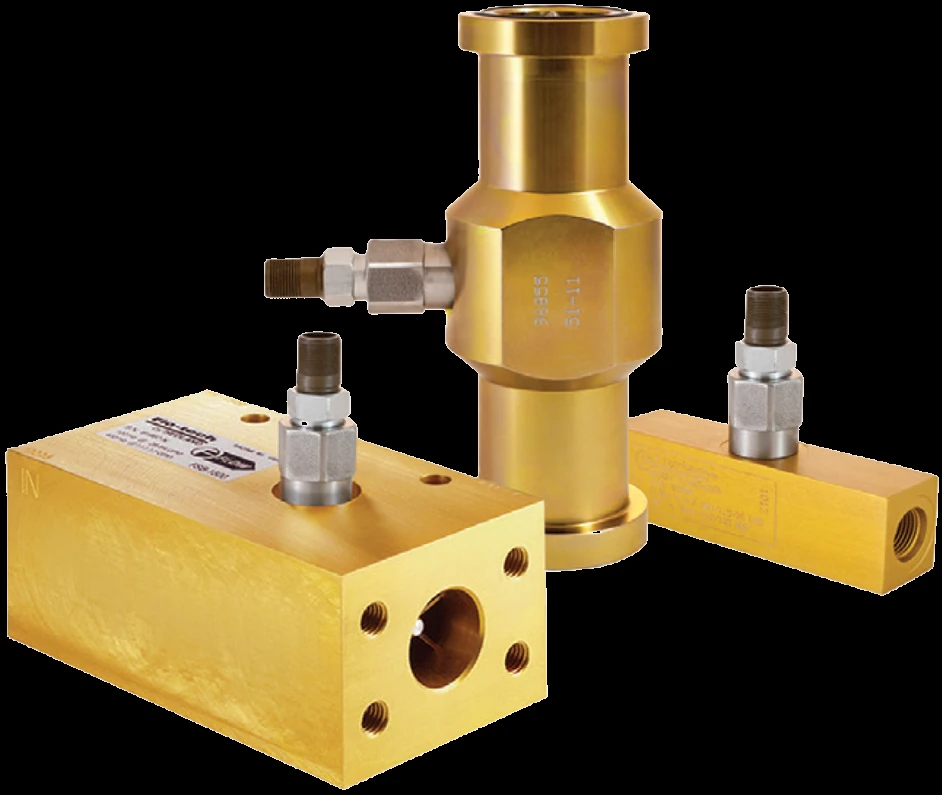
Classic Turbine Sensors
FSC/FSB/FSD single‑rotor bodies · 0.4–350 gpm
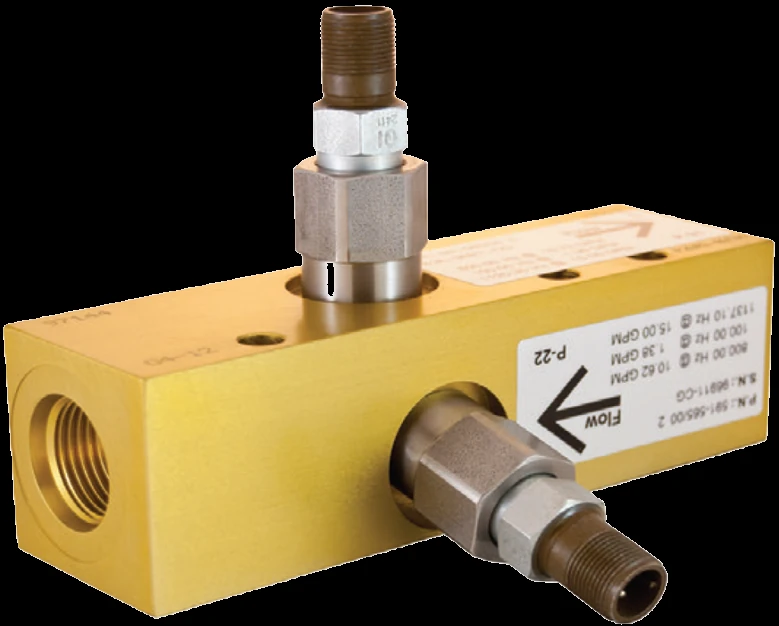
Quad Series Sensor
Dual‑transducer · bi‑directional / Quadrature
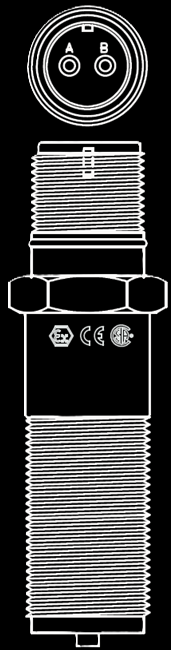
F5162 Hazardous-Area Pickup
ATEX/IECEx/CSA intrinsically safe
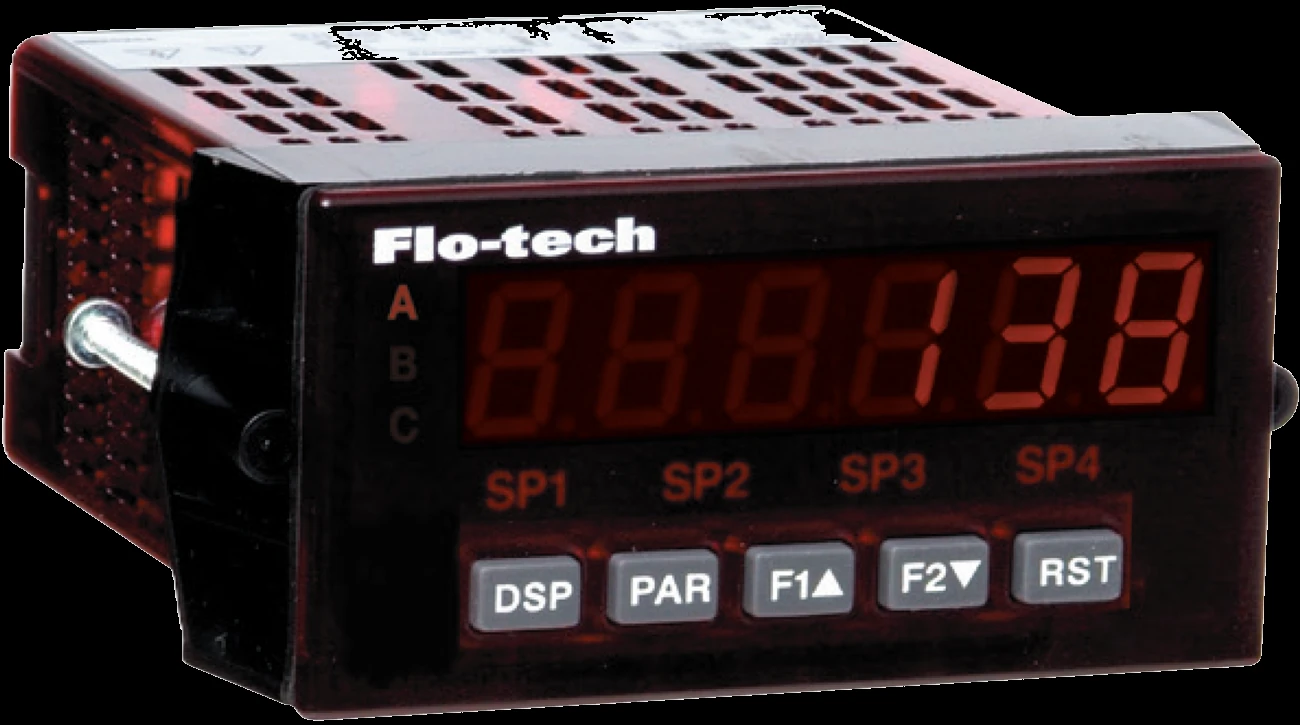
F6600/F6650 & F6700/F6750 Displays
Panel‑mount, NEMA 4X, comms cards
Industries Served
Oil & Gas
OEM & Custom Equip.
Test & Measurement
Water & Wastewater
Aerospace & Defense
Power Generation
Chemical Processing
Mining & Minerals
FAQ: Hydraulic Test & Diagnostics
What does a Flo-tech tester do, and why one tri-sensor connection instead of three?
Flo-tech is turbine-based hydraulic test-and-diagnostic instrumentation: the passing fluid spins a bladed rotor at a speed proportional to flow rate, and an integral pressure tap and temperature sensor read the same point, so one connection into the circuit returns flow, pressure, and temperature at once — one line break instead of three separate instruments, each needing its own connection. From flow × pressure the tester also computes hydraulic horsepower (hp or kW) automatically, which is what makes it the tool for pump and motor efficiency baselining, valve and cylinder testing, hydrostatic-drive evaluation, power-steering diagnostics, test-stand monitoring, and preventive-maintenance trending. The instruments are calibrated on 0.876 SG / 150 SUS (32 cSt) hydraulic oil and read ±1% with ±0.2% repeatability and a turbine response under 200 ms. Tell us the circuit and what you are trying to find and we point you to the right tester.
How do I choose among the Flo-tech products?
They fall into three groups by how the work is done. Portable diagnostics for field troubleshooting: the MC4000 electronic handheld analyzer, and the self-contained PFM6 and PFM6BD gauge testers. Fixed arrays for permanent stands and machines: the F6100 sensor array with an integral load valve, and the compact Activa and Ultima flow/pressure/temperature arrays for OEM and test-stand integration. Turbine sensors that feed your own electronics or a Flo-tech display: the Classic single-rotor sensors (FSC, FSB, FSD bodies) and the bi-directional Quad. Decide first whether the meter is hand-carried to the machine or permanently plumbed in, and whether you need a live reading or recorded data.
MC4000 or PFM6 for field work?
The MC4000 is the electronic analyzer; it includes five sensor inputs (turbine flow, two pressures P1/P2, temperature, and an RPM pickup), a back-lit graphic LCD, a 2.5 MB datalogger holding up to 80,000 samples across all channels, two 1 ms fast-transient recorders on P1 (240,000-sample capacity, programmable trigger) for catching pressure spikes, automatic hp/kW, three-point flow calibration, and USB upload to a PC through the MC4CON utility. The PFM6 is the self-contained gauge tester: a large LCD for flow and temperature, a dual-scale helical-tube pressure gauge rated to 6,000 psi, a fingertip loading valve with internal pressure-surge relief, five flow ranges from 1 to 199.9 gpm, and about 50 hours on AA batteries — it is strictly portable, without datalogging or computer upload. Choose the MC4000 when you need recorded data, transients, RPM, or computed power; choose the PFM6 for a rugged, instant standalone check — flow, pressure, and temperature read directly on its gauge and LCD, with no electronics to set up. The PFM6BD is the same tester with bi-directional measurement, reading flow in both directions for closed-loop hydrostatic-drive testing.
How accurate is it, and does viscosity matter?
Accuracy follows the output. The electronic devices — the MC4000 analyzer and any IFC-equipped sensor (the Activa, and the IFC versions of the Classic and F6100) — read ±1% of reading at 32 cSt; the magnetic-pickup and gauge devices — the PFM6, Ultima, Quad, and frequency-output Classic — read ±1% of full scale, and the PFM6BD adds ±2% on reverse flow. All repeat to ±0.2%. Everything is calibrated on 0.876 SG / 150 SUS (32 cSt) hydraulic oil, with a functional viscosity range of roughly 2 to 110 cSt (25 to 500 SUS). Viscosity does matter. Like any turbine, calibration shifts as the fluid thickens, so for work far from 32 cSt tell us the operating viscosity, and we confirm it sits within the functional range and set the right accuracy expectation. When the reading has to be traceable — warranty work, efficiency contracts, lab use — order the meter with a NIST-traceable 5-point or 10-point calibration certificate.
Can it read flow in both directions?
Yes, where the duty needs it. The PFM6BD portable tester adds bi-directional measurement on the SAE 16 and SAE 24 sizes (±1% of full scale forward, ±2% reverse) for closed-loop hydrostatic drives, and the Quad turbine sensor — derived from the FSC series with a quadrature output — reads both directions in a fixed installation. The standard PFM6, the MC4000, and the Classic single-rotor sensors are uni-directional. Tell us whether the circuit reverses and we pick accordingly.
What about hazardous (classified) areas?
For flow sensing in a classified area, Flo-tech offers the F5162 magnetic pickup, which carries ATEX, IECEx, and CSA w/NRTL/C intrinsic-safety certification (to the IEC 60079-11 standard). It is a sealed 300-series stainless housing with solid epoxy encapsulation, a 2-pin MS connector, and a −150 to +330 °F range, made to sense the rotor in a Flo-tech turbine flow meter. Intrinsic safety is a system, not a single component: the F5162 is deployed in the hazardous area only as part of a certified intrinsically-safe loop, installed to the certificate conditions of safe use, so a classified-area installation is engineered to your area classification rather than taken off the shelf. That certification covers the F5162 flow pickup only; the array electronics — the IFC converter and the integral pressure and temperature transmitters — are not hazardous-area rated and are kept outside the classified area. Tell us the area classification (Division or Zone, gas group, and temperature class) and the turbine body, and we confirm the certificate, its conditions of safe use, and the barrier scheme with Badger Meter before anything is quoted.
What outputs and displays are available?
Turbine sensors put out a frequency pulse natively; the rest depends on the product. The Classic sensors are available with frequency, 4–20 mA, or 0–5 VDC output. The Activa array has the IFC (Intelligent Frequency Converter) built in — 4–20 mA or 0–5 VDC at 1:4000 resolution — while the Ultima array outputs raw frequency native to the F6600/F6650 displays. The panel-mount displays split by input: the F6600/F6650 take a frequency signal (six-digit), the F6700/F6750 take analog 4–20 mA or 0–10 V (five-digit); both are NEMA 4X / IP65 and carry three expansion-card slots for serial comms (RS-232 or EIA-485) and a Form C relay; specify AC (F6600/F6700) or DC (F6650/F6750) power at order. The smallest sensors use the F5140 K-Factor Scaler to scale the frequency signal for the displays. Tell us how the reading has to land and we size the sensor, output, and display together.
How do I buy Flo-tech, and is calibration included?
Flo-tech is a Badger Meter line authorized for sale nationwide by Prater Technical Partners as the distributor. Standard configurations are priced on our webstore, and we inspect and consolidate at our Brooklyn facility before shipping to you. Factory NIST-traceable calibration (a 5-point or 10-point certificate) is available as an order option on the meter, and PTP programming and commissioning are available as an optional, quoted service — mainly configuring the digital displays and the MC4000 (K-factor, scaling, units, comms, and setpoint alarms). Tell us the circuit, flow range, port, and pressure and we confirm the tester, sensor array, and display, and the price.
Have an application question? Talk to Scott — send directly to Scott Prater at scott@pratertechnical.com, or call him directly at 917-580-0878 during business hours.
Territory Coverage
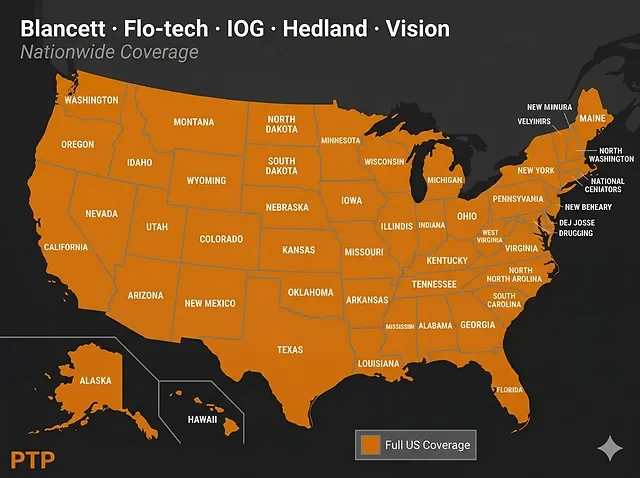
Nationwide: Authorized for sale across the United States, shipped from the Brooklyn warehouse
Prater Technical’s other product lines have their own coverage — see each brand’s page.
Specifications compiled by Prater Technical Partners from Flo-tech product datasheets.