About this category
Hedland is Badger Meter's variable-area (rotameter) flow line — spring-loaded piston meters that read flow against a calibrated spring on a magnetically-coupled external indicator, so there is no glass tube to break, they install in any orientation, and they need no straight run. Selection is by fluid and pressure across seven families: petroleum and hydraulic oil (series H200–H901, ¼ to 3 in, aluminum/brass to 3,500 psi or T303 stainless to 6,000 psi), phosphate ester (H294–H898, EPR seals and a Nylon guard for Skydrol, Fyrquel, HFD-R), water-based and fire-resistant / emulsion hydraulic fluids (H212–H913), plain water and other general liquids (H204–H905, brass or stainless — no aluminum), air and compressed gas (H270–H971, multi-pressure SCFM scale), API oil and corrosive liquids (H231X–H841X, T316 stainless, Hostile-Environment Pyrex guard), and corrosive air and gas (H237X–H847X, T316 stainless), plus low-cost EZ-View direct-read meters (polysulfone or Radel, ½–1 & 2½–3 in). Accuracy is ±2% full-scale on the metal-body meters (±7% on ¼-in bodies), ±5% on EZ-View; add a Flow-Alert switch or an MR transmitter with an F6700/F6750 digital display when you need an output. Prater Technical works with you to spec the meter to your fluid and pressure and, as an authorized Badger distributor, ships it authorized for sale nationwide and priced on our webstore.
Hedland SeriesSold on our webstore →
Click any Series box for details →
 Badger Meter — variable area (rotameter)
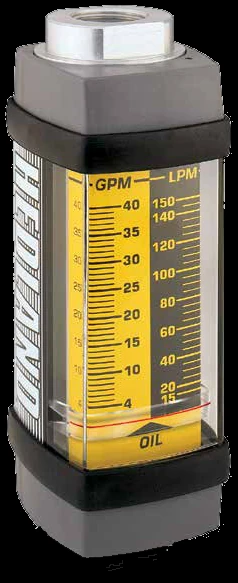
Petroleum & Hydraulic Oil
H200–H901, ¼–3 in, Al/brass to 3,500 psi · T303 SS to 6,000 psi
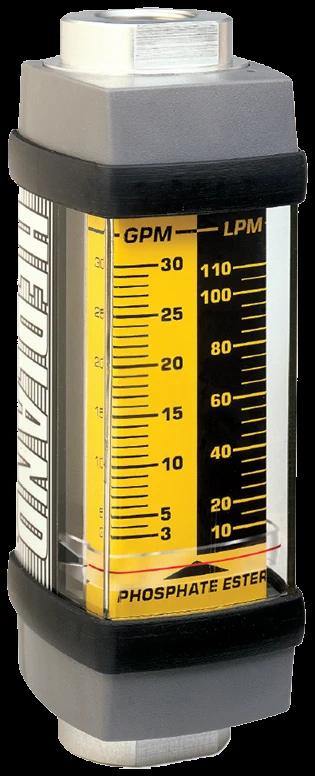
Phosphate Ester (Skydrol)
H294–H898, EPR seals & Nylon guard — Skydrol, Fyrquel, HFD‑R
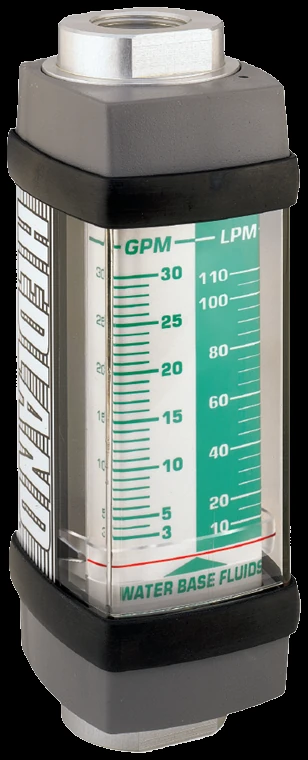
Water-Based Liquids & Emulsions
H212–H913, water‑glycol / Fire‑resistant & water‑oil emulsions, brass or SS
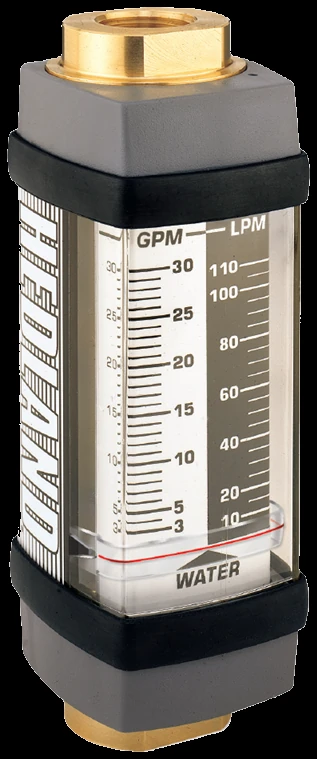
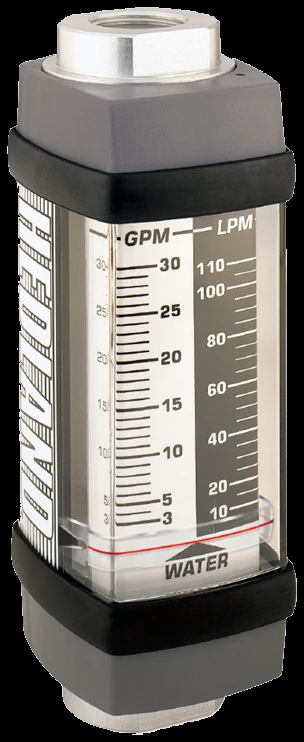
Water & Other Liquids
H204–H905, plain water & coolant, brass / T303 SS (no aluminum)
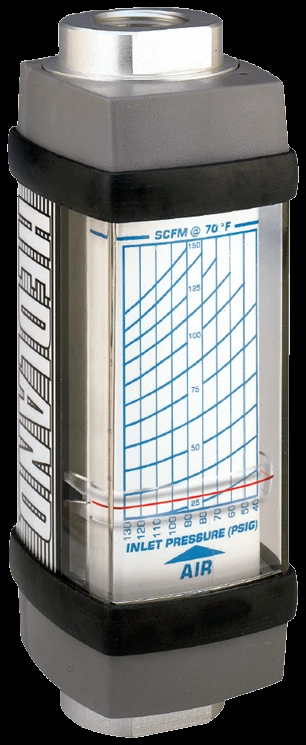
Air & Compressed Gas
H270–H971, multi‑pressure SCFM scale, to 2,200 SCFM
API Oil & Corrosive Liquids
H231X–H841X, T316 SS, Hostile‑Environment Pyrex‑guard option
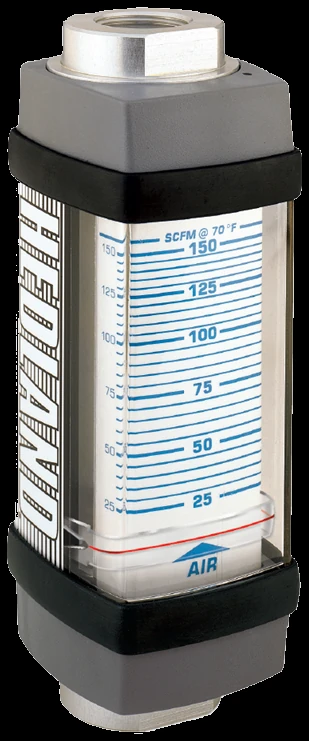
Corrosive Air & Gas
H237X–H847X, T316 SS corrosive‑gas service, HE option
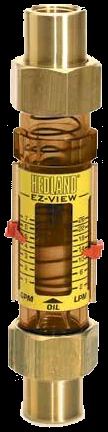
EZ-View® Direct-Read
Polysulfone / Radel®, ½–1 & 2½–3 in, direct read, ±5% FS
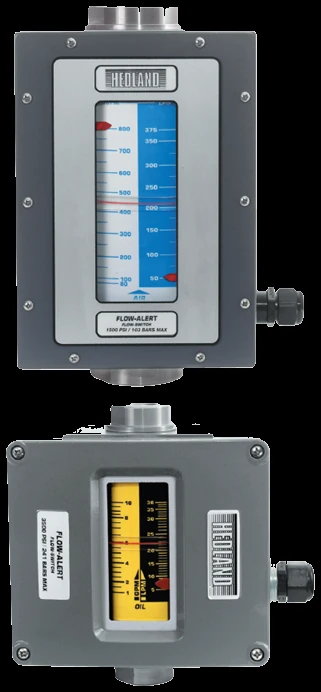
Flow-Alert® Flow Switches
Micro‑switch (F1/F2) & reed‑switch (RS), any H‑series
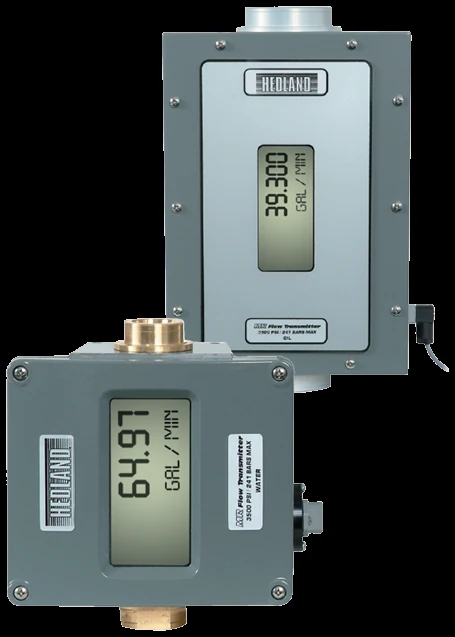
MR Transmitter & F6700/F6750 Displays
Non‑contact magnetic, 4–20 mA / 0–10 V, remote digital display
Industries Served
Oil & Gas
Power Generation
Chemical Processing
OEM & Custom Equip.
Food & Beverage
Water & Wastewater
Test & Measurement
Building
FAQ: Variable-Area Flow Meters
What is a variable-area (rotameter) flow meter, and where does it fit?
A Hedland variable-area meter reads flow with a spring-loaded piston: flow pushes a piston against a calibrated spring along a contoured metering cone, and a magnetically-coupled indicator outside the body tracks the piston position against a 360° rotatable scale. Because the coupling is magnetic there is no glass tube to break and nothing leaks through the wall — and because the spring (not gravity) sets the balance, the meter installs in any orientation and needs no straight pipe run or flow conditioning. That makes it the practical choice for local flow indication and flow switching on hydraulic, lubrication, water, coolant, and compressed-air lines, where you want to see the rate at the machine and trip a switch — not feed a control system. When you need ±0.2% accuracy, fieldbus, or remote totalization, a different meter fits — a turbine, electromagnetic, or ultrasonic meter from the Badger Meter flow family; when you need a rugged, see-it-at-a-glance indicator that survives the shop floor, this is it.
How do I choose the right Hedland — it is organized by fluid?
Selection is by fluid first, then pressure, port, and size. The H-series splits into seven fluid families, each with its own materials and scale: petroleum and hydraulic oil (series H200–H901, calibrated for oil — specific gravity 0.876); phosphate ester (H294–H898, EPR seals and a Nylon guard for Skydrol, Fyrquel, HFD-R); water-based and fire-resistant / emulsion hydraulic fluids (H212–H913); plain water and other general liquids (H204–H905, brass or stainless — no aluminum); air and compressed gas (H270–H971, multi-pressure SCFM scale); API oil and corrosive liquids (H231X–H841X, T316 stainless); and corrosive air and gas (H237X–H847X, T316 stainless). Aluminum or brass bodies run to 3,500 psi, T303 stainless to 6,000 psi. Tell Prater Technical the fluid, flow range, line pressure, and port, and the family and model fall out quickly.
Why does phosphate ester need its own meter — can I use a petroleum meter?
No. Phosphate-ester fire-resistant fluids (Skydrol, Fyrquel, HFD-R) attack the Viton seals and polycarbonate guard used on the petroleum and water meters. The phosphate-ester series (H294–H898) is built with EPR pressure seals and a Nylon guard specifically for compatibility — both are required. Running a phosphate-ester fluid through a standard petroleum meter degrades the seals and crazes the guard, so match the series to the fluid rather than just the port size.
Why can’t I run water through an aluminum meter?
Plain water corrodes an aluminum body, so the Water & Other Liquids series (H204–H905, for plain water, coolant, and general liquids) is built in brass or T303/T316 stainless only. The Water-Based series (H212–H913, for water-glycol, fire-resistant, and water/oil emulsion hydraulic fluids) is a different case: the glycol content protects an aluminum body, so it is offered in aluminum, brass, or stainless — though the factory recommends a brass body for emulsions below 20% oil. Both calibrate to a specific gravity of 1.0; pick stainless for higher pressure or aggressive water chemistry.
How accurate is a Hedland, and what is the ¼-inch exception?
The metal-body meters are ±2% of full scale with ±1% repeatability; the transparent EZ-View direct-read meters are ±5% of full scale. The one exception is the smallest body: ¼-inch meters are ±7% of full scale. Accuracy holds in any orientation with no straight-run requirement, but the factory recommends 200-mesh (74-micron) filtration upstream to keep grit off the piston and cone. If you need a tighter number than a rotameter delivers, that is a different meter — say so and we will steer you to the best-fit option.
When do I add a Flow-Alert switch versus an MR transmitter?
Both mount on any H-series meter; the difference is switching versus a signal. A Flow-Alert flow switch trips at an adjustable high- or low-flow setpoint over the full range — micro-switch (F1 single, F2 double, SPDT 10 A @ 250 VAC) for relay/PLC inputs, or reed-switch (RS1/RS2, normally open or closed) for low-power logic — in a NEMA 12/13 enclosure. The MR transmitter adds a non-contact magnetic sensor with an integral 8-digit rate-plus-totalizer display and a field-selectable analog output (0–5 V, 0–10 V, or 4–20 mA), and can drive an F6700 (AC) or F6750 (DC) remote digital display with linearization, alarms, and optional Modbus/Profibus communications. Use Flow-Alert to trip an alarm or interlock; use the MR when you need a reading and an output.
What about corrosive or hostile-environment service?
Two stainless series families cover it: API oil and corrosive liquids (H231X–H841X) and corrosive air and gas (H237X–H847X), both built in T316 stainless for the wetted parts. For the harshest duty, add the Hostile-Environment option (HE) — a cylindrical Pyrex® glass guard, T316 stainless indicator, bumpers, end-caps and scale support, and a Teflon-coated Alnico magnet — rated continuous −20…+400°F and intermittent to +500°F. Specify the fluid or gas and the environment and we build the corrosion path to suit.
How do I buy Hedland, and is anything stocked?
Hedland is a Badger Meter line that Prater Technical Partners sells as an authorized distributor — authorized for sale nationwide, with distributor catalog unit prices published on our webstore. Badger also runs a 24-hour Quick-Ship program on the most common petroleum, water, brass, and EZ-View configurations, and an Accelerated Delivery program on the rest. Tell us the fluid, flow range, pressure, port, and any switch or transmitter output, and we configure the part number, add Flow-Alert or MR electronics if needed, and ship.
Have an application question? Talk to Scott — send directly to Scott Prater at scott@pratertechnical.com, or call him directly at 917-580-0878 during business hours.
Territory Coverage
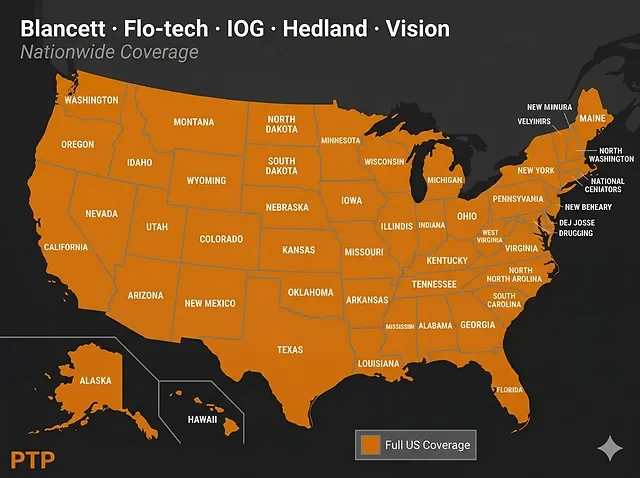
Nationwide: Authorized for sale across the United States, shipped from the Brooklyn warehouse
Prater Technical’s other product lines have their own coverage — see each brand’s page.
Specifications compiled by Prater Technical Partners from Hedland product datasheets.