About this category
SunWize Technologies — turnkey off-grid solar power for sites where the grid is unavailable, unreliable, or too costly to extend: pre-engineered Power Ready systems and custom-built solutions sized to a worst-month sunlight analysis, Class I Division 2 capable. Prater Technical Partners works with you to spec the right SunWize system from your load profile and site.
SunWize Remote Solar Systems
Click any Series box for details →
 Off-Grid Solar · Turnkey Systems
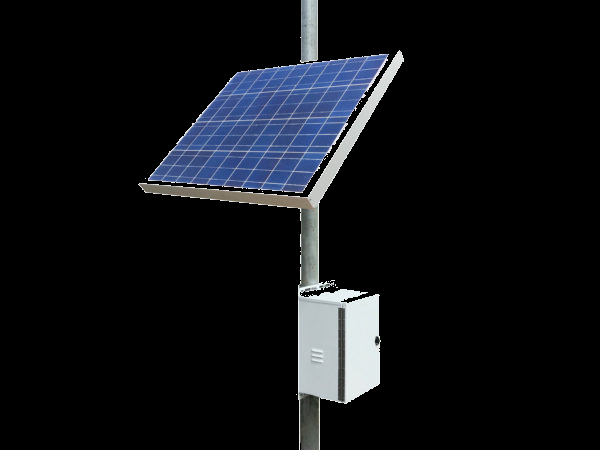
PRE Power Ready Express
65–650 W — Stocked configs, ship in days
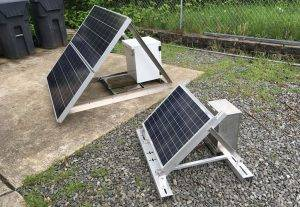
Rapid Deploy 1 kW System
1 kW skid — Set down & energize
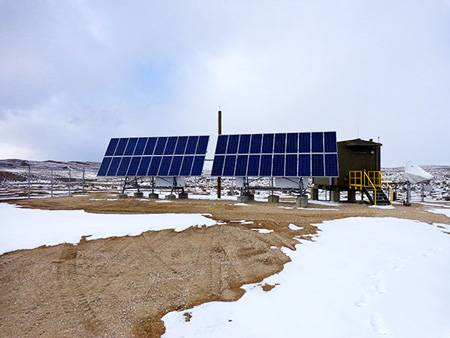
Power Station
Skid-Mounted
Skid-Mounted
Larger skid, 600 W–4.5 kW — Forklift/crane‑set
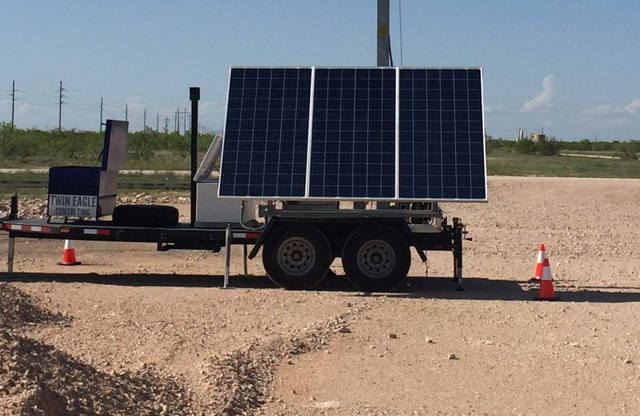
System Components & Options
Modules, batteries, controllers, mounts & enclosures
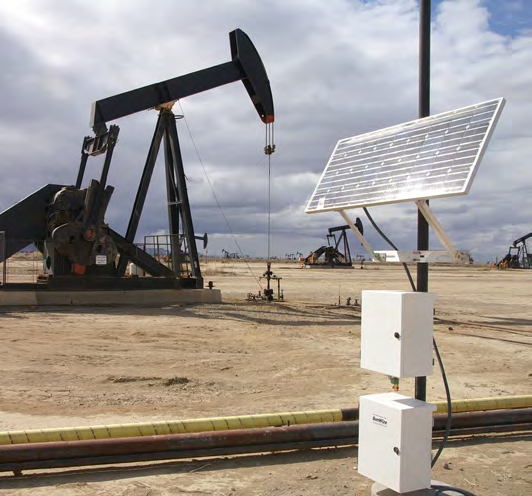
Power Ready
Custom-Engineered
Custom-Engineered
1–75 W standard, custom higher — Sized to your exact load & site
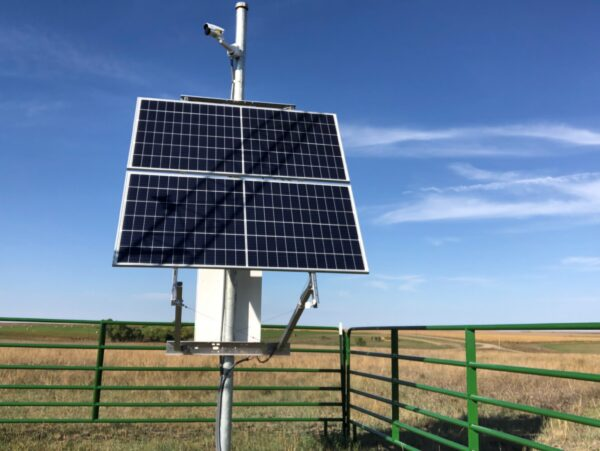
PVK Solar Kits
40/50/60 W
40/50/60 W
Panel + mount kit — Add a charge controller, battery & enclosure
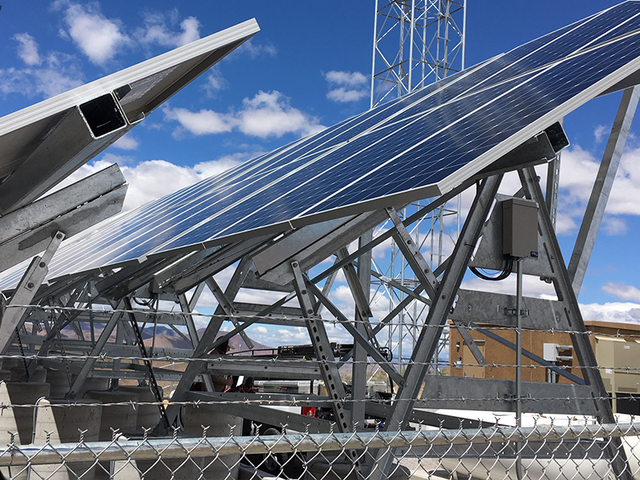
Hybrid
Solar + Generator / Fuel Cell / Wind
Solar + Generator / Fuel Cell / Wind
800 W–5 kW — Low‑sun / high‑load sites
Power Online
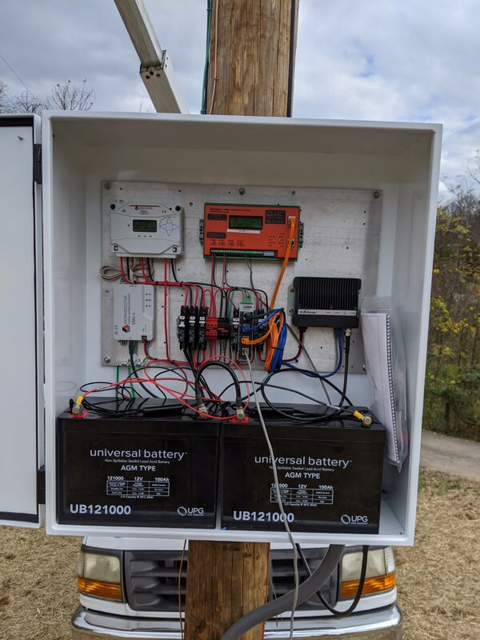
Grid Battery Backup
Grid Battery Backup
Backup for grid‑connected sites
Industries Served
Water & Wastewater
Oil & Gas
Telecommunications
Pipeline Monitoring
Transportation & DOT
Environmental Monitoring
Power Generation & Alternative Energy
Defense & Military
FAQ: SunWize remote solar power systems
How does an off-grid remote solar power system work?
A remote solar power system supplies electricity at a site with no utility grid, by making and storing its own. It has four parts: a solar (PV) array that converts sunlight to DC electricity; a charge controller that manages the power flowing into the battery; a battery bank that stores energy; and the load itself — the equipment being powered. During the day the array runs the load and charges the battery; at night and during cloudy stretches the load draws from the battery. An inverter is added when the load needs AC. The whole point of the design is that the array and battery are sized together so the system carries the load continuously, through the worst sunlight the site will ever see.
How is a remote solar system sized?
Sizing starts with two inputs: a load profile — how much energy the equipment uses per day, in watt-hours, including any duty cycle — and the site location, which sets how much sun is available. The key method is worst-month (worst-case) sizing: the system is designed against the month with the least usable sunlight — in the Northeast, typically December — so it carries the load year-round, not just in summer. From the worst-month sun-hours and the daily load, the engineering produces the array wattage, the battery capacity, and the charge controller. SunWize Power Ready systems are engineered to IEEE 1562 practice for 99.5 percent worst-case-month power reliability, with 5-day (120-hour) autonomy as the standard. SunWize's engineering team builds the bill of materials and integration package against that analysis. Give us the load and the site, and the system is sized to it — undersizing shows up as dead equipment in mid-winter, which is exactly what worst-month sizing prevents.
What is battery autonomy, and how many days do I need?
Autonomy — a/k/a days of autonomy or no-sun reserve — is how long the battery alone can run the load with no charging at all, through a stretch of dark, stormy, or snow-covered days. SunWize systems are sized for 2-day, 5-day, or 7-day autonomy. The right number is a judgment about the site and the consequences of an outage: 5-day is the common standard for SCADA, RTU, and traffic sites; 7-day is specified for critical service — pipeline monitoring, life-safety alarm chains, environmental monitoring in mountain or desert terrain where weather can shut out the sun for a week. More autonomy means a bigger, costlier battery bank, so it's matched to how critical the load is. Tell us what happens if the site goes dark, and the autonomy figure follows.
12 V, 24 V, or 48 V — which system voltage?
The DC system voltage is chosen mainly from the size of the load and the wiring runs. A higher voltage carries the same power at lower current, which means smaller conductors and less voltage drop over distance — so larger systems and longer cable runs favor 24 V or 48 V. 12 V is simple and common for small instrument loads and where the equipment is natively 12 V. Many remote loads (SCADA gear, telemetry, cathodic-protection rectifiers) come in 12 V or 24 V versions, and the system voltage is often set to match. SunWize systems are configured at 12 V, 24 V, or 48 V DC, with 120/230/240 V AC available through an inverter. Give us the load and where it sits relative to the array and battery, and the voltage is set accordingly.
What battery chemistry should I use — AGM, gel, or lithium (LFP)?
Three chemistries, three trade-offs. Sealed AGM lead-acid is the standard, value-tier choice — proven, widely available, good for moderate cycling. Gel lead-acid is also sealed and suits some deep-cycle and industrial duty. Lithium iron phosphate (LFP) costs more up front but earns it back on the right sites: far more charge cycles, much better performance in cold weather, lighter weight, and a longer design life — which makes it the choice for high-cycle loads and cold-climate or hard-to-reach installations where replacing a battery is expensive. The deciding factors are how hard the battery cycles, how cold the site gets, and how costly a service visit is. For an arctic or remote site that cycles daily, LFP's total cost of ownership often beats AGM despite the higher purchase price.
PWM or MPPT charge controller — which do I need?
The charge controller sits between the array and the battery. A PWM (pulse-width modulation) controller is simple and economical and works well when the array voltage is close to the battery voltage — typical of small systems. An MPPT (maximum power point tracking) controller is more sophisticated: it actively converts the array's output to extract the most available power and feed it efficiently into the battery, which matters when there's a voltage gap between array and battery, in cold weather (where panel voltage rises), and on larger systems where the harvest gain pays for the controller. As a rule: a small, low-cost, voltage-matched system calls for PWM; a larger system, a cold climate, or a site where squeezing maximum energy from the array matters calls for MPPT.
How do I power equipment in a hazardous (Class I, Division 2) location?
Oil-and-gas, pipeline, and some chemical sites are classified areas where electrical equipment can be an ignition source, so the solar power system has to suit the classification. SunWize offers Class I, Division 2 rated components — including a 445 W C1D2-rated solar module — and C1D2 sealed-enclosure options for the battery and electronics. The system is then engineered so the parts sitting inside the classified boundary carry the right rating, while parts that can be located outside it are placed accordingly. Cathodic-protection power for pipelines and tanks, methane-leak sensor power, and gas-transmission monitoring are common C1D2 applications. Tell us the area classification and we specify the components and the layout to it.
Does solar power work in the Northeast, and through winter?
Yes — provided the system is sized for winter, which is exactly what worst-month sizing does. The Northeast gets far less usable sun in December than in June, and a system designed only for the annual average would run short in winter. Designing against the worst month — plus adequate battery autonomy for cloudy stretches — is what makes a Northeast off-grid system reliable year-round. Snow is handled with adequate array tilt so snow sheds, and mounting height that keeps panels above drifts; cold actually helps panel voltage. SunWize systems are deployed across the full Northeast and Mid-Atlantic service territory, engineered to the local insolation. Winter is a sizing input, not a reason solar won't work.
Pre-engineered or custom-engineered — which should I buy?
It's a trade between fit and speed. A custom-engineered system (Power Ready) is sized and built specifically to your load and site — the right answer when the load is substantial, unusual, or critical, or the site is demanding; lead time runs into weeks. A pre-engineered system trades some fit for speed: the PRE (Power Ready Express) line is a set of stocked, published configurations of array, battery, and enclosure that ship in days rather than weeks, and the PVK solar kits (40 W, 50 W, 60 W) are shelf-stocked panel-and-mount bundles for small remote loads — telemetry, RTUs, signage. Choose pre-engineered when the load is small and standard and you need it fast; choose custom when the load profile or site justifies a system sized exactly to it. We can tell you quickly which category your site falls into.
What happens when there isn't enough sun — do I need a hybrid system?
When a site's load is large relative to its available sunlight — high-power telecom, or a low-insolation or heavily shaded location — a solar-only system would need an impractically large array and battery. A hybrid system solves that: solar carries the bulk of the energy (typically 30–80% of the annual total) and a secondary source covers the rest. The options are a fuel cell (such as the EFOY Pro 2800 methanol unit, 125 W, automatic), a propane or diesel engine generator, a wind turbine, or a thermoelectric generator, and the system automatically starts and stops that secondary source based on battery state of charge. Hybrid systems suit telecom BTS, repeater, and microwave sites in the 800 W–5,000 W range. The design choice comes down to the load size, the site's sun, and how often someone can visit to refuel.
What's a typical remote load — what can these systems actually run?
Remote solar systems are matched to the load, and most fall into recognizable bands. Small instrument and telemetry loads — a single SCADA/RTU site, a flow or level transmitter, a cathodic-protection rectifier, an environmental sensor station — run roughly 2 W to 50 W continuous, and are powered by compact systems or PVK kits. Traffic and ITS loads — RRFBs, school-zone and work-zone flashers, beacons — are similar, often duty-cycled dawn-to-dusk. Pipeline cathodic-protection rectifiers draw more, up to 24 V systems at 20–40 A. Telecom site loads are the largest at 800 W to 5,000 W, which is where hybrid systems come in. If you can give us the equipment's continuous wattage and duty cycle, those are the two most useful numbers for sizing.
How is a remote solar power system mounted and installed?
The mounting is chosen for the site. Pole-top and side-of-pole mounts are the most common for small systems — the array, and often the enclosure, go up a single pole. Ground frames and A-frames suit larger arrays where ground space is available. Skid-mounted systems (Power Station, Rapid Deploy) integrate array, battery, and enclosure on a galvanized steel skid with forklift pockets and crane points, so the whole system can be positioned and energized as one unit and relocated later. Roof mounting is available where that's the practical surface. Hardware is hot-dipped galvanized (stainless for coastal and chloride environments), and systems are engineered for local wind and snow loads. Many SunWize systems are designed to uncrate, position, and energize with minimal on-site assembly.
What maintenance does a remote solar system need, and how long does it last?
Remote solar systems are built for long, low-attention service — the design intent is years of unattended operation, with the critical-tier systems rated for a 20-plus-year design life. The components age at different rates. Solar modules last the longest — decades, with slow, gradual output decline. The battery is the wear item and the scheduled-replacement part: SunWize deep-cycle batteries are rated for greater than 500 cycles to 80% depth of discharge, with total life varying by site temperature and load — AGM typically needs replacement on a multi-year interval, LFP considerably longer. The charge controller protects the battery with a low-voltage load disconnect, factory-set at 80% depth of discharge for the battery type and system voltage. SunWize solar modules carry a 20-to-25-year warranty and the full system a one-year warranty. Routine attention is light: keep the array reasonably clear of snow and heavy soiling, and check battery and connections periodically. Cellular telemetry can be built in so the system reports its own battery state remotely — which, on a genuinely remote site, turns maintenance from a guessing exercise into a scheduled one.
How much does a remote solar power system cost?
Cost scales with the load: a system is the sum of array wattage, battery capacity (driven heavily by the autonomy days and chemistry), the charge controller, the enclosure and mounting, and any hazardous-location rating. PVK solar kits and stocked components are the low end; complete engineered systems — Power Ready, hybrids, and vertical-application systems — sit higher, sized to the load and site. Everything is quoted per application: tell us the load and the site, and we'll size and quote it.
Who invented the solar cell?
The photovoltaic effect — light generating electricity — was first observed by the French physicist Edmond Becquerel in 1839, at the age of nineteen. It took more than a century to turn into a practical device: the first useful silicon solar cell was developed at Bell Labs in 1954 by Daryl Chapin, Calvin Fuller, and Gerald Pearson, at an efficiency of around 6%. Early practical use was off-grid by necessity — powering spacecraft, and then remote terrestrial equipment like telecom repeaters and pipeline cathodic-protection sites far from any grid. That remote, off-grid role is exactly what the systems on this page do today.
Need an off-grid system scoped to your site & load? Talk to Scott — send directly to Scott Prater at scott@pratertechnical.com, or call him directly at 917-580-0878 during business hours.
Territory Coverage
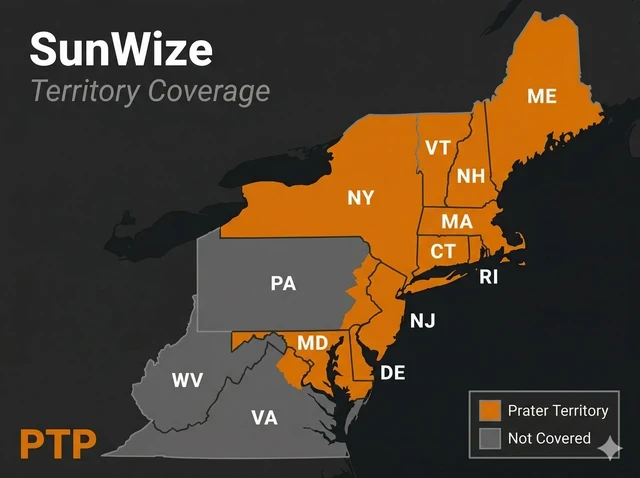
Coverage: Northeast & Mid-Atlantic United States — SunWize off-grid power systems are supported region-wide; send the site location and load profile and Prater will scope the system.
Territory applies to SunWize Technologies (Remote Solar Power). Other Prater product lines have their own coverage — see each brand’s page.
Specifications compiled by Prater Technical Partners from SunWize Technologies product literature.