About this category
Reuland Electric — American-made extreme-duty custom AC motors, built foundry-to-test in the USA since 1937: NEMA Design D high-slip and wound-rotor crane & hoist motors, high-speed test-stand and dynamometer motors to 60,000 rpm (EV and engine test), nuclear-rated and Mil-Spec marine, synchronous PM and reluctance, VVVF elevator-duty, and integrated gear motors and speed reducers — plus drop-in replacements for obsolete OEM frames, engineered to order with no minimum quantity. Prater Technical Partners works with you to spec the right Reuland motor, gearmotor & control package from your load, duty cycle, and environment.
Reuland Electric Motor Series
Click any Series box for details →
 Made in USA · Since 1937
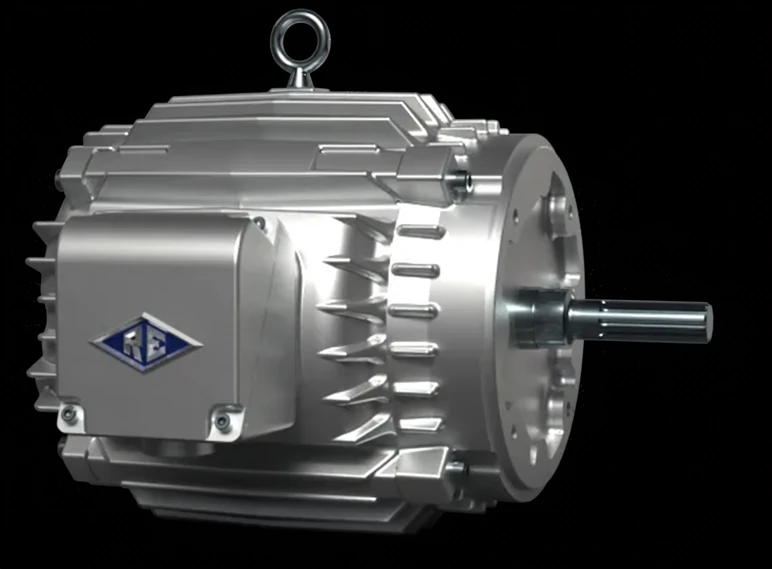
NEMA Design D High-Slip
Shock & pulsating loads — Presses & hoists
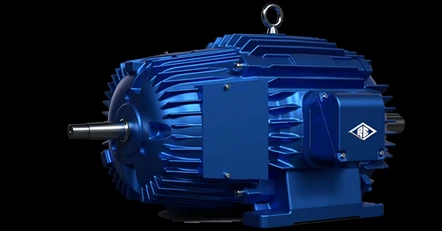
AC Wound Rotor / Slip Ring
Bridge & trolley drives — Adjustable rotor resistance
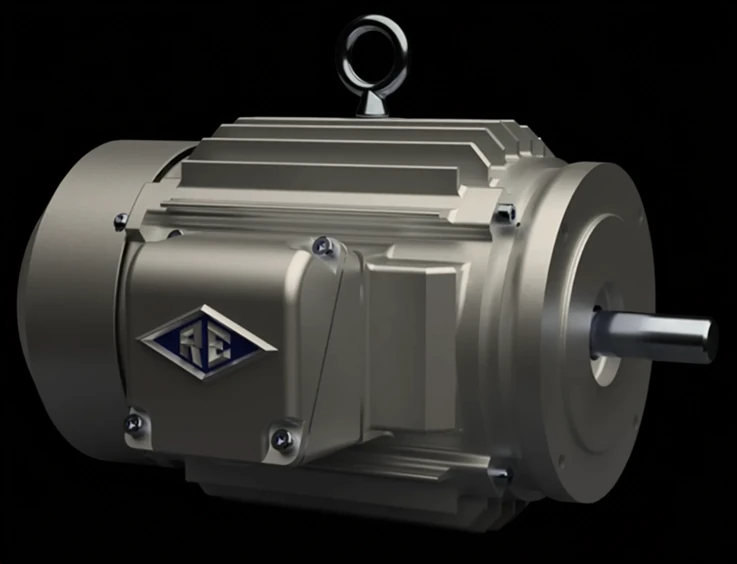
Overhead Crane & Hoist
Bridge / gantry / trolley — CMAA/HMI · SS‑100 VFD‑duty
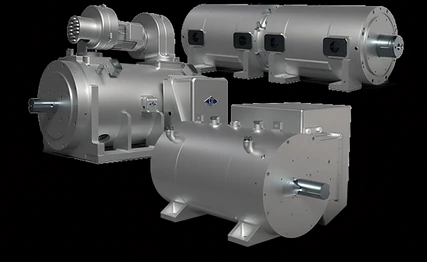
High-Speed Test Stand & Dyno
EV & engine test cells — Drive‑matched, to 60,000 rpm
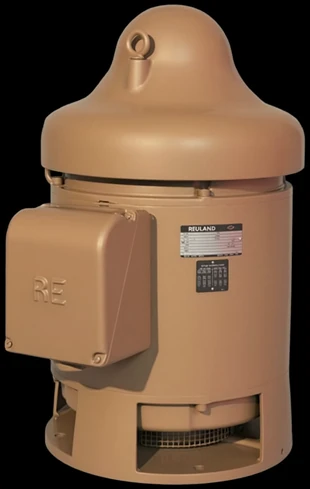
Dam & Sluice Gate Lift
Water control — Torque‑limited 190–210%
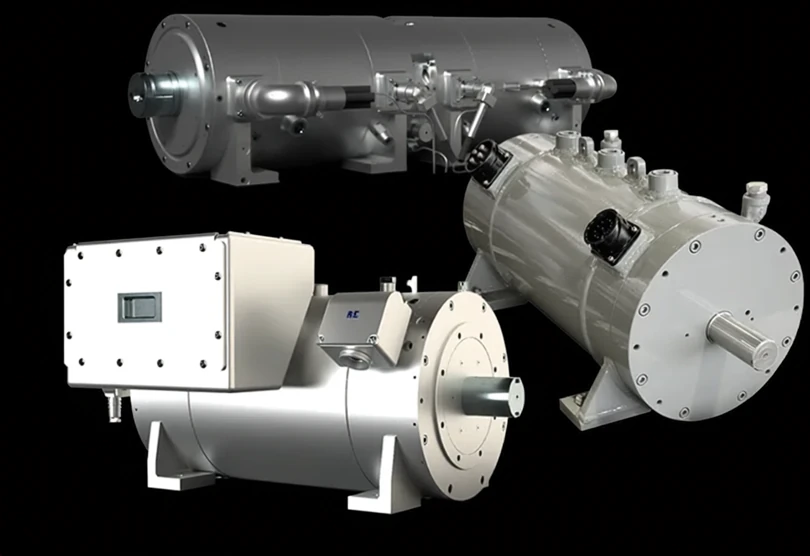
Line-Start & AC Synchronous PM
Efficiency retrofits — Exact speed, no slip
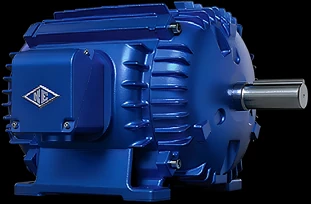
Inverter-Driven PM (IPM & SPM)
IPM to 1,000 HP — SPM to 30,000 rpm
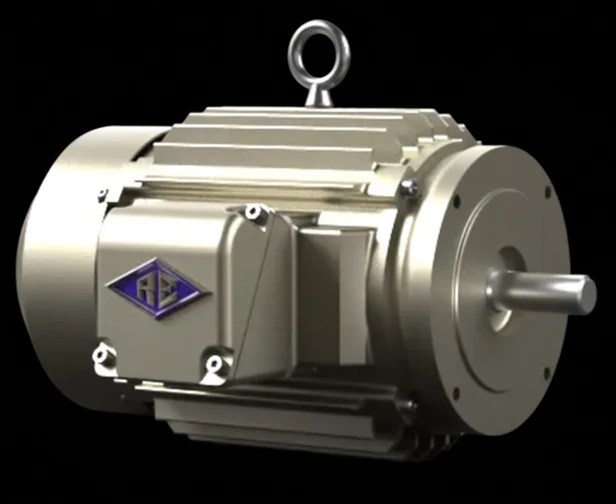
AC Synchronous Reluctance
Exact speed — No rare‑earth magnets
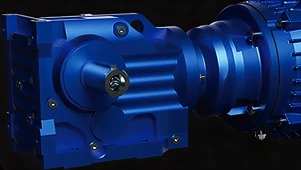
Gear Motors & Speed Reducers
Helical, bevel & worm — To 350,000 in‑lb
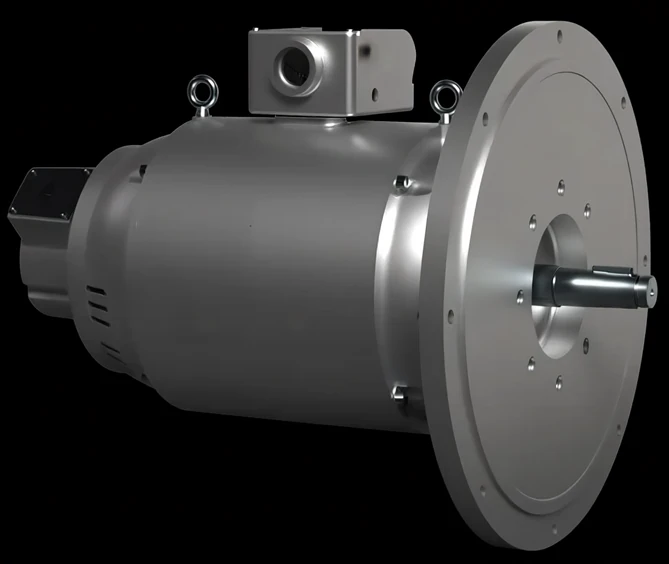
VVVF Elevator-Duty Motors
DC‑to‑AC drop‑in mod — CSA & NYCHA approved
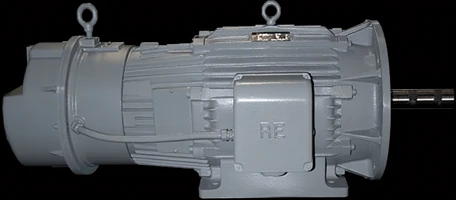
Mil-Spec Marine & Military
Shipboard — IEEE‑45, MIL‑STD shock
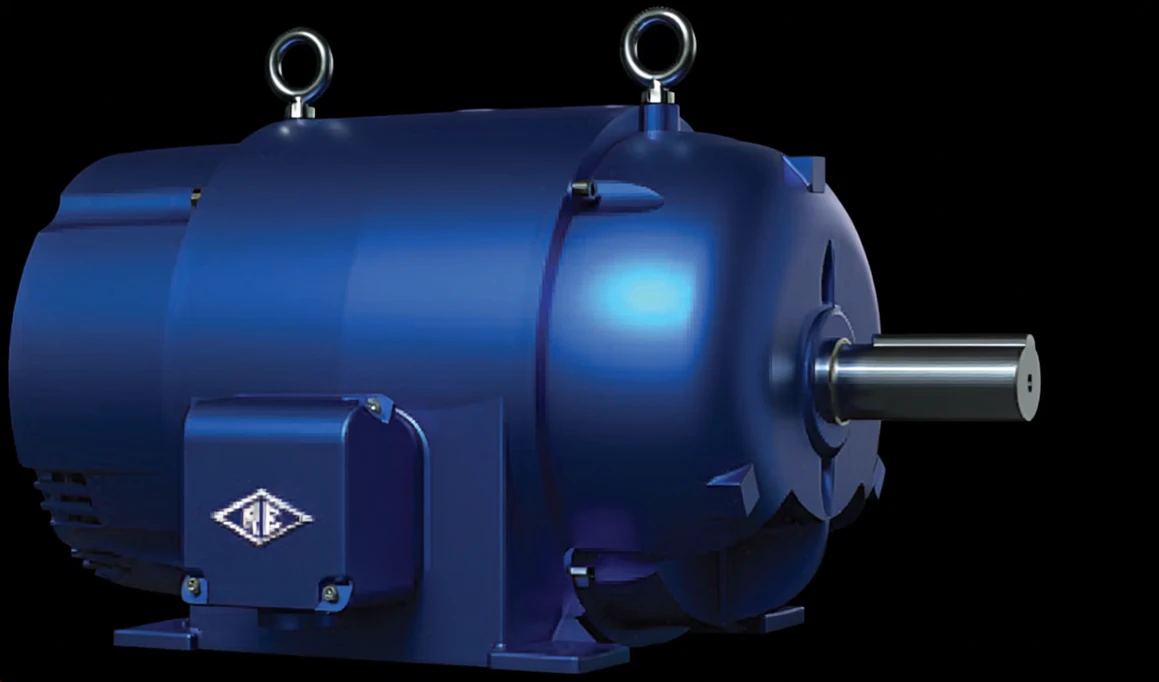
Nuclear-Rated AC
Reactor service — To 3.5×10⁹ rads TID
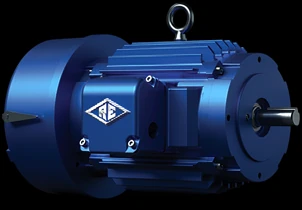
Integrated Brake Motors
Magnetic disc, spring‑set — 1.5–500 ft‑lb
Industries Served
Power Generation
Marine & Naval
Nuclear
Crane & Hoist
Metals & Steel
Mining & Minerals
Water & Wastewater
Oil & Gas
FAQ: Reuland Electric specialty & custom motors
What makes a motor "specialty" or "custom," and why not just buy a stock motor?
A stock motor is built to a catalog rating and sold from a shelf; it works well for ordinary loads. A specialty or custom motor is engineered when the application falls outside what any catalog covers — because the duty is extreme (shock loads, constant plugging, 60,000 rpm), the environment is severe (dirty environment or harsh loads, reactor service, shipboard, hazardous areas), the motor has to drop into an obsolete frame size installation no one builds anymore, or the performance simply isn't a stock option (a specific torque-speed curve, a non-standard voltage, a liquid-cooled high-speed design). High-speed and other specialized test-stand motors run to 60,000+ rpm and up to 1,500 HP, at frequencies to 2,000 Hz. Reuland Electric can derate a hoist-duty nameplate for actual drive voltage to reduce costs on drives, components and wiring. The frames are built with cast-iron frames or a full in-house aluminum foundry, with machining, winding, assembly, and test all in-house, and with no minimum quantity — one motor or thousands. The deciding question: has a stock motor failed in this service, or does the motor you need not exist as a catalog item?
What is NEMA design (A/B/C/D) and slip, and which do I need?
NEMA design letters describe an AC induction motor's torque-speed curve — how it behaves from start to full speed. Design B is the general-purpose workhorse: normal starting torque, low slip, good efficiency. Design C gives higher starting torque for hard-to-start loads like loaded conveyors and compressors. Design D is the high-slip design — it gives high starting torque and, crucially, 5–8% or 8–13% slip, which lets the motor speed drop under load instead of stalling or snapping the driveline. Slip is the gap between the motor's synchronous speed and its actual loaded speed. High-slip Design D is what you want for shock and pulsating loads — punch presses, hoists, dam gates, and other across-the-line applications where the load hits hard and the motor needs to absorb it. Tell us the load's torque demand and shock character and the design follows.
What is a wound-rotor (slip-ring) motor, and when do I need one?
In a standard induction motor the rotor is a fixed squirrel cage. In a wound-rotor (slip-ring) motor, the rotor carries windings brought out through slip rings to external resistors — and by changing that external resistance you can adjust the motor's starting current, starting torque, and speed. That makes it the answer for loads that need controlled, high starting torque without drawing a brutal inrush, and for speed control on heavy intermittent duty — classic uses are large cranes and hoists, including refuse and scrap-handling cranes on 120-minute or continuous duty. Reuland is one of the last U.S. manufacturers still building wound-rotor motors, with breakdown torque of 225% (continuous) to 275% (intermittent). Where a VFD isn't suitable or a wound-rotor is being replaced in kind, this is the motor.
How fast and how powerful can a test-stand or dynamometer motor go?
Very. Reuland is a leading supplier of motors for automotive and aerospace test stands and dynamometers, with designs reaching 60,000+ rpm and up to 1,500 HP (higher on consultation), at frequencies to 2,000 Hz. Reaching those numbers takes specialized construction: encapsulated rotors for ultra-high speed, ABEC-7 precision or ceramic bearings with oil-jet or mist lubrication, air/water/oil cooling, super Class H insulation with VPI, and integrated sensors for bearing and winding temperature, vibration, and coolant. Tilt-and-roll mounting supports driveline and chassis-dyno rigs, and tandem configurations double torque at speed. These are fully engineered to the test cell — applications range from EV traction-motor and transmission test to 60,000 rpm aerospace bearing rigs.
Synchronous, permanent-magnet, and synchronous-reluctance motors — what's the difference?
All three run at exact synchronous speed under load — no slip — which an induction motor cannot do. They differ in the rotor. A permanent-magnet (PM) motor uses magnets (samarium-cobalt or neodymium) in or on the rotor; it's the most efficient and power-dense — up to ~20% more efficient than an equivalent induction motor — and a line-start PM motor adds a squirrel cage so it can start across-the-line and then lock into synchronism. A synchronous-reluctance motor uses a specially shaped steel rotor with no magnets at all — robust as an induction rotor, with no rare-earth dependency, at some cost in power density. Choose PM when efficiency and power density are paramount and a magnet supply is acceptable; choose synchronous reluctance when you want exact speed and rugged simplicity without rare-earth magnets. Reuland builds both, plus high-power inverter-driven PM designs — interior-PM (IPM) to 1,000 HP and surface-mount (SPM) to 30,000 rpm.
How do I spec a motor for a hoist, crane, or movable bridge?
Lifting and movable-structure drives are defined by duty cycle and torque behavior, not just horsepower. They run intermittently — rated for 15-, 30-, 60-, or 120-minute duty, or continuous on heavy service — and they start and reverse under load constantly, so the motor must be built for that thermal and mechanical pattern. Reuland's crane and hoist motors are CMAA- and HMI-recognized, available as across-the-line, VFD-duty, or integrated-brake packages, and as drop-ins for Yale, P&H, Shaw-Box, and Detroit Hoist. One specialized case: dam and sluice-gate hoist motors are built with locked-rotor and breakdown torque deliberately capped at 190–210% — an off-the-shelf high-slip motor can develop enough torque to snap the gate cable, so the torque is limited by design. Give us the load, the duty cycle, and the structure, and the motor is specified to it.
What is a nuclear-qualified motor, and what does qualification involve?
A nuclear-qualified motor is one proven to perform in a reactor-service environment — which means surviving a lifetime radiation dose that would degrade ordinary insulation and materials. Reuland's nuclear-rated AC motors are built to withstand 3.5 × 10⁹ rads for the life of the unit, using a proprietary insulation system, cast-iron frame and end bells, a stainless-steel shaft, metal tags, and no Teflon or silicone rubber anywhere (both degrade under radiation). Qualification is documentation-intensive — it ties to 10 CFR 50 Appendix B quality assurance and IEEE-323/344 equipment-qualification standards — and the rating is available across Reuland's full range (single-speed, multi-speed, wound-rotor, high-speed, inverter-duty). Full application data is required for every nuclear quote, because the qualification has to be matched to the specific service and documented.
What's required for a marine, Navy, or Mil-Spec motor?
Shipboard and military motors are qualified against a stack of standards that ordinary industrial motors are not. Reuland's marine and military motors are built to IEEE-45 and Navy Service A, with MIL-STD-901 shock qualification, MIL-STD-167-1 vibration, and MIL-STD-740 airborne and structure-borne noise limits, plus MIL-M-17060G and related specs — and they are ABS (American Bureau of Shipping) and U.S. Coast Guard certified. Construction uses dripproof-watertight (DTWP) and marine-duty enclosures with sealed insulation systems to survive salt, humidity, shock, and vibration at sea. Because the qualification is specific, the spec process needs the vessel, the service, and the governing standards identified up front.
Can a specialty motor run on a VFD, and what should I watch for?
Yes — most of Reuland's motors are available in inverter/vector-duty configurations, and high-speed and synchronous designs are inverter-driven by nature. A few things matter when a motor runs on a drive. The winding insulation should be rated for the voltage stress a VFD's fast-switching waveform imposes — VPI Class H handles it. Bearing protection (and where needed insulated bearings) addresses VFD-induced shaft currents. And there's an efficiency opportunity often missed: a motor can be wound for the drive's actual output voltage rather than full line voltage, which can reduce drive and feeder cost. Tell us the drive model and how the motor will be operated — across-the-line, VFD, or both — and the winding and bearing spec are set accordingly.
How long do industrial motors last, and what maintenance do they need?
A well-specified, well-maintained industrial motor runs for decades. The two things that end a motor's life are bearing failure and insulation breakdown, and both are largely manageable. Bearings are the routine maintenance item: re-greasable designs need lubrication on schedule (over- and under-greasing both cause failure), and sealed bearings are chosen where maintenance access is poor. Insulation life is a function of heat and contamination — running within the rated duty cycle and ambient conditions, and keeping the motor clean and dry, is what preserves it; VPI windings resist moisture and contamination. The motors most likely to fail early are the ones mis-applied — wrong duty cycle, wrong enclosure, undersized for the real load — which is the case for specifying them properly in the first place.
What enclosure and insulation class should I specify?
The enclosure protects the motor from its environment: ODP (open drip-proof) for clean indoor service; TEFC (totally enclosed fan-cooled) — the industrial default — for dust, moisture, and outdoor exposure; TENV (totally enclosed non-ventilated) where no external fan is wanted; DTWP (dripproof-watertight) and marine-duty for shipboard; and explosion-proof builds for hazardous areas (Class I Div 1/2, Class II Groups E/F/G). The insulation class sets the motor's temperature capability — Class B, F, or H in ascending order, with VPI (vacuum-pressure impregnation) for a void-free, moisture-resistant winding; specialty and high-speed motors generally use Class H. Match the enclosure to the environment and the insulation class to the thermal duty — and on engineered motors both are specified per job rather than assumed.
What is motor duty cycle, and why does it matter?
Duty cycle describes how a motor is loaded over time, and it directly determines how the motor must be built — because the limit on a motor is heat. A continuous-duty motor runs at rated load indefinitely and is sized to shed that heat steadily. An intermittent-duty motor — rated for 15, 30, 60, or 120 minutes — is built for loads that run, then rest, so the motor cools between cycles; a hoist, a gate, a punch press. Apply a continuous motor to a hard-cycling shock load and it may be heavier and costlier than needed, or lack the torque character the load wants. Specialty applications specify duty cycle explicitly for exactly this reason — it's not a detail, it's a design input.
How do I replace an obsolete or discontinued motor?
Frequently the original manufacturer is gone or the frame hasn't been built in decades — Louis Allis, the old Westinghouse and GE industrial lines, P&H, Shaw-Box, Yale. Reuland Electric can manufacture a new motor to the obsolete frame — matching the mounting, shaft, and electrical characteristics so it drops into the existing installation, including Pre-U-Frame, U-Frame, and one-off configurations, with reverse engineering from the old motor where drawings are lost. Custom transition bases eliminate the need to fabricate adapter bases or change couplings. The path also covers DC-to-AC conversions and elevator modernization (VVVF replacements for Otis, Westinghouse, Dover and others). To start, send the old motor's nameplate, frame dimensions, mounting details and photos of the full motor from 5' away — the more data, the better for proper matching.
How do I get a custom motor — what do you need, and what's the minimum order?
There is no minimum quantity — Reuland builds one motor or thousands, all engineered to order. To produce a quote, the more application data the better: the load and what it drives, horsepower and speed, torque demand and shock character, duty cycle, voltage and frequency, the enclosure environment, mounting and frame constraints, and any governing standards (nuclear, marine, hazardous-area, CMAA/HMI). For a replacement, the old motor's nameplate and photos from 5' away. An application survey is available to walk through these questions. Because every motor is engineered and built in-house — foundry through final test — pricing is quote-only and lead time is set per job. Expedited lead times available based on factory capacity.
Who invented the AC induction motor?
The polyphase AC induction motor was developed in the 1880s, credited independently to Nikola Tesla — whose polyphase motor and system were patented in 1888 — and the Italian physicist Galileo Ferraris, who demonstrated the rotating magnetic field principle around the same time. The induction motor's simplicity and ruggedness made it the workhorse of industry, and the wound-rotor and synchronous variants followed soon after. The specialty motors on this page are direct descendants — the same fundamental machine, engineered for duties Tesla's era never imagined: 60,000 rpm test stands, reactor service, and naval shock qualification.
Need a custom Reuland motor spec? Talk to Scott — send directly to Scott Prater at scott@pratertechnical.com, or call him directly at 917-580-0878 during business hours.
Territory Coverage

New York: Full state
Connecticut: Full state
Massachusetts: Full state
Rhode Island: Full state
New Hampshire: Full state
Vermont: Full state
Maine: Full state
Connecticut: Full state
Massachusetts: Full state
Rhode Island: Full state
New Hampshire: Full state
Vermont: Full state
Maine: Full state
Territory detail above applies to Reuland Electric (Specialty & Custom Motors). Other manufacturer lines have their own coverage — see each brand’s page.
Specifications compiled by Prater Technical Partners from Reuland Electric product datasheets.