About this category
Flow Meters & Gas Detection covers the Badger Meter family of industrial flow-measurement and gas-monitoring products — the BlueEdge® suite spanning the complete water cycle: ModMAG electromagnetic, Dynasonics ultrasonic (clamp-on and inline), Vision & Blancett turbine and positive-displacement, Cox precision turbine, Hedland variable area, RecordALL sub-meters, AquaCUE AMI/AMR, Preso DP elements, Flo-tech hydraulic diagnostics, Telog telemetry, and ATi/GasSens gas detection. Prater Technical Partners is the authorized distributor for the Badger Meter family: the regional lines (including ATi/GasSens and Cox) cover Northern and Central New Jersey and New York, while Vision, Hedland, Blancett, Flo-tech, and Industrial Oval Gear are authorized for sale nationwide.
Applications
Flow Measurement — Badger Meter
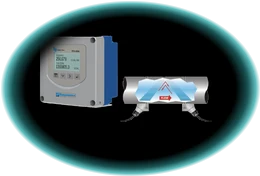
Clamp-On Ultrasonic Flow Meters
▼
Transit-time clamp-on measurement — no pipe cutting, no process shutdown
TFX-5000 fixed mount — pipes 1/2" to 48"; small, standard, Easy Rail, large-pipe, submersible (IP68) and high-temp transducer classes; flow or heating/cooling energy meter (with clamp-on RTDs)
TFX-500w — cost-effective, fixed-install water meter for pipes 1/2"–10" (DN250); potable, reclaimed, chiller, boiler feed, makeup
DXN-5P portable — hybrid transit-time/Doppler with Bluetooth SoloCUE; field verification, energy audits, entrained-air diagnostics. DFX Doppler for sewage, slurries and aerated fluids where transit-time fails.
Outputs: 4–20 mA, pulse/frequency, Modbus RTU, BACnet MS/TP; optional Modbus TCP/IP, BACnet/IP, EtherNet/IP, AquaCUE cellular endpoint
Liquid applications: water, glycol, chemicals, hydronic — temperature compensated
Ideal for retrofit where pipe cutting is costly or disruptive
Full pipe is mandatory for transit-time accuracy. TFX-500w is a fixed-install meter — use DXN-5P for portable work. PTP provides transducer sizing and spacing assistance.
Badger Meter — Dynasonics
View product line ›
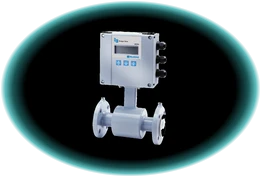
Magnetic Flow Meters
▼
Full-bore electromagnetic measurement for conductive liquids — water, wastewater, chemicals, slurries. No moving parts, no pressure loss, automatic zero stability, empty-pipe detection, bi-directional flow. Standard 4–20 mA analog, scaled pulse/frequency, and digital outputs on every model; NSF 61 Annex G listed.
M1000 — 1/4"–20" water & industrial meter; ±0.3% accuracy. Three sensor styles: flanged (Type II), wafer short-lay (Type III), and sanitary Tri-Clamp / DIN 11851. Drinking-water listed to NSF/ANSI 61 & 372, WRAS, ACS, KTW/DVGW. Optional data-logger kit.
M2000 — flexible transmitter with eight fieldbus protocols on plug-in daughterboards: Modbus RTU (RS-485), BACnet MS/TP, BACnet/IP, Modbus TCP/IP, EtherNet/IP, HART, Profibus DP, and M-Bus — over a base of Modbus RTU (RS-232) and encoder output. Optional data-logger kit.
M3000 — 1/4"–24" for oil, gas & industrial in Class I, Division 2 hazardous locations; NEMA 4X/6P (IP66/IP67). ±0.20% accuracy. Liners: PFA, PTFE, hard rubber, Halar. Electrodes: Alloy C, 316 SS, tantalum, Pt/Rh. FM and CSA approved.
M4000 — same performance envelope stepped up to Class I, Division 1 hazardous areas; 1/4"–12", NEMA 4X (IP66). ±0.20% accuracy. PFA, PTFE, or hard-rubber liners; same multi-material electrodes (Alloy C, 316 SS, tantalum, Pt/Rh).
M5000 — battery-powered transmitter for remote or off-grid installations where AC power isn’t practical. Serial interface auto-disables when idle to preserve internal Li-pol battery life.
AquaCUE connectivity — M1000 and M2000 provide Absolute Digital Encoded output for pairing with AquaCUE Flow Measurement Manager for remote monitoring, sub-metering reads, and alarm notifications — see AquaCUE below.
FC-5000 pairing & Field Verification Device — pulse/Modbus output feeds the FC-5000 Flow Computer for batching, or the FC-5000 BTU Monitor (adds BACnet + EN1434) for thermal-energy (flow × ΔT) in chilled-water and heating loops. Portable Field Verification Device (M1000 / M2000 / M5000) validates amplifier calibration, coils, electrodes, and I/O in-line — no meter pulled.
Requires minimum 5 µS/cm fluid conductivity (20 µS/cm for demineralized water). Not suitable for hydrocarbons, DI water, or non-conductive fluids.
Badger Meter — ModMAG M1000 · M2000 · M3000 · M4000 · M5000
View product line ›
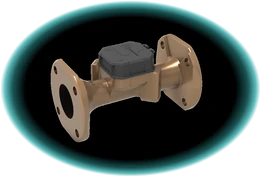
Inline Ultrasonic Flow Meters
E-Series G2 · Dynasonics U500w — wetted transit-time water meters
▼
Spool-piece transit-time design — no moving parts, ±1.5% accuracy over normal flow range
E-Series G2: lead-free bronze, 5/8×3/4" through 8" — flanged (3–8") or threaded (≤1"); pulse and passive 4–20 mA outputs
U500w: 316 SS or engineered polymer, 5/8" through 2" — threaded or elliptical flanged; AquaCUE-ready
Potable and non-potable cold water — NSF/ANSI 61 certified, AWWA C715 (E-Series G2); 175 psi max, 34–140°F
Battery powered (20-year life), sealed/tamper-protected, fully submersible — no external wiring required
E-Series G2 lead-free bronze replaces U500w stainless steel models (2025–2026 rollout). Engineered polymer U500w continues in 5/8" through 1".
Badger Meter — Dynasonics
View product line ›
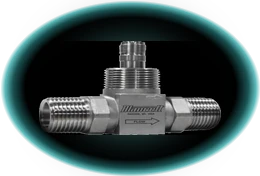
Blancett Turbine Flow Meters
1100 · QuikSert · Gas QuikSert · B16N FloClean — custody transfer, process, hazardous area, sanitary
▼
Precision axial turbine principle — helical rotor driven by fluid through inlet flow straighteners; magnetic pickup generates AC pulses per blade passage, producing output frequency proportional to volumetric flow; ±1% of reading for 7/8" and larger bores (±1% over the upper 70% of range for 3/8", 1/2", 3/4"), ±0.1% repeatability, 10:1 turndown; NIST-traceable water calibration on every meter (higher-accuracy and custom-viscosity calibrations available).
1100 Versatile (liquid, process) — 3/8" through 10", 0.6–5,000 gpm; 316 SS housing, CD4MCu rotor, tungsten carbide shaft and journal bearings; NPT, BSP, Victaulic, ANSI flange, Grayloc, or hose-barb end connections; 5,000 psi (NPT ≤2"), 3,000 psi (3"/4" Grayloc), 800 psi (3"–10" grooved); –150…350°F.
1100 Explosion-proof — Class I Div 1 Groups C, D per UL 1203 and CSA C22.2 No. 30; ANSI/ISA 12.27.01 “Single Seal” rating; MWP 5,000 psi at 350°F; developed for secondary oil recovery, water flood, and hazardous-area liquid measurement.
QuikSert (liquid, wafer) — between-the-flange wafer style in 3/8" through 10" line sizes; 0.6–3 gpm up to 500–5,000 gpm; 316/316L SS body, CD4MCu rotor, tungsten carbide internals; –150…350°F standard (to 450°F with high-temp pickup); pressure rating per ASME flange class (150# through 1500#); eliminates mating flanges for compact, one-person installation. An Explosion-Proof variant with hazardous-area pickup is available for Class I Div 1 service.
Gas QuikSert (gas, wafer) — dedicated gas variant, 2" wafer between ASME B16.5 flanges, 2,220 psig max; three rotor builds span 7–70 ACFM, 14–210 ACFM, and 35–350 ACFM; ±2% linearity (±1% system uncertainty with a Blancett flow monitor), ±0.5% repeatability; intrinsically safe and explosion-proof ratings for Class I Div 1 Groups C, D; dimensionally compatible with Cameron/NuFlo 2" wafer gas meter installations.
B16N FloClean (sanitary, Tri-Clamp) — 316L SS body with Tri-Clamp end fittings for pre-process food, beverage, and hygienic applications where high accuracy is needed without 3-A certification; bore sizes 3/8" through 1-1/2", flow 0.6–3 gpm up to 15–180 gpm; 1,000 psi (tri-clamp limited); –150…300°F; removable thrust bearings for easy cleaning and inspection; nickel-plated CD4MCu rotor, nickel-binder tungsten carbide shaft and bearings.
Displays, monitors & electronics — B3000, B2900, and B3100 flow monitors plus the newer B3150 explosion-proof monitor (ATEX / IECEx / FM / CSA c-us, HART 7, Modbus RS-485, USB configuration, through-the-glass keypad, 16-point linearization, loop- or battery-powered); IFC intelligent converters, K-factor scalers, and magnetic pickups complete the signal chain; solar-ready monitor option (external DC) for remote installations.
Badger Meter — Blancett
View product line ›
Blancett Positive Displacement Meters
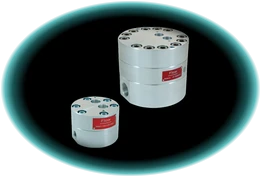
B1750 — aluminum or 303 SS, viscous fluids, fuels, chemical batching
▼
Positive displacement operating principle — fluid drives two meshing gears; a non-intrusive sensor produces a sine-wave pulse per tooth passage for direct volumetric measurement that is largely immune to viscosity changes and requires no upstream or downstream straight-run piping.
Accuracy & repeatability — ±0.5% of reading across the published flow range for fluids above 100 cP; 10:1 turndown from maximum flow for fluids below 30 cP (up to 400:1 turndown at full accuracy on select models with viscous fluids); ±0.1% repeatability.
Housing options — 6061-T6 aluminum standard (–20…185°F fluid) or 303 stainless steel for high-temp service (–20…400°F fluid); both rated to 5,000 psi; SAE 1-1/4" 6,000 psi 4-bolt flange available on B175-A80/S80 and B175-A90/S90 frame sizes.
Sizes & flow range — six frame sizes with 1/4", 1/2", 3/4", or 1-1/4" Female NPT end connections; flow ranges from 0.003–0.8 gpm (B175-A12, 1/4" bore) up to 1–120 gpm (B175-A90, 1-1/4" bore).
Typical fluids & seal options — lubricants, fuels, paints, solvents, resins, adhesives, and hydraulic oils; Teflon® O-ring standard, Viton® optional for aggressive-chemical compatibility.
Output & bi-directional capability — sine-wave pulse proportional to volumetric flow pairs with Blancett flow monitors, IFC intelligent converters, and K-factor scalers for totalization, batch control, and 4–20 mA retransmission; bi-directional flow measurement with appropriate electronics.
Calibration — NIST-traceable oil calibration standard on every meter with unique K-factor tag; custom-fluid calibration available on request.
Badger Meter — Blancett
View product line ›
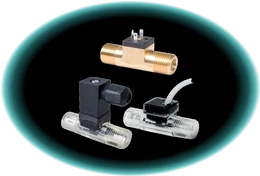
Ultra-compact turbine — ±3% accuracy, <0.5% repeatability; mountable in any orientation, no straight run required
BV1000: 1/4" push-fit (6 mm OD), NPT, or G; Trogamid or fiberglass-reinforced Grilamid (push-fit only) body; 0.026–0.65 gpm, 83,270 ppg — micro-flow dispensing and dosing
BV2000: 3/8" NPT, G, or O-ring (Trogamid); 3/8" NPT or G (brass); Trogamid 0.13–9.2 gpm across six flow ranges, brass 0.5–6.6 gpm — food/beverage, medical, cooling systems
BV3000: 3/4" NPT or G, 1.32–17.17 gpm — Trogamid; industrial cooling and process monitoring
362 psi max pressure, –4 to 212°F; NSF/ANSI/CAN 61 & 372 certified (BV1000, BV2000); BPA-free
NPN open-collector frequency output (Hall effect); 5–24V DC; up to 83,000 pulses/gallon resolution
Badger Meter — Vision
View product line ›
Vortex Flow Meters
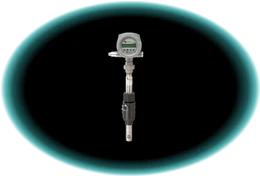
VN2000 · RVL — steam, gas, and liquid measurement
▼
Vortex shedding technology — no moving parts, dual piezoelectric sensors producing two independent flow signals; CNC-machined welded stainless steel with no internal O-rings or seals
VN2000 inline: 3/4"–8" flanged (ANSI 150/300) or 3/4"–6" wafer — ±0.7% of reading; mass flow and BTU/energy via internal RTD; optional bore reducers
VN2000 insertion: 2"–36" hot tap or 2"–24" compact — ±1.0% of reading; install/remove under pressure with optional extractor tool
RVL non-metallic inline: 1/4"–3" in PVDF or CPVC — liquid only, no metallic wetted parts; ultra-pure water, RO/DI, chemical injection, nonabrasive slurries
Process fluids & conditions — steam, compressed air, wet/dirty gas, DI water, chilled water; best for fluids under 20 cP; process temp –250 to 400°F, 1000 psi max
Outputs & communications — 4–20 mA, pulse, Modbus RTU, BACnet MS/TP; no recalibration required after startup
Campus and building steam submetering, chilled water BTU measurement, and compressed air auditing are common applications. PTP provides sizing assistance via Badger Meter's Vortex Sizing Application software.
Badger Meter — Vortex
View product line ›
IOG Oval Gear Meters
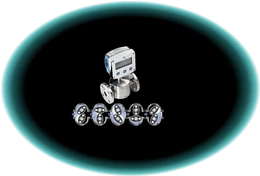
Positive displacement — chemical injection, viscous fluids, lubricants, solvents
▼
Oval gear positive displacement — directly measures actual volume; ±0.5% accuracy, ±0.03% repeatability; unaffected by viscosity shifts or pulsating flow
Sizes & flow range — nine sizes 1/8"–3" (including 1/4" LF and 1" HF), 0.0044–185 gpm; standard rotors to 1,000 mPas, high-viscosity (HV) rotors to 500,000 mPas
Body materials & connections — 316L SS (to 3,000 psi NPT/BSP), aluminum (to 2,000 psi), or PVDF (to 230 psi); 316 SS, PPS, or LCP rotors; flanged (ANSI 150/300, DIN PN16, Tri-Clamp) rated per size
Temperature & seals — −22…240°F (SS/aluminum, SS rotors), −22…176°F (plastic rotors), PVDF 14…140°F; seal options Viton, Aflas, Kalrez, or EPDM
Installation flexibility — no straight run required; mount any orientation; compact for tight pipework; fluids include chemical injection, produced water, lubricants, solvents, acids, resins, inks
Register options — ILR-700/701/750 local LCD (pulse, 4–20 mA, linearization), ER-420 scalable counter (4–20 mA, AC/DC/loop), ER-500 flow monitor (ER-500A adds Modbus RTU, up to 6-yr battery), advanced F-Series registers (F012 backlit, F018 HART 7.0, F131 batch + relays)
Hazardous area — intrinsically safe NPN/PNP and NAMUR sensors available; Class I/II/III Div 1 Groups A–G, ATEX Ex ia IIC T6–T4, IECEx
Badger Meter — IOG
View product line ›
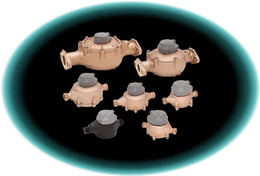
RecordALL Water Meters
Disc, turbo & compound — commercial and industrial water metering
▼
Disc Series (nutating disc PD) — 5/8"–2", 1/4–170 gpm; AWWA C700 (lead-free bronze) and AWWA C710 (engineered polymer); ±1.5% accuracy, ±0.5% repeatability, 150 psi max
Turbo Series — 1-1/2"–12", 2.5–8,800 gpm; AWWA C701 Class II; floating-rotor design; integral SS strainer std on 1-1/2", optional 2"–4"; external strainers available 2"–12"
Compound Series — 2", 3", 4", 6"; AWWA C702; PD disc + turbine with patented auto-crossover (no trigger valve); 0.5–2,000 gpm; ideal for facilities with wide demand swings (hospitals, universities, apartment complexes)
NSF/ANSI/CAN 61 & 372 certified lead-free bronze (potable water); Safe Drinking Water Act compliant; high-temp LCP option to 250°F on Disc M25/M70 (non-NSF)
Temperature: 32–120°F standard (Disc/Turbo), 105°F max (Compound); registers/encoders removable without disrupting service
Register options — mechanical sweep-hand (RCDL, non-resettable totalizer, visual only) or electronic: the HR-E LCD / HR-LCD high-resolution family covers encoded output for AMR/AMI endpoint pairing, encoder + 4–20 mA dual output, scaled pulse, and pulse + 4–20 mA dual output; separate ER-9 scaleable rate/flow counter with scaled pulse output (130°F max ambient operating temperature — external-mounted register, but electronics are still exposed to conductive heat rising from the meter body, so ER-9 is not spec'd for hot-water service); tamper-resistant Torx seal screws standard on all electronic registers. See RecordALL product page for full register selection and part-number detail.
AquaCUE with ORION Cellular LTE endpoints — cloud-hosted AMI/AMR with 15-minute interval reads transmitted over the cellular network; no fixed-network infrastructure required; ADE encoded input from HR-E LCD registers
Badger Meter — RecordALL
View product line ›
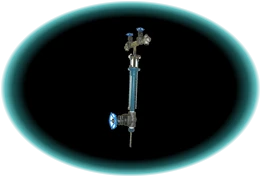
DP Flow Elements
Preso — averaging pitot, Venturi, segmented wedge & cone
▼
Ellipse averaging pitot — industrial: AR/AF (compression & flanged, non-hot-tap), AHL/AHF/AHZ (hot-tap threaded & flanged), AS/ASF/AHS (steam), AHR (low-pressure wet-tap); 2"–72" pipes, up to 800 psi / 800°F; probe widths 1/2", 7/8", 1-1/4", 2-1/4"; ±0.75% of reading, ±0.1% repeatability, 17:1 turndown, drag coefficient ≤0.32, single-point pipe entry
Ellipse averaging pitot — commercial grade: BAR (compression), BHL (hot-tap dual-rod), BHR (wet-tap w/ safety chain, 75 psig / 120°F), BIN (round pitot, ±3%); 2"–24", 400 psig / 250°F; TT3/TT5 transmitter manifolds optional (225°F max); integral 100Ω RTD option (480°F std, 1000°F high-temp)
Venturi — full-bore: LPL low-pressure-loss nozzle (±3% uncal / ±0.5% cal, 3% permanent loss, 35+ yr field history), SSM hydraulic nozzle (±1.0% / ±0.5%), SSL classical/Herschel (±0.75% / ±0.25%); 0.5"–60"+, liquid/gas/steam, CS or 316/316L; betas 0.35/0.49/0.63/0.75 or custom; 5D upstream / 2D downstream; optional NIST wet-flow calibration
Venturi — insert & commercial: VILPL / VISSL / VISSM short-form inserts (316/316L only, add only flange thickness to line, 3"–60"); CV commercial Series (2"–16", CS, 300 psig / 250°F, RF 150#/300# or NPT/butt-weld/grooved, beta 0.38 or 0.65)
Coin segmented wedge — butt-weld, flanged (RF 150–900#), Chem-Tee taps (slurry/fouling), NPT pressure taps, PCOW wafer (0.5"–4", narrow face-to-face), PCB back-to-back (bidirectional, compact, flange-integral taps); 0.5"–40"; ±3% uncal / ±0.5% cal, ±0.2% repeatability, 10:1 turndown, 800°F max, Reynolds as low as 300, viscosity to 3,000+ cP; ASME, ANSI B31.1, NACE MR-0175
Cone — flanged (1"–24"), wafer (1"–4"), butt-weld (0.5"–24"), socket-weld (0.5"–2"), threaded NPT (0.5"–2"); 304/304L or 316/316L SS, or A106 CS body; RF flange 150–900#; ±0.5% of actual flow, ±0.1% repeatability, 10:1+ turndown; beta 0.40–0.80; straight run typically 0–3D upstream / 0–1D downstream; no moving parts, minimal wear on cone edge
Shared options across the line: factory 5-point ±0.5% calibration or special calibration; instrument manifolds (3-valve or 5-valve); needle or gate-w/cross valves (CS or SS, steam-rated); hardcoating (tungsten or chromium carbide, on wedge or center 1/3); traceable material certs, NACE MR-0175 / MR-0103, PMI, hydrostatic, 5% or 100% radiography / magnetic particle / dye penetrant NDE
Badger Meter — Preso
View product line ›
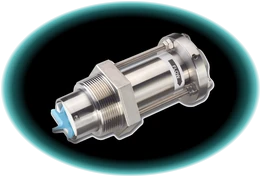
Impeller / Paddle Wheel Flow Meters
Data Industrial — insertion, hot-tap, tee-mounted, inline & BTU
▼
SDI Series (preferred insert, lead-free SS) — 1-1/2"–60" via a 1" NPT tap, 316SS (NSF/ANSI/CAN 61 & 372 certified) or brass wetted, PPS or PEEK tip, tungsten carbide shaft; ±1% of rate, ±0.5% repeatability, 0.15–6 m/s (0.5–20 fps); direct-insert or hot-tap (SS only, 1000 psi @ 70°F); four-blade non-magnetic impeller; outputs: 2-wire raw frequency (to 2000 ft without amplification), 4–20 mA loop-powered, or scaled pulse; bidirectional + LCD options; battery-powered version with 5-yr lithium cell and local or remote display
Series 200 Insertion (220BR / 220SS / 220PVCS) — six-bladed forward-swept impeller through a 2" NPT saddle or Threadolet®, 3"–40"+; admiralty brass, 316SS, or all-plastic PVC with 316SS trim for corrosives (220PVCS, 100 psi @ 68°F); 400 psi @ 100°F standard / 325 psi @ 300°F high-temp (PEEK housing); ±1% FS, ±0.3% repeatability, 0.5–30 fps; raw frequency pulse 3.2–200 Hz, 5 ms pulse width; IR direct-burial irrigation electronics option
Hot-Tap Series 225 / 226 — insert under pressure through an existing saddle without draining the line: 225BR with gate valve (300 psi @ 100°F), 226BR with ball valve (400 psi), 226SS with ball valve in 316SS (400 psi); 3"–40"; 1-1/2" factory-preset insertion depth; ball-valve 226 recommended for live hot-tap operations; otherwise identical electronics to the 220 series
Tee-Mounted Series 228 & 250 — complete flow body + sensor preassembled: 228BR (bronze tee, 2"/2.5", Class 125, 200 psi), 228SS (316SS tee, 2", Class 150, 300 psi), 228CB (cast iron tee, 2"/2.5", Class 125, 175 psi), 228PV (Sch 80 PVC tee, 1-1/2"/2"/3"/4", solvent-weld, NSF/IAPMO potable water); Series 250 compact cast-bronze female-NPT tee for small pipes 1/2"–1-1/2" (400 psi @ 100°F, ±1% of rate, 0.3–15 fps, 60:1 rangeability) — typical for BTU sub-metering, cooling tower chemical treatment, condensate return
Plastic Tee 735 & Inline 4000 — Series 735 economical PVC tee 1/2"/3/4"/1" with solvent weld or BSP adapter, 150 psig @ 73°F, ±3% FS, irrigation/IR electronics; Series 4000 tangential inline flow-through 1/2"/3/4"/1", PVC (350 psi @ 73°F) or PVDF (275 psi @ 65°F, compatible with SYGEF, Kynar®, Super Proline, Sanitech); documented 40-month continuous service in hot UPW; enhanced low-flow variant reads 0.25–8 fps; pulse or 4–20 mA loop-powered output; bearings and electronics field-serviceable without opening the pipe
Series 380DS BTU System — integrated flow sensor, two temperature probes, and electronics in a single brass tee (3/4", 1", 1-1/4", 1-1/2", 2"); transmits flow rate, flow total, energy rate, energy total, supply & return temp, and ΔT over Modbus RTU or BACnet MS/TP plus a scaled pulse output; fluid 20–260°F (230 psig @ 260°F, 400 psig @ –6.7°F); drop-in hydronic hot-water or chilled-water sub-metering at a fraction of discrete-component BTU system cost
Transmitters & flow computers — Model 310 programmable loop-powered 4–20 mA (±0.04% of reading, user-set filter); Model 320 programmable scaled pulse (50 ms–1 s width, isolated solid-state switch); Model 330 relay control for flow switch, booster-pump staging, leak detection, high/low alarm with adjustable deadband and 1–9999 s time delay; Model 340 BN/MB BTU energy transmitter (pulse + dual temp, 10 kΩ thermistor or 100/1000 Ω RTD, BACnet/Modbus); FC-5000 Flow Computer and FC-5000 BTU Monitor — panel-mount, backlit graphical display, 100-point linearization, Roshko/Strouhal temperature compensation, EN1434, Modbus RTU / BACnet MS/TP, up to 255 units on one RS-485 daisy-chain
Badger Meter — Data Industrial
View product line ›
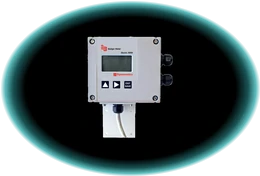
Open Channel Flow Meters
▼
Telog Raven-Eye 2 — advanced non-contact radar Doppler area/velocity meter with independent ultrasonic (and optional pressure) level sensor; velocity accuracy ±0.5% of reading with ±0.06 ft/s zero stability; velocity range 0.26–29.5 ft/s bidirectional; flow accuracy ±5% over 0–90% pipe fill; 4–26V DC low-power operation enables long battery life; RS-485 Modbus ASCII + 4–20 mA; IP68/NEMA 6P completely sealed polyurethane + SS enclosure; self-calibrating, no field maintenance, eliminates confined-space entry; pairs with Ru-35 for CSO/SSO monitoring, I&I analysis, and custody transfer billing
Telog Beluga A/V — submerged digital ultrasonic Doppler area/velocity sensor with advanced spectral velocity analysis; velocity accuracy ±1% with ±0.03 ft/s zero stability; range –6.56…19.68 ft/s bidirectional; integrated replaceable hydrostatic pressure level sensor (±0.25% FS, 0…6.56 ft range); Smart Velocity feature extends operation to shallow flow below 0.8" / 2 cm; side-mounted cable reduces flow-hydraulic disturbance; IP68 PVC-C with epoxy potting; RS-485 Modbus RTU/ASCII; pairs with Ru-35 or RS-45 (up to two sensors per logger) for partially filled pipes, surcharged sewers, and hydraulic modeling
Dynasonics IS-4000 — economical non-contact ultrasonic level meter for flumes, weirs & primary devices; preprogrammed tables for Parshall (1–60 in.), Manhole (4–12 in.), V-notch (30°/45°/60°/90°), contracted/suppressed rectangular, Cipoletti, Manning rectangle & pipe, and custom exponential channels; five level sensor options — DL10/DL24 ultrasonic (0.125–0.25 in. accuracy), ULM 53/70 ultrasonic, and C21 radar (±0.08 in., 0…49 ft range, ATEX ULM 70 option); 92–275V AC, Modbus RTU + Modbus TCP Ethernet, active/passive 4–20 mA, two open-collector digital outputs + solid-state relay, pump-control logic, 2 MB / 130,000-line datalogger; IP67 die-cast powder-coated aluminum; AquaCUE connectivity
Dynasonics IS-6000 — submerged pulse coherent Doppler area-velocity meter; eliminates construction and maintenance of weirs and flumes; velocity accuracy ±2% of reading (±0.1 ft/s in low range) with up to 32-cell velocity profiling; ±2% typical flow accuracy; bidirectional ±16.5 ft/s range; integrated velocity + level sensor (1.6–51" native, expandable via external 4–20 mA); round/U-shape/rectangular/trapezoid/egg/custom channels; 100–240V AC or 10–36V DC, Modbus RTU + Modbus TCP Ethernet, four 4–20 mA outputs, four relays, two pulse/frequency outputs; WiFi + web-browser setup (no app or software); 16 GB SD, 12-month onboard logging; IP66 aluminum; eliminates seasonal recalibration
Pairing electronics — Telog Ru-35 submersible battery-powered recording telemetry unit for standalone CSO/SSO event capture and portable flow studies; Telog RS-45 wastewater RTU for continuous, externally-powered (AC or solar) cellular telemetry with multiple sensor inputs (up to two Beluga A/V sensors per RTU); IFQ Monitor 1.5 local display/converter for Raven-Eye 2 and Beluga with two 4–20 mA outputs, optional Modbus RTU, optional 16 GB SD logger, and optional LTE cellular backhaul direct to FTP — useful where SCADA or Telog RM is not the target
Typical applications — wastewater treatment influent, in-plant, and effluent metering; combined / sanitary sewer overflow (CSO/SSO) event capture and billing; inflow & infiltration (I&I) analysis; stormwater and catchment/drainage area studies; industrial discharge; agricultural irrigation channels; aqueducts; water treatment plant reservoir intake
Selection guidance — Raven-Eye 2 for confined-space-free sewer monitoring with the highest velocity accuracy (±0.5%) and extended battery life; Beluga A/V for submerged area/velocity with integrated level and shallow-flow capability; IS-4000 where a primary device (flume/weir) is feasible and deterministic hydraulic calibration is preferred; IS-6000 for retrofit open channels and partially filled pipes without a primary device at a lower price point than radar solutions
Badger Meter — Telog · Dynasonics
View product line ›
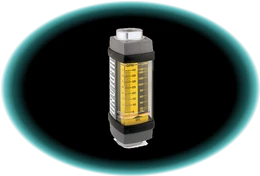
Variable Area Flow Meters
Hedland H-series · EZ-View · Flow-Alert · MR Transmitters · F6700/F6750 — hydraulic, phosphate ester, water, API/caustic, air & corrosive gas
▼
Spring-loaded variable area principle — sharp-edged orifice in a piston assembly forms an annular opening against a contoured metering cone; a magnetically-coupled external indicator tracks piston position against a 360° rotatable linear scale; ±2% full-scale accuracy (±7% FS for ¼" meters), ±1% repeatability; installs in any orientation with no straight-run or flow-conditioning requirements; 200 mesh (74 µm) filtration recommended
Petroleum fluids / hydraulic oil — H200·H600·H700·H760·H800·H860·H901 series — ¼"–3" sizes, flow range 0.02 gpm to 300 gpm, calibrated for 0.876 S.G.; aluminum (A) or brass (B) 3,500 psi max with 3:1 safety factor, T303 stainless (S) 5,000–6,000 psi; SAE J1926-1, NPTF, BSPP, and Code 61/Code 62 4-bolt flange ports; Viton pressure seals; optional reverse-flow by-pass (RF); High-Temperature variant (HT suffix) for continuous −20…+400°F and intermittent +400…+500°F service
Phosphate ester fluids (Skydrol, Fyrquel, HFD-R) — H294·H694·H794·H764·H864·H894·H898 series — ¼"–1½" sizes, flow range 0.1–150 gpm, calibrated for 1.18 S.G.; EPR pressure seals and Nylon guard (both required for phosphate ester compatibility — Viton and polycarbonate are not); same alloy and pressure options as petroleum series (3,500 psi Al/brass, 5,000–6,000 psi stainless); HT high-temperature variant (HR suffix for reverse-flow HT)
Water-based fluids, water & water/oil emulsions — H212·H612·H712·H782·H812·H882 (emulsions) and H204·H604·H704·H754·H804·H854 (water & general liquids) — ¼"–1½" sizes, flow range to 150 gpm, calibrated 1.0 S.G.; brass 3,500 psi (factory recommends brass body for emulsions below 20% oil content) or T303 SS 5,000–6,000 psi; Viton seals, polycarbonate guard; HT option to +400°F continuous
API oil, caustic & corrosive liquids — H231X·H631X·H731X·H741X·H831X·H841X series — ¼"–1½" sizes, 6,000 psi max (5,000 psi on ¾"–1½") with 3:1 safety factor; T316 SS body, piston, cone, fasteners, retaining ring and spring; Viton seals; NPTF (API oil 0.876 S.G. or liquids 1.0 S.G.) or BSPP ports; Hostile Environment option (HE suffix) — cylindrical Pyrex® glass guard, T316 SS indicator/bumper/end-caps/scale support, Teflon-coated Alnico-8 internal magnet; continuous −20…+400°F and intermittent +400…+500°F
Air, compressed gas, caustic & corrosive gas — H237X·H637X·H737X·H747X·H837X·H847X (T316 SS, 1,500 psi corrosive-gas service) and H270·H670·H770·H790·H870·H890 (aluminum/brass 1,000 psi or T303 SS 1,500 psi, general compressed gas) — 10:1 safety factor per NFPA/T2.6.1 R1-1991; standard multi-pressure flow scale calibrated SCFM at 100 psi / 70°F (L/sec at 6.9 bar / 21°C optional via S1 suffix); EP (extended inlet cap, plugged ¼" NPTF gauge port) and EG (extended inlet cap with 0–160 psi glycerin-filled gauge) options; 3" models (H971/H972) to 2,200 SCFM at 250 psi; 600 psi in-line test kits (TK suffix) with integral nickel-plated brass ball valve, chrome-plated ball, Teflon seats, and 0–160 psi gauge for pneumatic tool, cylinder, and compressor performance testing; optional sintered-bronze silencer
EZ-View® direct-read meters — polysulfone or Radel® R body, ½"–2" sizes — for petroleum oil and water service only; molded-sharp-edge orifice with calibration spring, indicator line read directly against scale on transparent body; C360 brass, T303 stainless, or Type 1 PVC fittings (NPT or BSPT); ±5% FS accuracy, ±1% repeatability; 325 psi / 22.4 bar max (140°F max on PVC fittings); +32…+250°F (0…+121°C) temperature range; Basic and Flow-Alert Reed-switch variants in both ½"–1" and 1½"–2" body sizes
Flow-Alert® flow switches (any H-series meter, F1/F2 or RS-prefix suffix) — NEMA 12/13 (IP52/54) anodized & epoxy powder-coated aluminum enclosure with polycarbonate lens, Viton® O-ring body seal, T303 SS fasteners; adjustable high-or-low setpoint over full flow measuring range; Micro-switch version (F1 single, F2 double) — pre-wired SPDT, 10 A @ 250 VAC / 0.5 A @ 125 VDC, 34" 4-wire (single) or 18" 7-wire (double) #16/18 AWG jacketed cable standard, 8-ft option; Reed-switch version (RS1NO, RS2NO, RS1NC, RS2NC) — SPST normally-open or normally-closed, 10 W max (NO) / 5 W max (NC), 50 VDC max, 0.5 A max, 15-ft shielded 4-wire #22 AWG PVC cable or 4-pin IP65 connector; ¼" strap-on retrofit option for small air meters
MR Flow Transmitters & F6700/F6750 Digital Display — MR transmitter (MR suffix): non-contact magnetic sensor in NEMA 12/13 aluminum enclosure, integrated 8-digit digital rate + totalizer display (0.70" numeric / 0.35" alphanumeric), three field-selectable analog outputs (0–5 VDC, 0–10 VDC, 4–20 mA) factory-calibrated to 4 mA / 0 V at zero flow and 20 mA / 5 or 10 V at full flow, 1:4000 resolution, 50 ppm/°C drift, loop-powered (4–20 mA, 30 VDC max) or 10–30 VDC target-powered, transmission to 1,000 ft on VDC outputs, CE/EMC 89/336/EEC compliant, US Patent 7,130,750, optional 5-point calibration certificate; F6700 (AC 85–250 VAC) / F6750 (DC 11–36 VDC) remote digital display — 5-digit 0.56" sunlight-readable red LED, 16-bit A/D, 20 readings/sec, 9-digit totalizer, built-in 24 VDC / 50 mA transmitter power supply, 2–16-point linearization, NEMA 4X / IP65 front; three plug-in card slots for analog retransmission (4–20 mA / 0–20 mA / 0–10 VDC), digital communications (RS232, RS485, Modbus, Profibus, DeviceNet), and setpoint alarms (dual Form-C 5 A, quad Form-A 3 A, or sinking/sourcing open-collector logic)
Badger Meter — Hedland
View product line ›
Smart Water Telemetry — Infrastructure & Consumption · Badger Meter
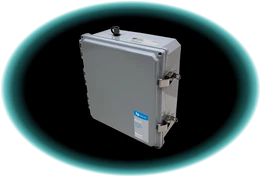
Remote Telemetry & Field Recorders
Infrastructure telemetry — Telog standalone recorders and cellular RTUs for pressure, level, flow, rainfall & wastewater network monitoring
▼
Standalone field recorders with local memory — HPR-32A hydrant pressure recorder and HPR-32iA with high-speed impulse / transient capture (for surge, water-hammer, and pressure-event analysis); PR-32A / PR-32iA pipeline pressure recorders; RG-32A tipping-bucket rain gauge recorder; all battery-powered, logged locally, downloaded via direct connection or paired with a cellular gateway when continuous telemetry is required
Cellular telemetry RTUs — Ru-32mA multichannel analog/pulse telemetry unit; Ru-32iMA with added impulse/transient channels; Ru-35 submersible recording telemetry unit (IP68, battery-powered, for CSO/SSO and I&I event monitoring); RS-45 wastewater RTU on external AC or solar power for continuous duty, multi-sensor input, and direct pairing with Raven-Eye 2 or Beluga open-channel sensors
Dual-mode architecture — every device logs locally first and operates standalone indefinitely; the same hardware optionally streams to Telog RM cellular backhaul, or exports to third-party SCADA via Modbus RTU / 4–20 mA / SDI-12; no re-engineering when a standalone asset is later promoted to continuous telemetry
Telog RM cloud platform — web-based Remote Monitoring portal for Telog Enterprise with alarm notifications, automated reports, trending, and mobile access; Telog Historian long-term data archive; Telog RM ArcGIS Connector surfaces live and historical sensor data as a feature layer inside Esri ArcGIS for GIS-based asset visualization and geospatial analytics
Typical deployments — water distribution pressure surveys, hydrant-based flow & pressure tests, pump station & well field monitoring, CSO/SSO event capture, rainfall-runoff correlation studies, inflow & infiltration (I&I) analysis, tank-level monitoring, and pressure-zone transient hunting
Sensor & SCADA integration — native pairing with Badger Meter open-channel sensors (Raven-Eye 2, Beluga) and pressure / level / flow transmitters from third parties; AquaCUE interoperability; Modbus RTU, 4–20 mA, pulse, and SDI-12 sensor inputs
Power & siting — long-life lithium battery packs for standalone recorders and Ru-35 (multi-year service between replacements); external AC- or solar-fed configurations for continuous-duty Ru-32/RS-45 installations; IP68 submersible housings for in-manhole and below-grade siting
Badger Meter — Telog
View product line ›
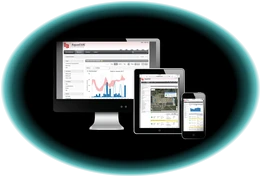
AquaCUE Flow Measurement Manager
Consumption telemetry — cloud-hosted meter-read aggregation, sub-metering & billing analytics
▼
Consumption-side telemetry platform — cloud-hosted Flow Measurement Manager that aggregates meter reads from ORION Cellular-paired Badger Meter flow meters (RecordALL Disc / Turbo / Compound, ModMAG electromagnetic, Dynasonics U500w / TFX clamp-on, E-Series ultrasonic) across distributed sites; single dashboard for sub-metering, consumption tracking, and billing analytics across campuses, multi-tenant properties, hotels & resorts, university housing, commercial and industrial portfolios, hydronic loops, turf and agricultural irrigation, storm water, and BAS enhancement
ORION Cellular LTE endpoints — one cellular endpoint per flow meter; standard configuration uploads hourly interval reads once per day via the cellular network (no fixed-network gateways or drive-by collection required); optional 15-minute interval data uploaded 4× daily for higher-resolution analytics; Absolute Digital Encoded input from HR-E LCD registers on RecordALL, and Twist Tight pairing with ModMAG, Dynasonics, and E-Series electronic meters
Dashboard & analytics — customizable multi-site dashboards with filters by tags, account, location, and meter type; hourly / daily / monthly / yearly consumption views; temperature and precipitation overlays for weather-normalized analysis; historical averages, week-over-week comparisons, and exportable reports for documentation and billing reconciliation
Alerts & exception monitoring — configurable leak detection (continuous-flow alarms, low-flow thresholds), reverse-flow and tamper alerts, and user-defined exception conditions; notifications via email or SMS; map-view site markers with real-time leak indicators (e.g., "Leak detected: 0.9 gal/hr") to surface issues before they escalate into property damage or operational loss
EyeOnWater consumer engagement — optional tenant-facing extension available exclusively through AquaCUE; gives sub-meter occupants, residents, or end-users direct access to their own consumption data via web portal and native iOS / Android mobile apps, with hourly / daily / monthly / yearly views, week-over-week comparisons, weather overlays, and configurable email or SMS leak alerts — promotes conservation behavior and reduces inbound usage-question volume to property management
Security, compliance & integration — cloud-hosted architecture, ISO 27001 certified and SOC 2 examined for security, availability, and confidentiality; automatic software updates; REST API for integration with BAS, SCADA, billing, and property-management platforms; browser-based access from any device with no local client software to install or maintain
Service & engagement model — per-endpoint Monthly Data Service fee invoiced annually, tiered from $7.00/unit at 1–10 endpoints down to $1.03/unit at 251–500 ($100 minimum invoice); one-time Engagement Fee covers software, account setup, and web-based training (tiered $1,000 at 1–10 endpoints to $5,000 at 251–500); Badger Meter site survey available to scope endpoint locations using cellular coverage and propagation analysis
Complements Telog infrastructure telemetry — AquaCUE (consumption-side: meter reads from ORION-paired flow meters) and Telog (infrastructure-side: standalone pressure, level, flow, and rainfall recorders plus cellular RTUs) are the two halves of the Badger Meter telemetry stack; Telog RTUs can pair natively with AquaCUE for combined operations visibility across the distribution network and the endpoints it serves — see Telog accordion above
Badger Meter — AquaCUE · EyeOnWater · ORION
View product line ›
Precision Turbine Flow — Cox
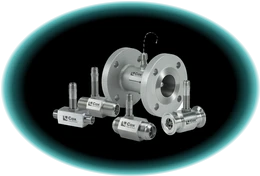
Cox Precision Turbine Flow Meters
CDL/CDX · CPT · CLF — aerospace, R&D, custody transfer
▼
Cox Exact (CDL/CDX) — Dual rotor, 1/2"–4", ±0.1% accuracy, Strouhal-Roshko viscosity compensation. RF Carrier pickoffs with optional thermistor or RTD for temperature-compensated flow computing. AN flare, NPT, or 150# ANSI RF flange. Remote (CDL) or integral (CDX) electronics.
Cox Precision (CPT) — Single rotor, 1/2"–2" (bore sizes from 1/4"), hybrid ceramic ball bearings. RF or MAG pickoffs, –450°F to +450°F range. AN flare, NPT, or 150# ANSI RF flange (1"+).
Cox Precision LoFlo (CLF) — Single rotor, 3/8", six flow range variants for ultra-low flow measurement. AN flare connections.
Calibration — all Cox meters include 10-point MIL-PRF-7024 calibration; multi-viscosity and custom fluid calibrations available
Flow computers & straighteners — EC80, FC-5000, and FC30 flow computers; flow straighteners in AN and 150# flange configurations
Applications: Aerospace fuel flow, custody transfer, chemical batching, test & measurement, laboratory, R&D flow loops, military/defense.
Cox Instrument Group
View product line ›
Hydraulic Test & Diagnostics — Flo-tech
Hydraulic Diagnostics
Flo-tech — turbine-based diagnostic testers, sensor arrays & digital displays
▼
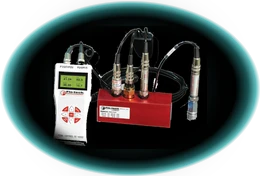
Hydraulic diagnostic platform — turbine-based technology measuring flow, pressure, and temperature simultaneously from a single line break in hydraulic oil and compatible liquids; typical applications include pump / motor / valve / cylinder testing, hydrostatic drive evaluation, power-steering diagnostics, test-stand monitoring, and preventive-maintenance trending across mobile (agriculture, construction, forestry, mining, marine) and stationary systems; ±1% of reading accuracy at 32 cSt, ±0.2% repeatability, ≤200 ms turbine response; calibrated on 0.876 SG / 150 SUS (32 cSt) hydraulic oil; functional viscosity range ~25 to 500 SUS (2 to 110 cSt); NIST-traceable 5-point (F001109) or 10-point (F001110) certificates optional
MC4000 Handheld System Analyzer — flagship portable diagnostic with five sensor inputs (turbine flow, two pressures P1/P2, temperature, RPM); back-lit 128 × 64 graphic LCD; 2.5 MB internal datalogger (up to 80,000 samples across all channels, selectable 1 s … 120 min sample rate); dual 1 ms fast-transient recorders monitor P1 with 240,000-sample capacity and programmable 0–100% trigger; automatic hydraulic HP / kW calculation from flow × pressure; tare (zero-offset) and 3-point flow calibration; USB upload to PC via MC4CON utility; 6V / 2 Ah rechargeable battery (~4 hr operation); English + Spanish / French / German / Italian language options; pressure sensor ranges 60 / 100 / 250 / 400 bar (870 / 1,450 / 3,625 / 5,800 psi); eight flow-range options from SAE 8 / G 1/4 (0.4–7 gpm) through SAE 20 / G 1-1/4 (8–160 gpm)
PFM6 & PFM6BD portable testers — compact self-contained testers with large 3½-digit LCD (flow and temperature), dual-scale helical-tube pressure gauge (pulsation-dampened, high overpressure capacity, ordered in PSI / Bar / MPa / kg/cm²; standard or CE); fingertip loading valve with internal pressure-surge relief (7,500 psi ΔP bypass); platinum RTD temperature sensor; ~50 hr AA battery service; five flow ranges 1–15 / 2–30 / 3–60 / 4–85 / 7–199.9 gpm (4–56 / 7.5–113.6 / 12–227 / 15–321 / 26–757 lpm) with SAE 12 / 16 / 24 or BSPP G 3/4 / G 1 / G 1-1/2 ports; operating pressure to 6,000 psi (414 bar); fluid temperature −4 to +300 °F (−20 to +150 °C); PFM6BD variant adds bi-directional measurement on SAE 16 and SAE 24 sizes (±1% FS forward, ±2% FS reverse)
F6100 Sensor Array with load valve — fixed-mount version of the portable tester built around the same turbine with integrated load valve for creating flow restriction during pump/motor efficiency testing, internal-leakage evaluation of valves and cylinders, or relief-valve setting verification; signals available as raw magnetic-pickup frequency, 4–20 mA (IFC), or 0–5 VDC (IFC); optional F6301 pressure sensor (1,000 / 3,000 / 5,000 / 6,000 psi ranges, 4–20 mA output, NEMA 4X 300-series SS enclosure) and F6310 RTD temperature sensor (−40 … +350 °F fluid, 4–20 mA); eight models covering SAE 12 / 16 / 24 and BSPP G 3/4 / G 1 / G 1-1/2
Activa™ & Ultima Sensor Arrays — compact fixed flow + pressure + temperature arrays for OEM and test-stand integration (no integral load valve); Activa has the IFC (Intelligent Frequency Converter) built in with 4–20 mA or 0–5 VDC flow output, 1:4000 resolution, 10–30 VDC supply; Ultima uses a raw magnetic pickup providing frequency output native to Flo-tech F6600 / F6650 displays; four flow ranges each (SAE 8 / 12 / 16 / 20 or BSPP G 1/4 / G 3/4 / G 1 / G 1-1/4) from 0.4 to 160 gpm (1.5 to 605 lpm); pressures to 5,800 psi (400 bar); Buna N standard seals, Viton® or EPR optional
Classic & Quad turbine flow sensors — Classic series covers 0.4–350 gpm (1.5–1,324 lpm) across three body lines: FSC high-strength anodized aluminum (5,000 psi, SAE ports), FSB aluminum with SAE Code 61 4-bolt flanged ports (5,000 psi), and FSD Stressproof® steel with SAE Code 62 high-pressure flanged ports (6,000 psi) with tungsten-carbide journal bearings; each ordered with standard magnetic-pickup frequency, 4–20 mA, or 0–5 VDC (IFC) output; Quad F2000 series adds bi-directional flow via dual transducers 90° electrically out of phase, used as speed/position feedback on mobile equipment and in linear-positioning control loops
F6600 / F6650 & F6700 / F6750 digital displays — panel-mount displays with AC (85–250V, 50/60 Hz) or DC (11–36V) power, sunlight-readable red LED, built-in 12–24V regulated transmitter power supply, three expansion card slots, NEMA 4X / IP 65 enclosure, CE-compliant; F6600/F6650 takes frequency input (0.01 Hz–34 kHz, 80 mV p-p trigger), 6-digit display, ±0.01% rate accuracy; F6700/F6750 takes 4–20 mA or 0–10V DC analog input, 5-digit display, 16-bit A/D, selectable 2–16-point linearization; optional output / comms cards include 4–20 mA, 0–20 mA, 0–10V DC, RS-232, EIA-485, Modbus, Profibus, DeviceNet; setpoint alarm cards with dual Form-C relays (5A), quad Form-A relays (3A), or sinking / sourcing quad open-collector logic outputs
F5162 hazardous-area pickup — ATEX, IECEx, and CSA w/NRTL/C certified magnetic pickup enabling intrinsically-safe turbine-meter deployment in classified areas; 300-series stainless steel housing with solid epoxy encapsulation, 2-pin MS3106-10SL-4S connector, 430F SS pole, ~325 Gauss magnetization, 1,450 Ω ±10% coil resistance, 55 mVrms minimum output, −150 … +330 °F (−50 … +175 °C) operating range, 500V AC dielectric strength pin-to-case; pairs with Flo-tech Classic, Activa, and Ultima turbine sensors for chemical, oil & gas, petrochemical, and refining hydraulic systems
Accessories, materials & typical industries — F5140 K-Factor Scaler (field-adjustable frequency divider; required on smallest sensors to amplify signal for F6600/F6650 displays, also converts frequency to alternate engineering units); standard 6-ft or 15-ft cables (F2832 / F6234 / F6557) with 2-pin MS, 3-pin, or 5-pin connectors; standard housings 6013-T651 anodized aluminum, T416 stainless rotors, 440C SS ball bearings (tungsten-carbide journal bearings on FSD), Buna N seals with Viton® or EPR options, SAE J1926/1 or ISO 1179 (BSPP) ports; typical industries include test-and-measurement laboratories and calibration facilities, OEM hydraulic test stands, mobile equipment service (agriculture / construction / forestry / mining / marine), oil & gas / refining / petrochemical hydraulic systems (F5162 hazardous-area pickup), automotive and aerospace test benches, and plant maintenance teams running pump / motor efficiency baselining
Flo-tech (Badger Meter)
View product line ›
Gas Detection — ATi · GasSens
Gas Detection Monitors
ATi · GasSens — fixed, portable & system gas detection
▼
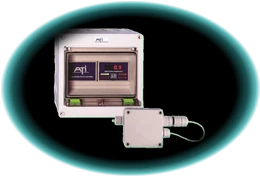
ATi D12 Gas Transmitter — Explosion-proof fixed transmitter for 40+ electrochemical or combustible gases. Integral, remote, heated, or duct-mount sensor holders. HART or Modbus RS-485 output. Optional alarm relays. Replacement for legacy A12 series.
ATi D12Ex-IR Infrared Gas Transmitter — NDIR sensor technology for CO₂ (0–50%), combustible gas / methane (0–100% LEL), nitrous oxide, and high hydrocarbon. Explosion-proof with optional HART or Modbus.
ATi F12iS / F12/D Gas Transmitters — F12iS: intrinsically safe 2-wire for classified areas (Class I Div 1 Groups A-D). F12/D: non-IS with AC/DC power, alarm relays, and Modbus. Both use interchangeable electrochemical smart sensors. LCD graphic display, internal data logger.
ATi D16 PortaSens III — Portable multi-gas detector with interchangeable plug-in smart sensor modules. 60+ gas types from PPB to percent range. IR sensors for CH₄ and CO₂. Color touchscreen, NiMH rechargeable, 4 GB USB data logging.
ATi E12-15 IR High Range Ammonia Detector — Infrared absorption for ammonia monitoring from PPM to explosive levels (0–15%). No routine calibration, no poisoning, operates in oxygen-free environments. Ideal for engine rooms, emergency vents, refrigeration.
ATi A14/A11 Modular Gas Detector — Multi-channel receiver/transmitter system, 1–12 sensors. General purpose or explosion-proof. Auto-test generators available. Sensor/transmitters up to 1000 feet from receivers.
GasSens Midi Gas Monitoring System — Centralized controller for up to 64 addressable ATi sensors via 4-core CANbus. Networkable to 1,024 points. 8 configurable relay zones, Modbus RS-485, event logging. Commercial, industrial, and hazardous area applications.
ATi IsoMon Dual-Channel H₂O₂ Monitor — Simultaneous high-range (0–2000 ppm) and low-range (0–100 ppm) hydrogen peroxide monitoring for pharmaceutical isolator decontamination validation. RS-232 data logging, programmable intervals.
ATi B12 / B14 Transmitters & Alarm Systems — B12: 2-wire loop-powered toxic gas transmitter, 40+ gases, NEMA 4X or explosion-proof. B14: multi-channel alarm receiver, 1–12 channels, configurable relays.
ATi Sampling & Calibration — A21 and Dri-Gas (C21) gas sampling systems for duct and remote monitoring. A23-14 ozone standards generator. Calibration kits for 12+ gases in 17L or 57/103L cylinders.
Applications: Water/wastewater treatment (Cl₂, O₃, H₂S), semiconductor fabs (hydrides, toxic gases), pharmaceutical (H₂O₂ decontamination), chemical processing, food & beverage (CO₂, NH₃), oil & gas (LEL, H₂S), laboratories, parking structures. All current-production transmitters share the H-Series interchangeable smart sensor platform.
ATi · GasSens (Badger Meter)
View product line ›
FAQ: flow meters & gas detection
How does a flow meter work, and what are the main types?
A flow meter measures how much fluid moves past a point — either the velocity (which, with the pipe area, gives volumetric flow) or the volume directly. There is no single "flow meter"; there are several physical principles, each suited to different fluids: magnetic meters use Faraday's law and a magnetic field to read the velocity of a conductive liquid; turbine & impeller meters spin a rotor whose speed tracks flow; ultrasonic meters use transit time or doppler sound waves traveling with and against the flow; vortex meters count eddies shed off a bluff body; positive-displacement meters (gear, oval-gear, nutating-disc) trap and count discrete volumes; differential-pressure elements (orifice, Venturi, averaging pitot, cone, wedge) infer flow from a pressure drop; radar, velocity and ultrasonic based meters measure partially filled & open channels; and variable-area meters (rotameters) float an indicator against a tapered tube. The right choice depends on the fluid, the accuracy you need, and the pipe — which is the next FAQ.
Which flow meter technology should I choose?
Start from the fluid and the pipe, not the brand:
- Magnetic (ModMAG M-Series) — conductive liquids: water, liquid food ingredients, chemicals, wastewater, slurries. No moving parts, no pressure drop, no straight-run-hungry. Will not work on hydrocarbons or pure water (see conductivity, below).
- Turbine (Blancett, Cox) — clean, low-viscosity liquids and gases where you need high accuracy and custody-transfer-grade repeatability.
- Clamp-on ultrasonic (Dynasonics TFX) — retrofit on existing pipe with no shutdown, no penetration; water, glycol, hydronic, BTU energy.
- Vortex (VN2000) — steam, compressed air, and gas; rugged, no moving parts.
- Positive displacement / oval gear (Blancett B1750, IOG) — viscous fluids, fuels, lubricants, chemical injection, where viscosity changes would defeat an inferential meter.
- Differential-pressure elements (Preso) — very large pipes, high temperature/pressure, or where a primary element on a big line makes sense.
- Variable-area (Hedland) — local visual indication and flow switching on hydraulic, water, and gas lines.
- Impeller / paddle-wheel (Data Industrial) — water, insertion and hot-tap into large pipes economically.
- Water sub-metering (RecordALL Disc, Turbine, and Compound; Dynasonics clamp-on) — potable-water consumption metering and tenant or process sub-billing.
Tell us the fluid, pipe size, accuracy target, and whether the line can be shut down, and the field narrows fast.
What is the minimum conductivity for a magnetic flow meter?
A magnetic flow meter measures the voltage a conductive fluid generates as it moves through a magnetic field, so the fluid has to conduct. The ModMAG M-Series needs a minimum of about 5 µS/cm — and about 20 µS/cm for demineralized water. Below that threshold the meter cannot read reliably. That rules magnetic meters out for hydrocarbons, deionized/ultrapure water, and other non-conductive fluids — for those, use a turbine, ultrasonic, vortex, or positive-displacement meter instead. For ordinary water, wastewater, and most chemicals, conductivity is not a concern.
Clamp-on or inline ultrasonic — when do I use each?
Both time ultrasonic pulses to measure flow; they differ in how they couple to the fluid. A clamp-on meter (Dynasonics TFX) straps transducers onto the outside of an existing pipe — no cutting, no penetration, no process shutdown, and it can be moved. That makes it the tool for retrofits, energy audits, and verification. Its accuracy depends on knowing the pipe wall and on a full pipe. An inline meter (E-Series G2, U500w) is a spool piece plumbed into the run, with wetted transit-time sensors — for lower price point ultrasonic measurement.
How accurate are flow meters, and what affects accuracy?
Accuracy spans a wide band by technology: Cox precision turbine meters reach ±0.1%; magnetic meters run ±0.2–0.3%; oval-gear and positive-displacement ±0.5%; vortex around ±0.7–1.0%; clamp-on ultrasonic and impeller meters ±0.5–1.5%; variable-area rotameters ±2% of full scale. But the published number is only achievable if the installation cooperates. The big accuracy killers are: not enough straight pipe run (see below), a partially full pipe on a meter that needs a full one, viscosity outside the calibrated range, air or gas entrainment, and operating near the bottom of the meter's range. Specify the meter for the actual worst-case conditions, not the nameplate ideal, and the rated accuracy holds up.
How much straight pipe run do I need around a flow meter?
Inferential meters read fluid velocity, and velocity is distorted by anything that swirls or skews the flow profile — elbows, valves, pumps, reducers. Most need straight run upstream and downstream to let the profile settle: turbine and orifice meters are the hungriest (commonly 10–20 pipe diameters upstream and around 5 downstream); vortex and ultrasonic meters need a moderate amount; magnetic, positive-displacement, oval-gear, and cone-type DP elements need little or none because they either don't care about profile or actively condition the flow. If your piping can't give a turbine meter its straight run, that's a reason to pick a different technology rather than accept the error. In some cases (Cox) flow straighteners are available where space is tight.
Can I install a flow meter without shutting down the line?
Often, yes — there are three live-install paths. Clamp-on ultrasonic meters mount entirely on the pipe exterior, so there's nothing to break into. Hot-tap insertion meters (impeller Series 225/226, Vortex insertion, averaging-pitot hot-tap elements) go in through a tapping valve under pressure and once originally installed, can be removed the same way for service. Insertion meters generally need only a single small tap rather than a full spool-piece cutout. A full-bore spool meter — magnetic, inline ultrasonic, turbine — does require the line open. If continuous operation is non-negotiable, say so up front and we'll steer the selection toward a clamp-on or hot-tap design.
How do you calibrate and verify a flow meter?
Most precision meters are wet-calibrated at the factory against a NIST-traceable standard — Blancett turbine meters ship with a water calibration and a unique K-factor; Cox meters carry a 10-point MIL-PRF-7024 calibration (others available); positive-displacement meters get an oil calibration; custom-fluid and multi-viscosity calibrations are available when the process fluid differs from the calibration fluid. In service, you don't always have to pull the meter to check it: magnetic meters have an in-line field verification tool that confirms the amplifier, coils, electrodes, and I/O are still in spec without removing the meter, and a meter's K-factor can be re-scaled against a reference. For billing or custody transfer, recalibrate on the interval your standard or regulator requires.
What is turndown (rangeability), and why does it matter?
Turndown — a/k/a rangeability — is the ratio between the highest and lowest flow a meter measures at its rated accuracy. A 10:1 turndown meter sized for 100 gpm holds accuracy down to 10 gpm; below that it degrades or reads zero. It matters because real processes rarely run at one steady rate — they ramp, batch, and idle. If you size a meter only for peak flow and the process spends half its time at low flow, you're measuring that half badly. Turndown varies a lot by technology: turbine meters run about 10:1, oval-gear meters reach into the hundreds-to-one on viscous fluids, and DP elements are limited by the square-root relationship between flow and pressure drop. Tell us the full flow range and we size for it.
How do I measure flow in a partially full pipe or an open channel?
A standard closed-pipe meter assumes a full pipe; sewers, storm drains, flumes, and channels are not full, so they need open-channel instruments. There are two approaches. With a primary device — a flume or weir of known hydraulics — a non-contact level sensor (Dynasonics IS-4000) measures depth and a built-in table converts it to flow; this is deterministic and well-suited where a flume already exists. Without a primary device, an area-velocity meter measures both the flow velocity and the level directly and multiplies them — radar Doppler (Telog Raven-Eye 2), submerged ultrasonic Doppler (Telog Beluga, Dynasonics IS-6000) — which is the retrofit answer for existing pipes and channels and avoids building a structure. These pair with recorders and cellular RTUs for CSO/SSO event capture and inflow-and-infiltration studies.
How do I measure steam, compressed air, or gas flow?
Gases and steam need meters that tolerate compressibility and don't rely on a conductive or liquid medium. Vortex meters (VN2000) are the workhorse for saturated and superheated steam, compressed air, and process gas — no moving parts, and with an integral temperature element they output mass flow and BTU/energy. Differential-pressure elements (Preso averaging pitot, Venturi, cone) suit large gas and steam lines and high temperatures. Gas-specific turbine meters (Blancett Gas QuikSert) handle clean gas where high accuracy is needed. For steam and gas, specifying mass flow rather than volumetric flow — and accounting for pressure and temperature — is what makes the number meaningful, so tell us the line pressure and temperature along with the flow range.
Why does my turbine flow meter under-read on a viscous fluid?
A turbine meter is calibrated on a fluid of a particular viscosity, usually water or a light oil. Run a thicker fluid through it and the rotor sees more drag, spins slower than the calibration predicts, and the meter under-reads — especially toward the low end of its range, where viscous effects dominate. The fix is not a bigger meter; it's viscosity-aware compensation. Cox precision turbine meters are characterized across a range of viscosities (the Universal Viscosity Curve), and a flow computer applies that curve to hold accuracy as viscosity shifts with temperature. The remedies, in order: pair the meter with a UVC-aware flow computer such as the FC-5000; have the meter re-characterized at the actual process viscosity and temperature; or, if it's chronically below its linear range, drop to a smaller-bore model. For genuinely viscous fluids, a positive-displacement or oval-gear meter avoids the problem entirely.
What output or communication protocol should I order — 4–20 mA, HART, pulse/frequency, open-collector, Modbus, BACnet, EtherNet/IP, or Profibus?
Match the output to whatever is going to receive it. 4–20 mA analog is the universal industrial choice — long cable runs, good noise immunity, one signal per loop, reads straight into a PLC. HART superimposes digital data on that same 4–20 mA loop — use it when the host or asset-management system is HART-capable and you want remote configuration and diagnostics over the existing pair. Pulse / frequency output is the right one for totalizing and batching, since each pulse is a discrete volume. An open-collector (transistor) output is the simple, low-cost digital version of that — scaled pulses or on/off status into a counter or PLC digital input, with no relay to wear out. Modbus (RTU over RS-485, or TCP over Ethernet) is the digital workhorse for SCADA and multi-meter networks — many meters daisy-chain on one bus. BACnet (MS/TP or IP) is the choice when the data goes to a building-automation system, common for campus BTU and energy metering. EtherNet/IP, Profibus DP, and M-Bus cover plant networks built on those standards. For cloud-hosted remote reads, AquaCUE cellular endpoints upload meter data with no fixed network to build. Tell us the host system and we'll set the output card accordingly — the ModMAG M2000, for example, takes plug-in daughterboards for Modbus RTU/TCP, BACnet MS/TP and IP, EtherNet/IP, HART, Profibus DP, and M-Bus.
How much does a flow meter cost?
Cost scales with line size, accuracy class, materials (a stainless or exotic-alloy wetted path costs more than bronze), hazardous-area certification, and electronics (a local indicator is lower cost vs a multi-protocol transmitter with datalogging). A small impeller meter for an irrigation application and a large custody-transfer turbine meter in a hazardous area are an order of magnitude apart. For the lines we sell on our webstore — RecordALL and the nationwide-distribution meters — unit prices are published there, so the number is in front of you; engineered, configured, and hazardous-area builds are by quote only.
How long does a flow meter last, and what maintenance does it need?
It depends on whether the meter has moving parts. No-moving-part meters — magnetic, vortex, ultrasonic, DP elements — have very little to wear out and run for many years with little more than occasional electrode or sensor inspection; magnetic meters can be verified in place without removal. Meters with moving parts — turbine, positive-displacement, oval-gear, impeller — last well too, but their bearings and rotors are wear items, and life depends heavily on fluid cleanliness; grit and debris are the enemy, which is why upstream filtration (often a 200-mesh strainer) is recommended. Across all types, the practical maintenance items are keeping the fluid clean, keeping electronics in their ambient range, and recalibrating on your quality interval.
How does gas detection work, and do I need fixed or portable monitors?
Gas detection monitors (ATi, GasSens) sense a target gas and alarm before it reaches a dangerous concentration. Most use electrochemical sensors for toxic gases (chlorine, H₂S, ozone, ammonia) or catalytic/infrared (NDIR) sensors for combustibles and CO₂ — NDIR has the advantage that it can't be poisoned and works in oxygen-free atmospheres. The fixed-vs-portable split is about the job: fixed transmitters mount permanently to watch a defined space continuously — a pump room, a chlorine building, a semiconductor tool — and tie into alarms, ventilation, and shutdown logic, with multi-channel controllers managing up to dozens of sensors. Portable detectors (D16 PortaSens III) go with a person for spot checks, confined-space entry, and leak hunting. Many facilities need both: fixed monitoring for continuous protection, portable units for entry surveys and maintenance.
Need application help? Talk to Scott — sent directly to Scott Prater at sales@pratertechnical.com.
Industries Served
Water & Wastewater
Oil & Gas
Chemical Processing
Power Generation
Semiconductor Mfg.
Pharmaceutical
Food & Beverage
Sub-Metering