About this category
Impeller / Data Industrial is the Badger Meter paddle-wheel flow brand — impeller meters that tap a single point in the line, so one sensor spans a wide pipe range without cutting in a full-bore body. Pipe size, material, and mounting set the meter: for larger lines the lead-free SDI Series (316 stainless or brass, 1-1/2 to 60 in via a 1 in tap, ±1% of rate, NSF/ANSI/CAN 61 & 372 certified, with bidirectional, LCD, and battery options) or the six-blade Series 200 (220BR/SS/PVCS, 3 to 40 in), which installs direct-insert or, on a live main, as the Hot-Tap 225/226 (gate or ball valve) under pressure without draining the line. Smaller lines use a preassembled tee — the metal Series 228 and compact cast-bronze Series 250 (bronze, stainless, or cast-iron, 1/2 to 2-1/2 in), or the Sch 80 PVC Series 228 tee for potable and corrosive duty — while irrigation uses the 735 PVC tee and corrosive or ultra-pure-water lines use the inline Series 4000 in PVC or PVDF. Energy sub-metering uses the Series 380DS — flow, two RTDs, and electronics in one brass tee with Modbus RTU or BACnet MS/TP — with the 300-series (310 analog, 320 pulse, 330 relay) and 340 BTU transmitters and the FC-5000 flow display / BTU monitor setting the output. As an authorized Badger Meter distributor, Prater Technical works with you to spec the insertion style, material, and electronics to your conditions.
Impeller / Data Industrial Series
Click any Series box for details →
 Badger Meter — impeller / paddle-wheel flow
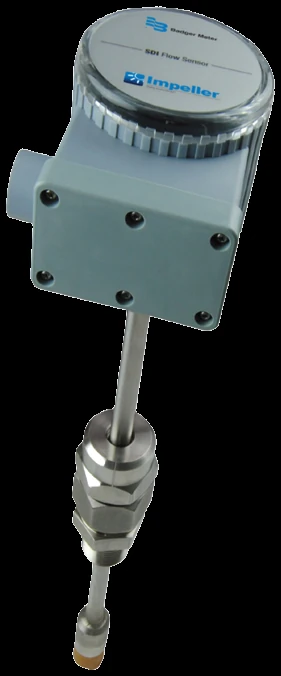
SDI Series
Preferred insert, lead‑free SS/brass — 1‑1/2–60 in, NSF 61/372, ±1%
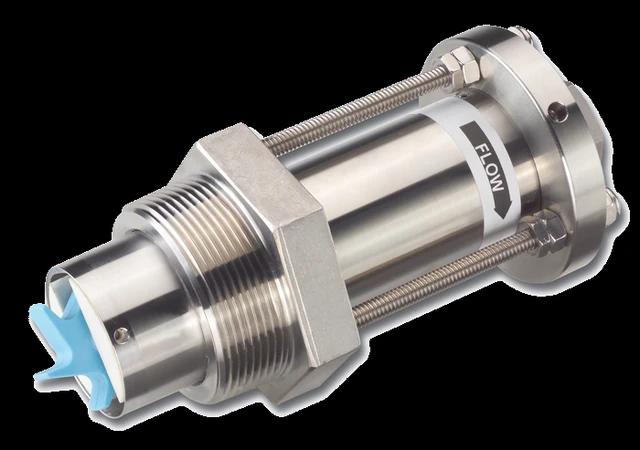
Series 200 Insertion
220BR/SS/PVCS, 3–40 in — direct‑insert or 225/226 hot‑tap under pressure
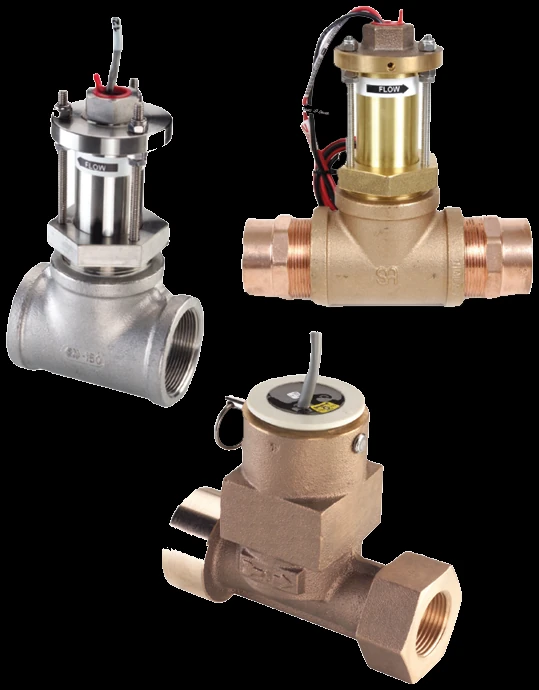
Metal Tee Series 228 & 250
Preassembled bronze / SS / cast‑iron tee — 1/2–2‑1/2 in
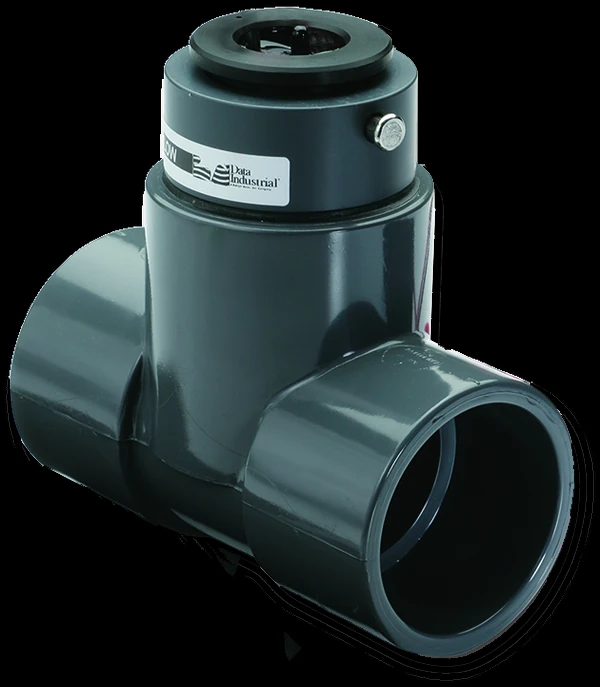
PVC Tee Series 228
Sch 80 PVC solvent‑weld, 1‑1/2–4 in · potable & corrosive
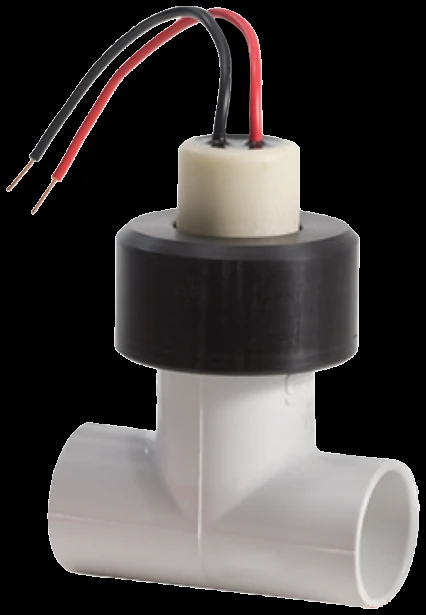
Irrigation PVC Tee 735
Economical PVC tee 1/2–1 in · IR direct‑burial electronics
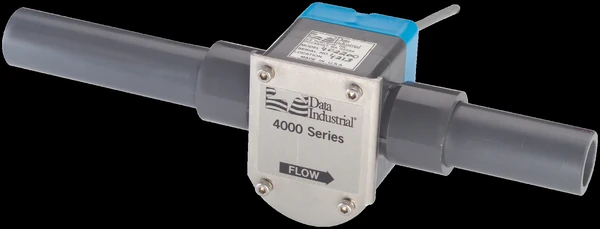
Inline Series 4000
Tangential inline 1/2–1 in · PVC/PVDF for corrosives & UPW
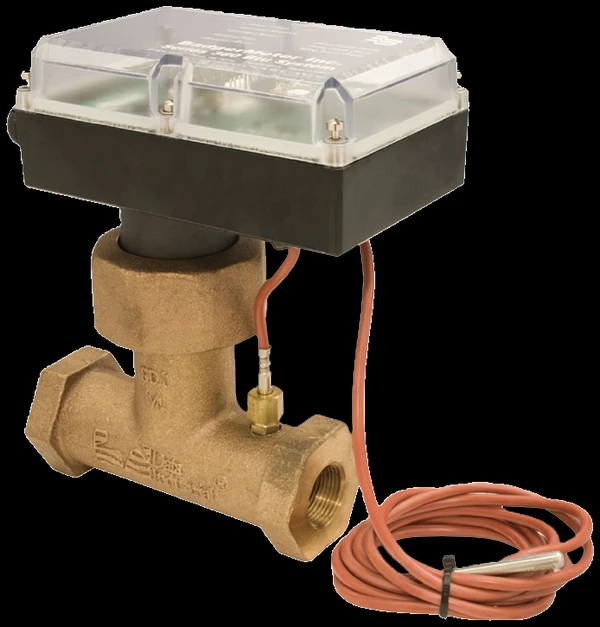
Series 380DS BTU System
Flow + 2 RTDs + electronics in one tee · Modbus / BACnet
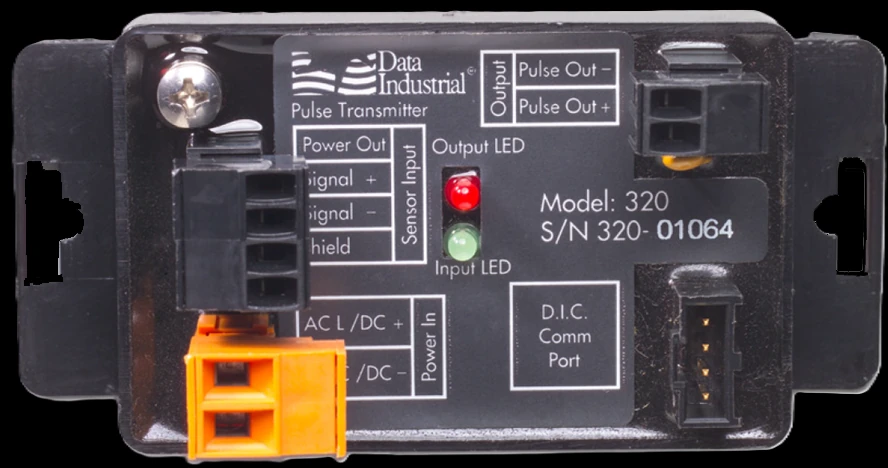
300-Series Flow Transmitters
310 loop 4–20 mA / 320 scaled pulse / 330 relay flow switch
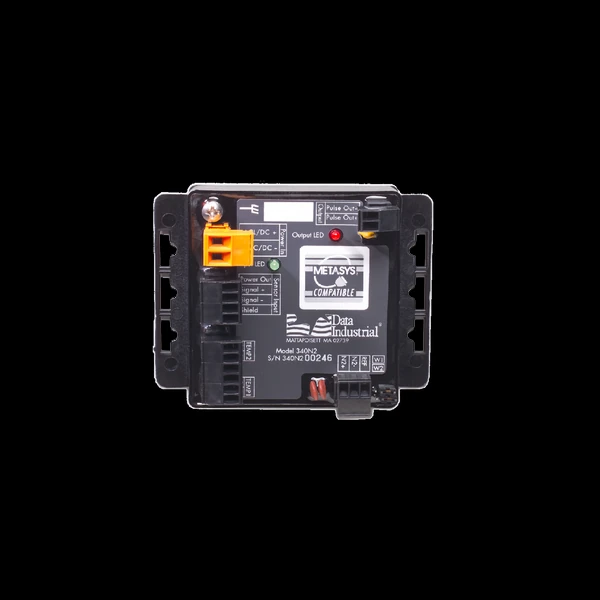
340 BTU Energy Transmitters
Flow × ΔT hydronic energy · 340 BN/MB BACnet or Modbus, 340N2 Metasys
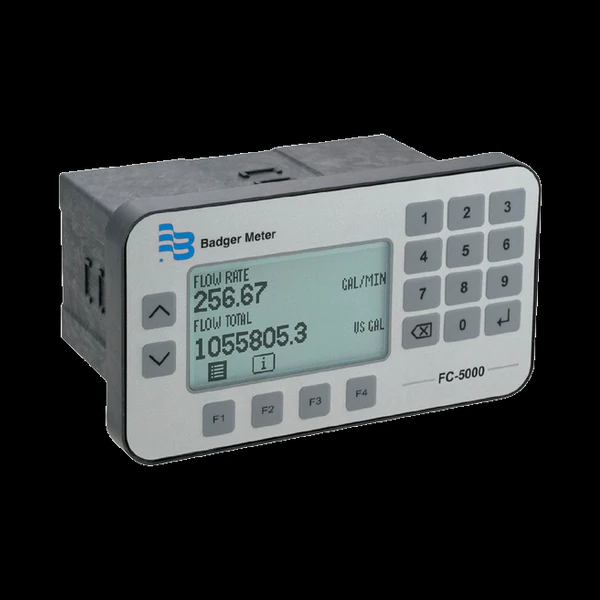
FC-5000 Flow Computer / Display
Panel/wall flow computer, one or two channels · Modbus / BACnet / USB
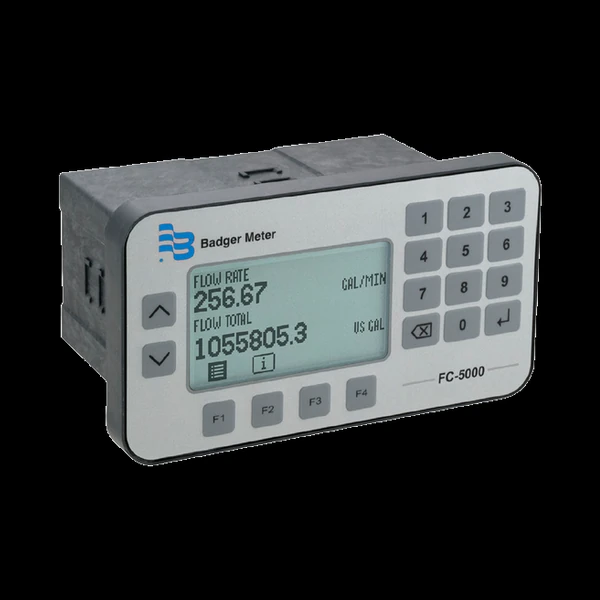
FC-5000 BTU Monitor
Flow + matched RTD pair → hydronic energy (BTU) to EN 1434
Industries Served
Water & Wastewater
Building
Sub-Metering
Irrigation & Agriculture
Chemical Processing
Semiconductor
Food & Beverage
Power Generation
FAQ: Paddle-Wheel Flow Meters
What is a paddle-wheel (impeller) flow meter, and where does it fit?
An impeller meter puts a small six- or four-bladed wheel into the stream through a single point in the pipe; the flow spins the wheel, and its speed tracks the velocity, which the electronics turn into flow rate and total. Because only one insertion point is tapped, a single sensor covers a wide pipe range — up to 40 in and beyond — without the cost of a full-bore meter or a spool piece. That makes it the economical workhorse for clean to lightly-laden water: building air-handling and chilled/hot water, cooling-tower and condenser loops, irrigation, process and city water, and water sub-metering. It is a velocity meter with a moving rotor, so it wants a reasonably clean, full pipe — grit and heavy solids are the wear enemy.
Insertion, tee-mounted, or inline — how do I choose?
By pipe size, material, and mounting. For larger lines (3 in and up) the insertion meters tap a single point through a saddle: the Series 200 (220BR brass, 220SS stainless, 220PVCS all-plastic) installs direct-insert, or on a live main as the Hot-Tap 225/226 under pressure, and the premium SDI covers potable water out to 60 in. For small to mid metal lines a preassembled tee drops the meter in as one piece — the metal Series 228 (bronze, stainless, or cast-iron) and the compact cast-bronze Series 250, 1/2 to 2-1/2 in. For plastic lines, the Sch 80 PVC Series 228 tee (1-1/2 to 4 in) handles potable and corrosive duty, the 735 PVC tee (1/2 to 1 in) suits irrigation, and the inline Series 4000 (1/2 to 1 in, PVC or PVDF) is the flow-through body for corrosives and ultra-pure water. Tell us the pipe size, material, and fluid and we point you at the right style.
Can I install or service the meter without shutting the line down?
Yes, on the insertion meters. The Hot-Tap Series 225 and 226 — part of the Series 200 insertion family — go in through a tapping valve under pressure and come back out the same way for service without draining the line; the 225 uses a gate valve, the 226 a ball valve (spec the ball-valve 226 for live hot-tap work), in brass or 316 stainless. The SDI is also available in a hot-tap version. A standard insertion meter still needs only a single small tap rather than cutting in a spool piece, and a portable hot-tap removal/insertion tool is offered for the operation.
What makes the SDI Series the premium insertion meter?
The SDI is the lead-free, certified-potable-water insertion meter: 316 stainless or brass wetted path with a PPS or PEEK tip, NSF/ANSI/CAN 61 and 372 certified, for pipe from 1-1/2 to 60 in through a 1 in tap, at ±1% of rate. It does what the 220 cannot: a single unit can be ordered direct-insert or hot-tap, uni- or bi-directional (4-20 mA plus a direction signal), with an on-board LCD, or as a battery-powered version with a remote display for sites without power. Raw frequency carries to 2000 ft without amplification. It is the choice for potable-water metering and any insertion point that needs a display, bidirectional flow, or lead-free certification.
How do I pick the wetted material?
Match it to the fluid. Bronze/brass is the default for water, condenser, and cooling-tower duty; 316 stainless (220SS, 228SS, 226SS, SDI) handles more aggressive or higher-purity water and chemicals; all-plastic PVC (220PVCS, the Sch 80 PVC 228 tee, the 735 tee) suits corrosive and potable lines; and the inline Series 4000 in PVDF is the one for strong chemicals and ultra-pure water — it is documented in 40-month continuous hot-UPW service. Within each meter the o-ring (EPDM, Viton, Buna-N, AFLAS), shaft (tungsten carbide standard, zirconia or 316SS), and impeller/bearing materials are configurable, so we spec the full wetted stack to your chemistry.
Can an impeller meter measure heating or cooling (BTU) energy?
Yes — this line includes a full thermal-energy path for sub-metering and tenant billing. The Series 380DS is the all-in-one: flow sensor, two temperature probes, and the energy electronics in a single brass tee (3/4 to 2 in), with scaled pulse and RS-485 (Modbus RTU and BACnet MS/TP). To add energy to an existing flow point, the 340 BTU transmitter pairs a 300-series flow signal with a matched RTD pair and outputs BACnet and Modbus, and the FC-5000 BTU Monitor does the same on the display side. These are building thermal-energy sub-meters for tenant and process cost allocation.
How accurate are they, and do they need straight pipe runs?
The insertion and metal-tee meters hold about ±1% (the 228 family is ±1% of full scale, the 250 ±1% of rate; the 735 economy tee is ±3% of full scale), with the SDI at ±1% of rate and ±0.5% repeatability. Like any velocity meter they read a single point in the profile, so they want straight run to read true — a good rule is 10 pipe diameters upstream and 5 downstream, more after a pump or two close elbows. Keep the pipe full, keep the fluid reasonably clean (a strainer ahead of the meter pays off on debris-prone water), and set the insertion depth correctly. Every meter is calibrated and we program it to your pipe size and schedule so it reads right from start-up; the 300-series, 4000 analog, and SDI are field-calibratable as well.
How do I buy Impeller / Data Industrial, and can it run at a remote site?
Impeller / Data Industrial is a regional Badger Meter line — Prater Technical is the authorized distributor for Northern and Central New Jersey and New York. It is configured to your conditions and quoted to the application, not sold on the webstore; we spec the insertion style, material, and electronics, ship through our Brooklyn facility, and offer meter programming and commissioning as an optional, quoted service. For a remote or off-grid point, an impeller meter’s pulse or 4-20 mA output backhauls through a Telog cellular RTU powered from a SunWize solar supply — as the factory-authorized SunWize distributor and your Badger source, Prater Technical scopes the meter, power, and telemetry together. Contact us for a quote, current availability or lead time.
Have an application question? Talk to Scott — send directly to Scott Prater at scott@pratertechnical.com, or call him directly at 917-580-0878 during business hours.
Territory Coverage
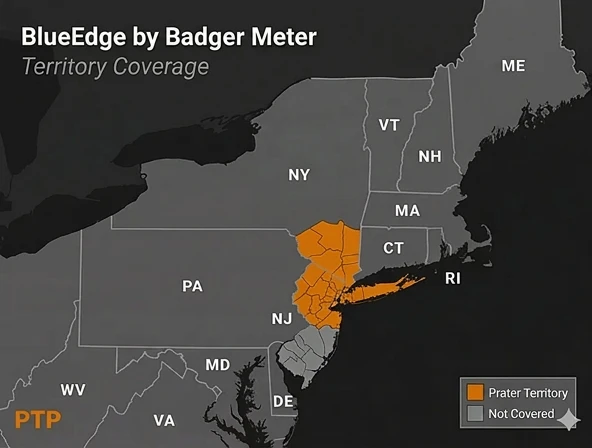
New York: New York City (all boroughs), Long Island, and the Hudson Valley — Westchester, Rockland, Putnam, Orange, Ulster, Dutchess, and Sullivan (ZIP 10000–11999 and 12400–12799). And Greene and Delaware counties that fall within ZIP 12400–12799
New Jersey: Northern NJ (07000–07999) and Central NJ (08500–08999)
New Jersey: Northern NJ (07000–07999) and Central NJ (08500–08999)
Territory above applies to Impeller / Data Industrial as a regional Badger Meter line. Other Badger lines have their own coverage — see the Badger Meter family page.
Specifications compiled by Prater Technical Partners from Impeller / Data Industrial product datasheets.