About this category
Hi-Heat Industries — custom flexible heaters built to your drawing and/or specifications on silicone-rubber, polyimide (Kapton), and polyester-film substrates, with wire-wound or etched-foil elements, to your preferred size, shape, sensors, attachments, and lead-wire spec. Prater Technical Partners works with you to spec the substrate, element, watt density, and shape from your surface, temperature, and environment.
Hi-Heat Flexible Heater Series
Click any Series box for details →
 Custom flexible heaters · Built to your specifications
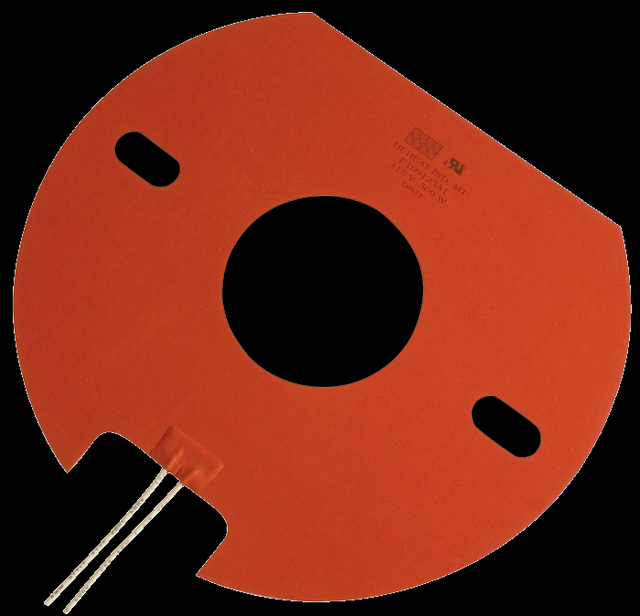
Silicone Rubber Flexible Heaters
Rugged, moisture‑tolerant — UL‑rated to 200 °C / 392 °F
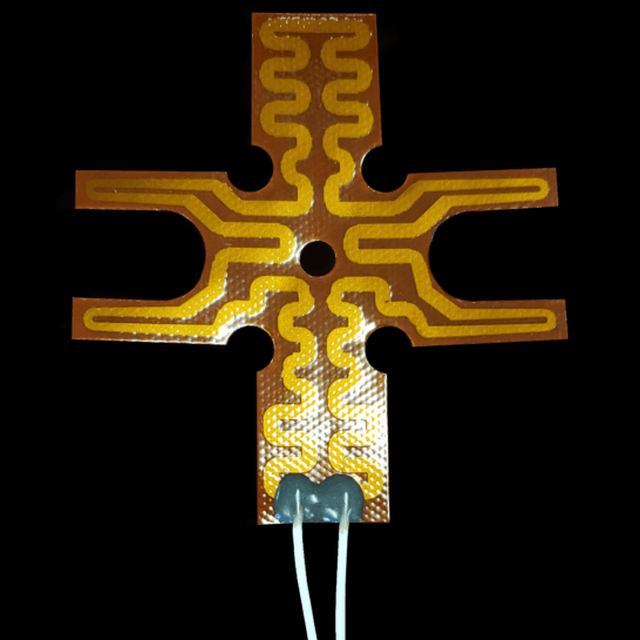
Polyimide (Kapton) Flexible Heaters
Thinnest format — Vacuum, cleanroom, aerospace
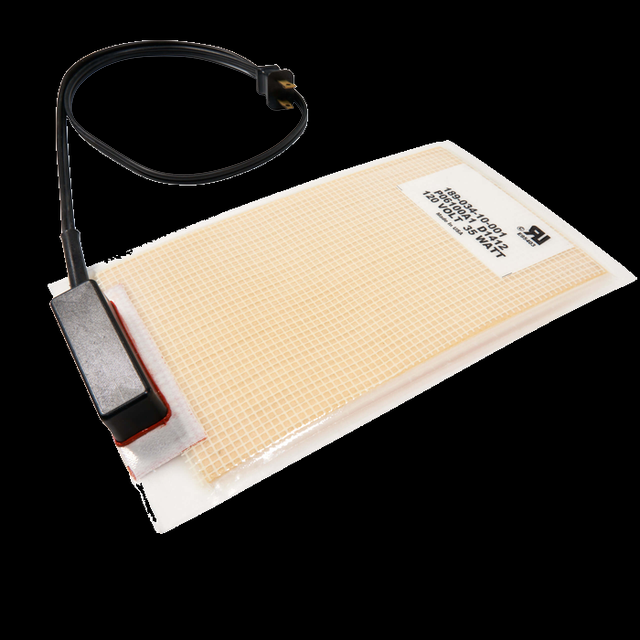
Polyester Film Flexible Heaters
Cost‑effective low‑temperature OEM work
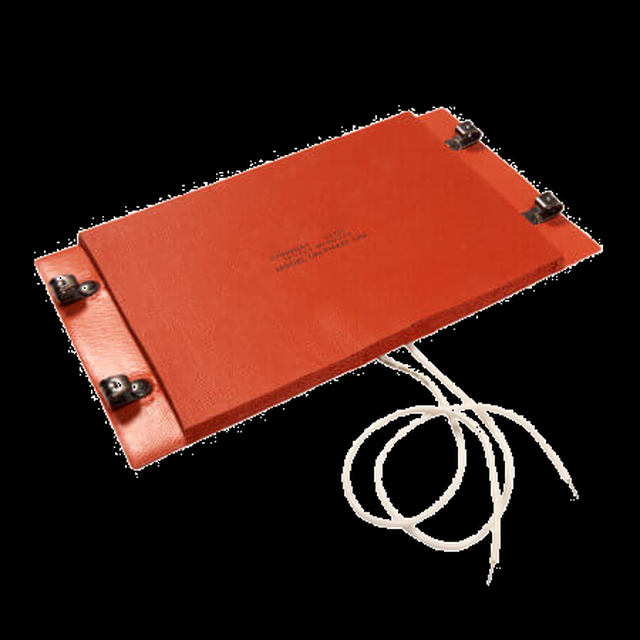
Wire-Wound Element Heaters
Highest watt density — Economical for many shapes
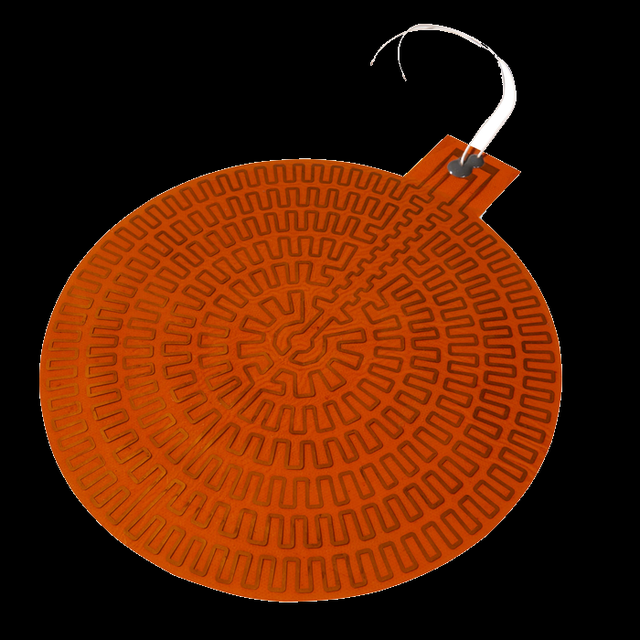
Etched-Foil Element Heaters
Uniform heat, tight tolerance, complex patterns
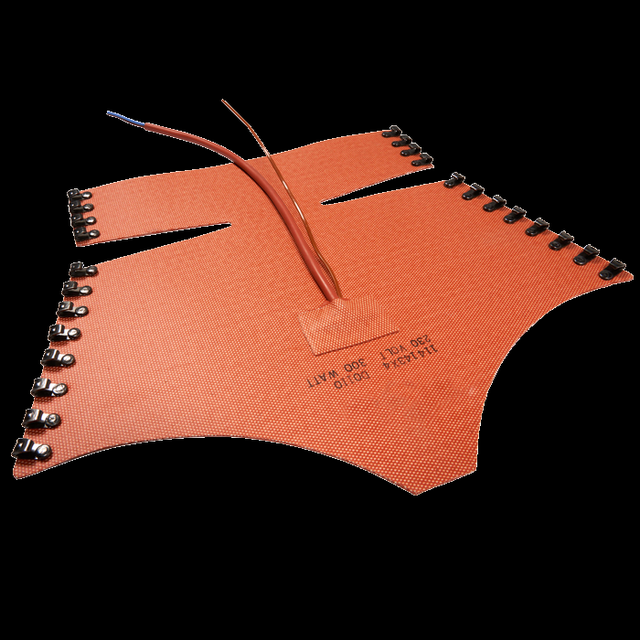
Freeze Protection — Tanks & Pipes
Wrap valves, pumps & small tanks above freezing
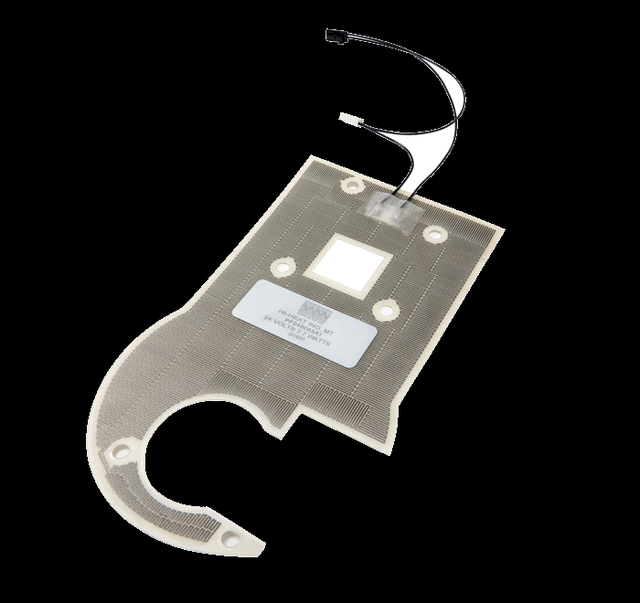
Medical & Laboratory Instrument Heaters
Conformable heat for instruments & analyzers
Industries Served
Aerospace & Defense
Medical Devices
Semiconductor
Research & Labs
Electronics
Oil & Gas
Food & Beverage
Transportation / DOT
FAQ: Hi-Heat custom flexible heaters
What is a flexible heater, and where is it used?
A flexible heater is a thin, conformable heating element built onto a bendable substrate so it can wrap or adhere to a surface that is not flat. Hi-Heat builds them in three substrates: silicone rubber — rugged, tolerates moisture and rough handling, UL-rated for continuous operation to 200 °C (392 °F); polyimide (Kapton) — the thinnest format, with aerospace-grade thermal stability and low outgassing for vacuum and cleanroom use, serving to about 260 °C (500 °F); and polyester film — a cost-effective option for low-temperature OEM work, to about 105 °C. The resistance element inside is either wire-wound (highest watt density) or etched-foil (very uniform heat, tight resistance tolerance). They are used wherever the heater has to follow the shape of the part — freeze protection on tanks and pipes, medical and lab instruments, aerospace components, and OEM equipment — and are sized and shaped to your drawing and/or specifications.
Silicone rubber, polyimide (Kapton), or polyester film — which substrate?
The substrate sets the temperature range, ruggedness, and thickness. Silicone rubber is the general-purpose workhorse: rugged, moisture-tolerant, and UL-rated for continuous operation to 200 °C (392 °F), it suits tanks, pipes, drums, and equipment that sees rough handling. Polyimide (Kapton) is the thinnest and most thermally stable, with low outgassing — the choice for vacuum chambers, cleanrooms, aerospace components, and tightly-spaced electronics where thickness and purity matter. Polyester film is the cost-effective option for low-temperature OEM work where the higher-temperature substrates would be over-spec. Tell us the surface, the maximum temperature, and the environment (vacuum, washdown, abrasion), and the substrate follows.
Wire-wound or etched-foil element — what is the difference?
Both are resistance elements laminated into the flexible substrate; they differ in how the resistance is formed and what they are best at. A wire-wound element is a resistance wire laid in a pattern — it reaches the highest watt densities and is economical for many shapes. An etched-foil element is a thin metal foil photo-etched into a precise circuit pattern — it spreads the heat very uniformly, holds a tight resistance tolerance, and can be routed around cut-outs and sensors with fine control. Choose wire-wound when you need maximum watt density or lowest cost; choose etched-foil when uniformity, tight tolerance, or a complex pattern matters (precision instruments, optics, aerospace).
How do I size and spec a flexible heater?
A flexible heater is specified to the size & surface it heats and the temperature it must hold: the heated area and shape, the watt density (watts per square inch) that the substrate and the part can take without a hot spot, the target temperature and the heat losses from the part, the voltage, and any cut-outs, sensors, or lead-exit locations. Watt density is the value to get right — too high scorches the substrate or the part, too low cannot reach temperature. Two things drive the design: the part geometry (which the heater is shaped to) and the temperature with its losses. Send us a drawing or sketch of the surface, the target temperature, and the voltage, and the heater is laid out to it.
How are flexible heaters attached to the part?
Three common methods. Pressure-sensitive adhesive (PSA) — a factory-applied adhesive backing that bonds the heater to a clean, smooth surface; the quickest field install. Factory vulcanizing or bonding — the heater is permanently bonded to a plate or component at build time, for the best thermal contact and durability. Mechanical clamping or strapping — for pipes, drums, and removable installations. The key in every case is intimate, gap-free contact: an air gap between heater and part is thermal resistance that makes the heater run hotter than it should. Tell us the surface and whether the heater is permanent or removable, and the attachment is specified with it.
How are flexible heaters controlled?
Like any electric heater, a flexible heater needs a control loop and a safety. The usual package is a temperature sensor (thermistor, RTD, or thermocouple) bonded into or next to the heater, a controller (a simple thermostat for on/off duty, or a PID controller with an SCR or solid-state relay for tight control), and an independent high-limit cut-out so a control fault cannot overheat the part. A simpler more discrete option is a snap-action thermostat which can be laminated right into the heater. Tell us the target temperature, the tolerance, and whether the heater is part of a larger control system, and the control and safety are specified to match.
What temperatures and environments can flexible heaters handle?
It depends on the substrate. Polyester film serves to about 105 °C, suited to low-temperature OEM duty; silicone rubber is UL-rated for continuous operation to 200 °C (392 °F) and tolerates moisture, washdown, and rough handling; polyimide (Kapton) serves to about 260 °C (500 °F) and offers aerospace-grade thermal stability with low outgassing for vacuum and cleanroom service. Beyond temperature, the substrate is chosen for the environment — abrasion and moisture point to silicone; vacuum, cleanroom, and tight-clearance electronics point to polyimide. Every heater has a maximum watt density and maximum temperature for its construction, and running within them is what gives a flexible heater a long service life.
How do flexible heaters provide freeze protection for tanks, pipes, and instruments?
Freeze protection holds a tank, pipe, valve, or instrument above the freezing point (or any minimum maintain temperature) in cold ambient conditions. A flexible heater wraps or adheres directly to the item, so the heat goes into the metal rather than the surrounding air, and a thermostat or controller cycles it to hold the set point efficiently. Because the heater is shaped to the part, it covers irregular surfaces — valve bodies, pump housings, instrument enclosures, and small tanks — that a straight heat-trace cable cannot follow well. For compact installs a snap-action thermostat can be laminated right into the heater so the control is integral to the assembly. One fit limit to note: a flexible heater conducts heat into a surface — it is not an immersion heater for a fluid volume or an air heater for a duct, so for heating a tank of liquid or a moving air stream the immersion and process-air heater families are the better answer. Give us the item, the minimum ambient, and the maintain temperature, and the heater and control are sized to hold it.
Are Hi-Heat flexible heaters custom-built, and how do I order them?
Yes — Hi-Heat flexible heaters are built to your drawing and/or specifications: the substrate, element type, watt density, shape, cut-outs, lead exits, sensors, and attachment are all specified per job, so virtually every heater is engineered to its part. Pricing is quote-only. Hi-Heat is an authorized-distribution line for Prater Technical Partners: Prater is the vendor of record and the heater is drop-shipped from the factory, with optional Prater kitting. Coverage is the Northeast and Mid-Atlantic. Send us a drawing or sketch of the surface, the target temperature, the voltage, and the quantity, and we will quote it.
Are Hi-Heat heaters UL Recognized, and can they carry my own UL file number?
Yes — Hi-Heat heaters are UL Recognized Components, the UL category for a component installed inside a larger UL-Listed end product. The silicone-rubber line, for example, is UL-rated for continuous operation to 200 °C (392 °F). For OEMs that need it, Hi-Heat issues customer-specific UL Recognized file numbers — useful when your end product is itself UL-Listed and the heater is a recognized component within it. Hi-Heat is also ISO 9001:2015 certified (Perry Johnson Registrars, ANAB-accredited), so the quality system behind the heater is third-party audited. Tell us if a customer-specific UL file is required when you request a quote and the documentation is set up with the build.
Need a custom flexible heater spec? Talk to Scott — send directly to Scott Prater at scott@pratertechnical.com, or call him directly at 917-580-0878 during business hours.
Territory Coverage
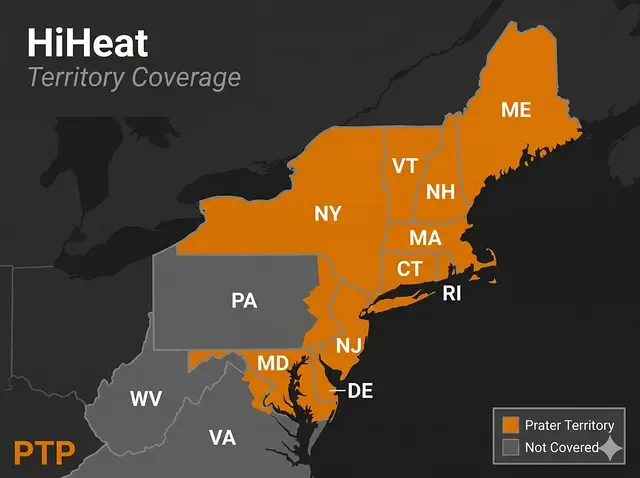
Coverage: Northeast & Mid-Atlantic
Territory above applies to Hi-Heat Industries (custom flexible heaters), a Northeast & Mid-Atlantic line. Other Prater Technical product lines have their own coverage — see each brand’s page.
Specifications compiled by Prater Technical Partners from Hi-Heat Industries product literature.