About this category
Industrial Oval Gear (IOG) is Badger Meter's positive-displacement oval-gear line — meters that measure actual volume directly as paired rotors sweep a fixed volume through the chamber, so accuracy holds to ±0.5% on fluids above 5 cP (±0.03% repeatability), unaffected by viscosity shifts or pulsating flow and needing no straight run — right for batching, dispensing, and metering lubricants, fuels, chemicals, additives, resins, coatings, and inks. Selection is by fluid and service: chemistry and pressure set the body — 316L stainless to 3,000 psi (flange & Tri-Clamp), aluminum to 2,000 psi, or Kynar (PVDF) to 230 psi for aggressive chemicals; viscosity sets the rotor — standard to 1,000 mPas, high-viscosity (HV) modified rotors to 500,000 mPas; flow sets the size from 1/8 to 3 inch (0.0044–185 gpm, including a 1/4 in low-flow and a 1 in high-flow body); and the host sets the register — the meter-mounted ILR-700/701/750 LCD, the ER-420 4–20 mA counter, the ER-500 flow monitor (ER-500A adds Modbus RTU), or the advanced F-series (F012 display, F018 HART 7.0, F131 batch control) — with intrinsically safe Class I/II/III Division 1 and ATEX/IECEx sensors for hazardous areas. Prater Technical Partners works with you to spec the body, rotor, seal, and register to your fluid and ships nationwide, configured to your spec.
Industrial Oval Gear SeriesSold on our webstore →
Click any Series box for details →
 Badger Meter
oval-gear PD flow for Industrial
How it works

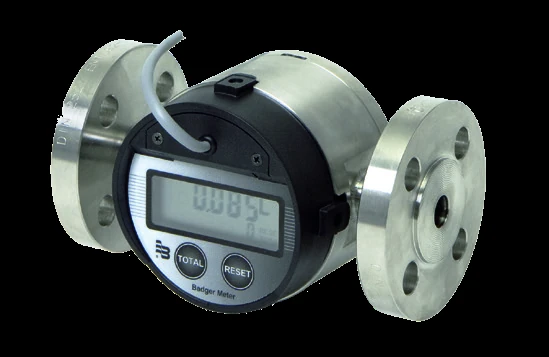
Stainless 316L Oval Gear
316L SS body & rotors — to 3,000 psi, flange & Tri‑Clamp, −22–240°F
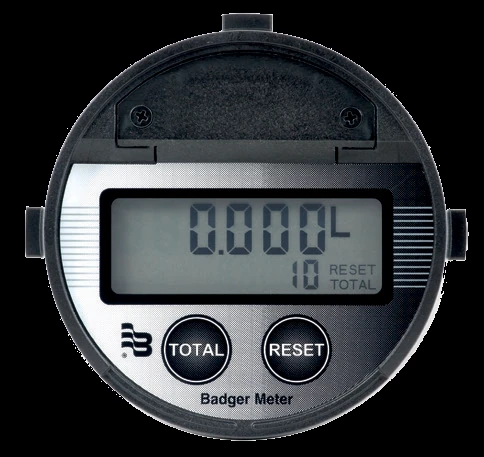
Aluminum Oval Gear
6061 aluminum body — to 2,000 psi, lube & fuel dispensing
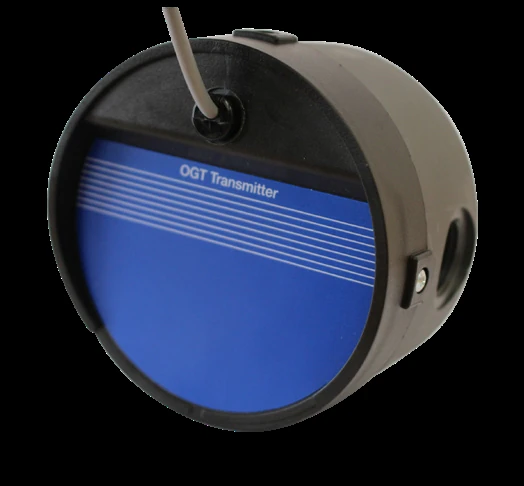
PVDF (Kynar) Oval Gear
Kynar body, Hastelloy‑C spindle — to 230 psi, aggressive chemicals
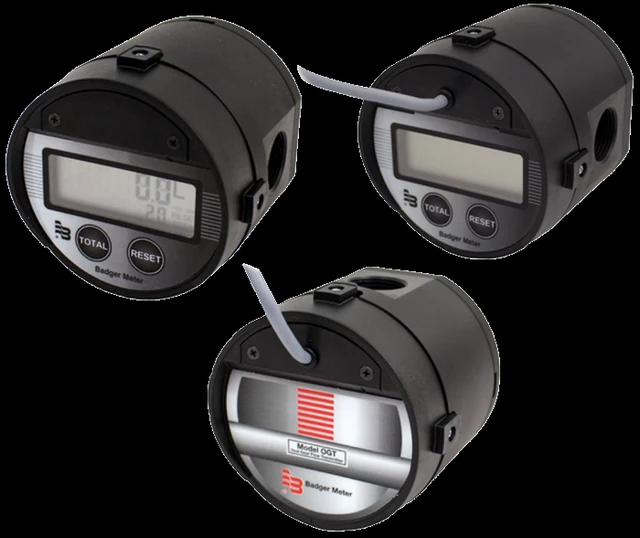
High-Flow Oval Gear
1 in. HF body — to ~45 gpm (170 l/min), high‑throughput dispensing
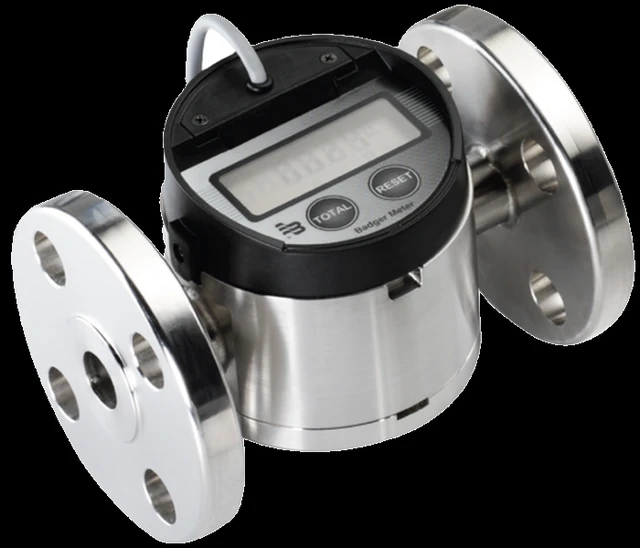
ILR Registers & Sensors
ILR‑700 / 701 / 750 LCD — pulse, 4–20 mA · NAMUR / PNP / NPN IS sensors
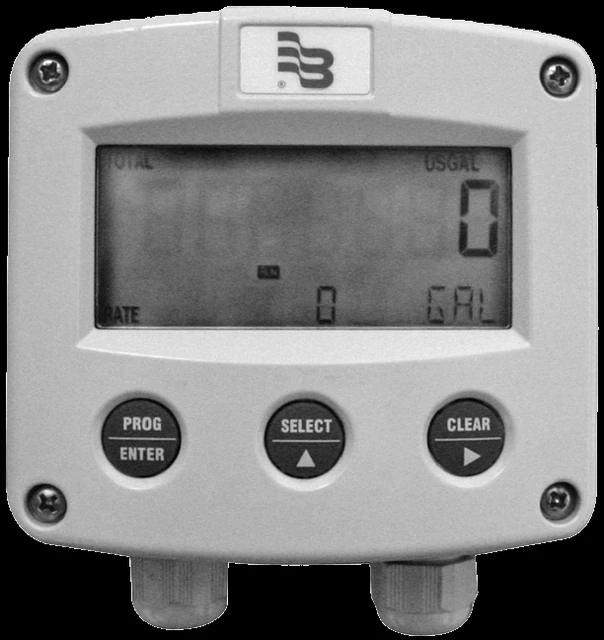
ER-420 Rate & Flow Counter
Scalable 4–20 mA — AC / DC / loop‑powered remote counter
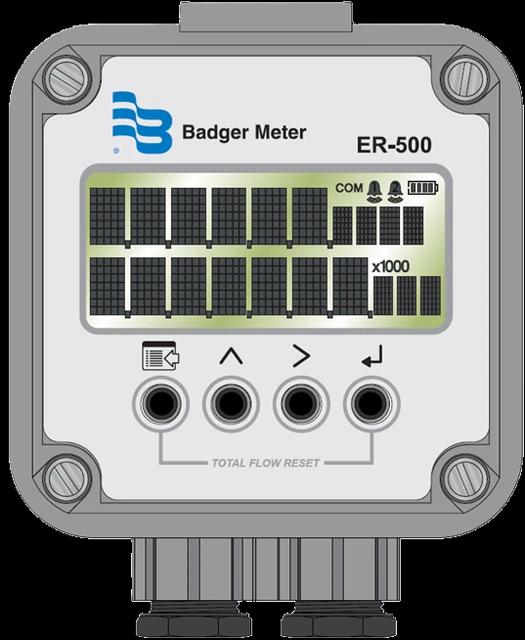
ER-500 Flow Monitor
4–20 mA + alarms, 0.05% — ER‑500A adds Modbus RTU, ~6‑yr battery
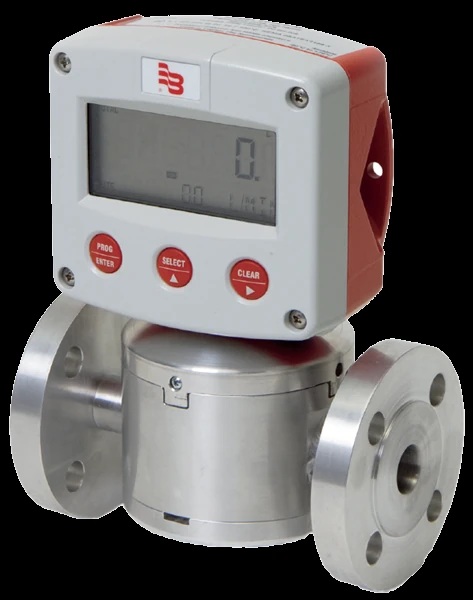
F-Series Registers & Batch
F012 backlit · F018 HART 7.0 · F110 RS‑485 · F131 batch + relays
Industries Served
Oil & Gas
Chemical Processing
OEM & Custom Equip.
Food & Beverage
Pharmaceutical
Water & Wastewater
Power Generation
Pulp & Paper
FAQ: Oval Gear Positive-Displacement Meters
What is an oval-gear positive-displacement meter, and where does it fit?
An Industrial Oval Gear meter measures actual volume directly. A pair of close-meshed oval rotors turns as fluid passes through the metering chamber, and each rotation sweeps a fixed, known volume from inlet to outlet — so the count of rotations is a true volume measurement, not an inference from velocity. Magnets on the rotor ends trip a sensor in the register on every turn. Because the measurement is mechanical displacement rather than velocity, it is unaffected by changes in viscosity and by pulsating flow, it needs no straight pipe run or flow conditioning, and it mounts in any orientation and in tight pipework. That makes it the right meter for accurate batching and totalizing of lubricants, fuels, chemicals, additives, resins, coatings, inks, and coolants — especially viscous or variable-viscosity fluids where a turbine or magmeter struggles. When you instead need a meter for low-viscosity water at high flow, an in-line electromagnetic or ultrasonic meter from the Badger Meter flow family is usually the better fit.
How do I choose the body material — stainless, aluminum, or PVDF?
Chemistry and pressure set the body. Stainless steel (316L body and rotors) is the industrial workhorse — rated to 3,000 psi in the 1/2 to 1 inch sizes, with flange and Tri-Clamp options, for corrosion resistance and the widest fluid compatibility. Aluminum (6061) is the lighter, lower-cost body to 2,000 psi for petroleum, lubricants, and fuel-dispensing duty where the fluid is compatible with aluminum. Kynar (PVDF) is the all-plastic body to 230 psi for aggressive chemicals — acids, caustics, and solvents that attack metal (PVDF meters use a Hastelloy-C spindle). Rotors are offered in 316L stainless, Ryton (PPS), or Vectra (LCP), and seals in Viton, Aflas, Kalrez, or EPDM, so the whole wetted path is matched to the fluid. Use the input form to tell us the fluid, line pressure, flow range, and port, and the body, rotor, and seal choices are spec’d accordingly.
How accurate is it, and does viscosity affect the reading?
Accuracy is plus or minus 0.5 percent of reading on fluids above 5 cP in the 1/2 inch and larger sizes, with plus or minus 0.03 percent repeatability; the small 1/8 and 1/4 inch meters run plus or minus 1.0 to 1.5 percent, and PVDF meters plus or minus 1.5 to 2.5 percent. The key property of the oval-gear principle is that viscosity does not degrade the reading — in fact higher viscosity tightens internal sealing and helps accuracy — so a meter calibrated on one oil holds its accuracy as the fluid thickens or thins with temperature. That is the opposite of a turbine meter, whose calibration shifts with viscosity. Repeatability of plus or minus 0.03 percent also makes it an excellent batch and dispense meter. A 5-point calibration report, and linearization with the report, are available as documented options to be specified at time of quote/ordering.
I have a thick fluid — do I need the high-viscosity rotors?
Standard rotors handle fluids to 1,000 mPas (about 1,000 cP). For heavier fluids — greases, heavy oils, polymers, adhesives, syrups — the high-viscosity (HV) option substitutes modified rotors rated to 500,000 mPas. HV is a build option on the meter, not a separate model: you order the same body and size with HV rotors instead of standard. It is the one rotor decision that is set by viscosity rather than by chemistry, so use the input form to tell us the fluid and its viscosity at operating temperature and we specify standard or HV rotors with the rest of the build.
Which register or output should I pick — ILR, ER-420, ER-500, or F-series?
Match the register to what the reading has to do. The meter-mounted ILR family is the local-display choice: ILR-700 shows rate and resettable/lifetime totals, ILR-701 adds 9-point linearization, and ILR-750 adds a scaled pulse output and a 4-20 mA analog output (6-24 VDC). For unscaled pulse to a PLC or flow computer, the ILR-740/741 transmitters and the NAMUR, PNP, NPN, reed, and Hall sensor boards cover it. For a remote scalable rate/flow counter with 4-20 mA, the ER-420 comes in AC, DC, and loop-powered versions. The ER-500 flow monitor adds programmable alarms and a totalizing pulse with 0.05 percent accuracy and up to a 6-year battery; the ER-500A version adds Modbus RTU over RS-485. The advanced F-series registers add a backlit display (F012), HART 7.0 (F018), analog-plus-pulse with optional RS-485 (F110, the F-series counterpart to the ER-420), and batch control with two relay or transistor outputs (F131), with intrinsically-safe variants across the line. Use the input form to tell us the signal type, the power source (battery, AC, or 24 VDC / loop), the output and protocol you need (4-20 mA, scaled pulse, HART 7.0, or Modbus RTU), the area classification, and whether you want a meter-mounted local display or a remote-mounted register, and we configure the register into the part number.
Can I use it in a hazardous (classified) area?
Yes. The NPN and PNP open-collector sensors and the NAMUR sensor are intrinsically safe, rated for Class I, II, and III, Division 1, Groups A through G in the USA; in Canada, Class I Division 1 (Groups A through G on the aluminum and PVDF sensors, A through D on the stainless and high-flow sensors). They carry ATEX and IECEx Ex ia IIC approvals for gas areas; the ER-420 / F-series electronics carry ATEX intrinsically-safe markings for gas and dust as well. Intrinsic safety needs the right barrier and wiring on your side, so use the input form to tell us the area classification and we specify the IS sensor, the register variant, and the documentation to suit.
What temperature and pressure can it take?
Pressure is set by the body and size: stainless to 3,000 psi (1/2 to 1 inch; 720, 580, and 360 psi at 1-1/2, 2, and 3 inch), aluminum to 2,000 psi, and PVDF to 230 psi, with higher ratings on request. Operating temperature is body-dependent: stainless and aluminum run minus 22 to 240 F, the PPS/LCP plastic rotors are rated to 176 F, and the PVDF body is 14 to 140 F. Flow spans 0.0044 gpm at 1/8 inch to 185 gpm at 3 inch across the size range, including a 1/4 inch low-flow body and a 1 inch high-flow body to about 45 gpm. Process connections are NPT or BSP across the line, with ANSI 150# and 300# flange, DIN PN16 flange, and sanitary Tri-Clamp available on stainless housings.
How do I buy IOG, and is pricing published?
Industrial Oval Gear is a Badger Meter line that Prater Technical Partners sells as an authorized distributor, authorized for sale nationwide, with distributor catalog unit prices published on our webstore. Because every meter is a configured build — body, rotor, seal, connection, and register — the cleanest path is to use the input form to tell us the fluid, flow range, line pressure, port, area classification, and the output or protocol you need; we construct the part number, add the right register or sensor, and ship. A 5-point calibration report and food-industry documentation (on stainless body with stainless rotors) are available as options to be specified at time of quote/order.
Have an application question? Talk to Scott — send directly to Scott Prater at scott@pratertechnical.com, or call him directly at 917-580-0878 during business hours.
Territory Coverage
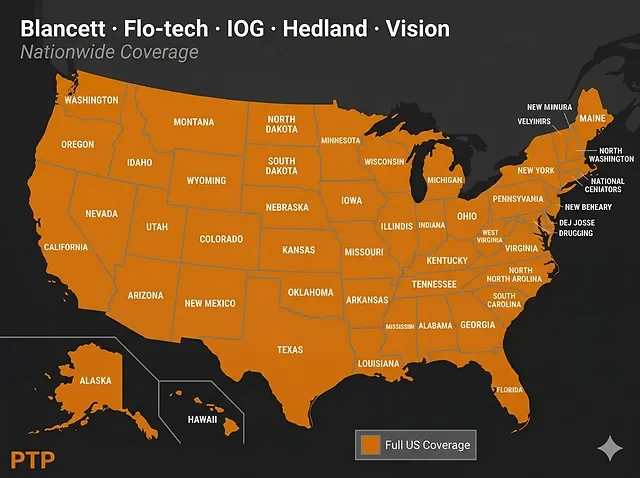
Nationwide: Authorized for sale across the United States, shipped from the Brooklyn warehouse
Prater Technical’s other product lines have their own coverage — see each brand’s page.
Specifications compiled by Prater Technical Partners from Industrial Oval Gear product datasheets.