About this category
ATi / GasSens is Badger Meter's gas-detection brand — electrochemical sensors for toxic gases, catalytic-bead sensors for combustibles, and infrared (NDIR) sensors for CO₂, high-level ammonia, and poison-prone or oxygen-free service, so the chemistry is matched to the hazard; current-production transmitters share the H-Series interchangeable smart-sensor platform, so a calibrated sensor swaps in the field with no recalibration. Selection runs by target gas and area classification: the loop-powered B12 is the 2-wire entry point for ~30 toxic gases (a Wet version for saturated streams); the C12-17 reads combustibles as %LEL; the explosion-proof D12 covers 30+ gases over HART or Modbus with integral or remote sensor holders, and its D12Ex-IR variant reads methane, hydrocarbons, and CO₂ by NDIR; the F12iS is intrinsically safe and the F12/D line-powered; the E12-15 measures ammonia from PPM to 15% with no routine calibration; and the D16 PortaSens III is the portable, with 60+ plug-in sensors. For display and alarm, the B14 receiver handles a point at up to 10,000 ft, the A14/A11 modular system places sensors up to 1,000 ft from the receiver, and the GasSens Midi networks up to 64 addressable sensors over CANbus to 1,024 points; the IsoMon validates H₂O₂ vapor on two channels for pharmaceutical isolators; and A21 sampling and C21 Dri-Gas vapor removal round out difficult-stream sampling. Prater Technical Partners works with you to spec the sensor, transmitter, and controller to your gas and area classification and, as an authorized Badger Meter distributor, ships through our Brooklyn facility — with sensor programming and commissioning available as an optional, quoted service.
ATi / GasSens Series
Click any Series box for details →
 Badger Meter — gas detection & H₂O₂ monitoring
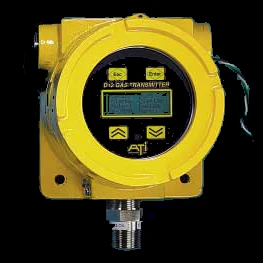
ATi D12 Gas Transmitter
Explosion‑proof smart sensor — 30+ gases, HART/Modbus · D12Ex‑IR NDIR variant
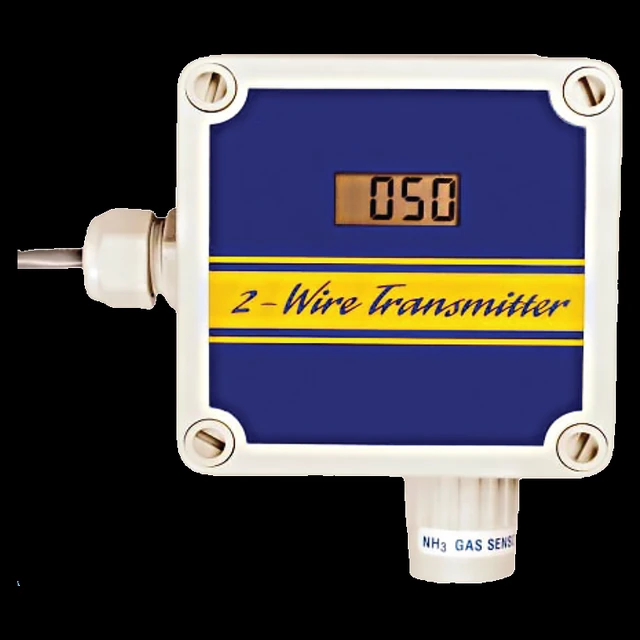
ATi B12 2-Wire Transmitter
Loop‑powered 4–20 mA — ~30 toxic gases · B12 Wet for saturated streams
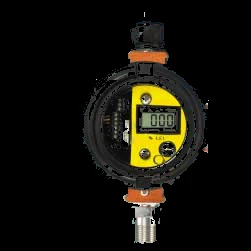
ATi C12-17 Combustible
Catalytic‑bead 0–100% LEL — methane, propane, solvents
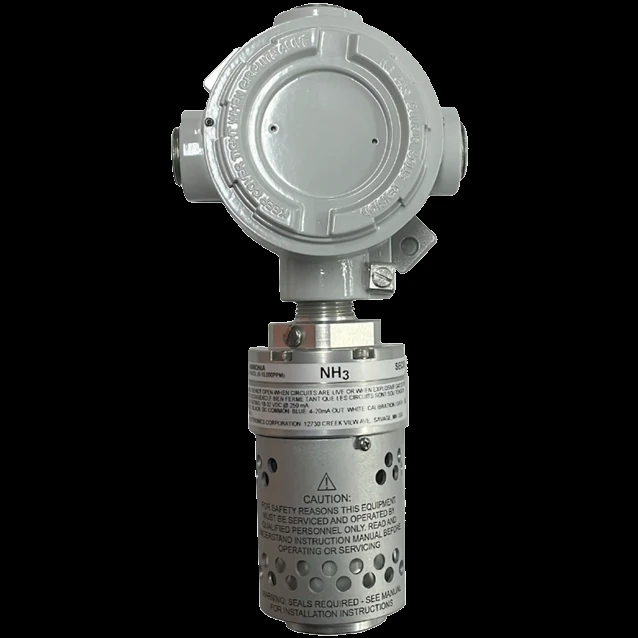
ATi E12-15 IR Ammonia
IR ammonia, PPM–15% — no calibration, oxygen‑free
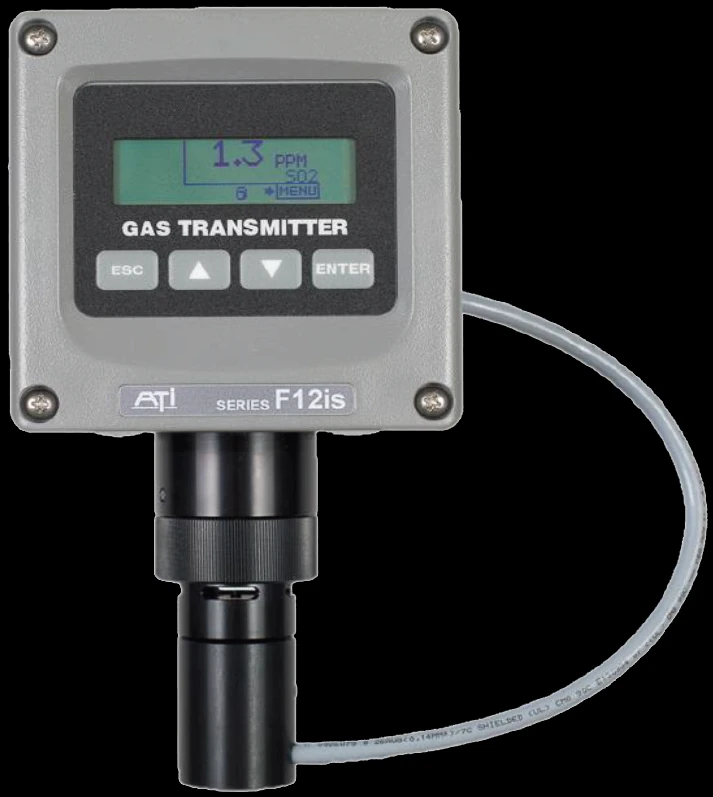
ATi F12iS / F12/D
60 H‑Series sensors — F12iS intrinsically safe / F12/D line‑powered
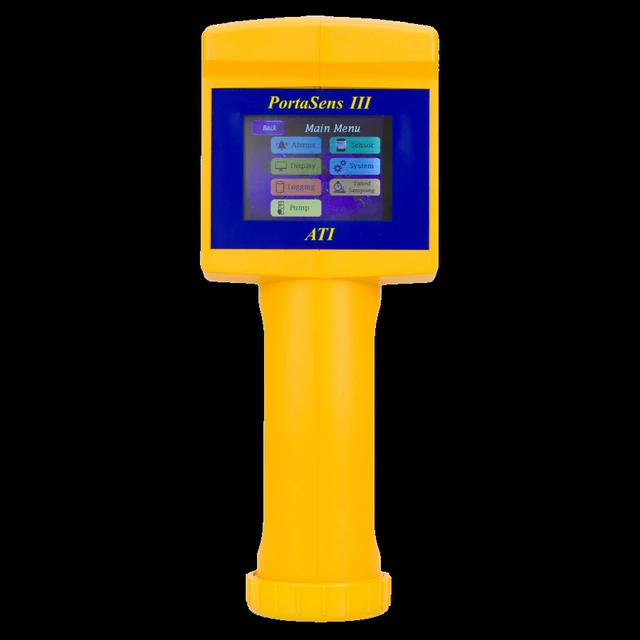
ATi D16 PortaSens III
Portable leak detector — 60+ plug‑in sensors, pump & wand
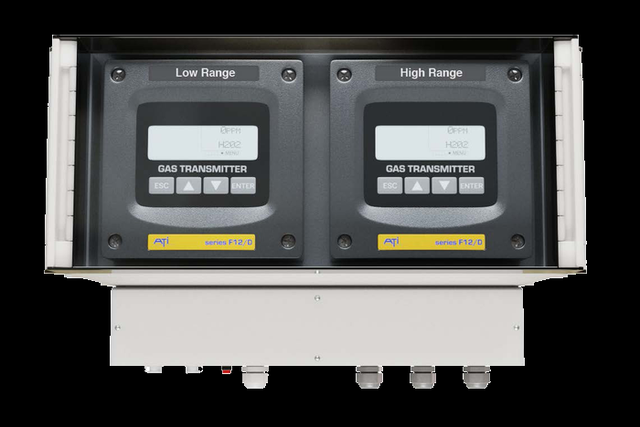
ATi IsoMon H₂O₂ Monitor
Dual‑channel H₂O₂ vapor — pharma isolator decon validation
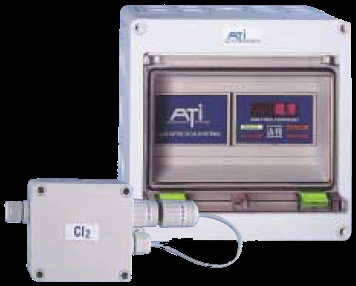
ATi A14/A11 Modular
Modular multi‑channel — receivers, relays, sensors to 1,000 ft
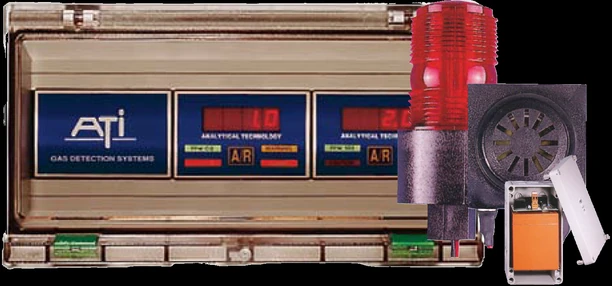
ATi B14 Alarm Receiver
Compact alarm/monitor — setpoints & retransmit, 4–20 mA to 10,000 ft
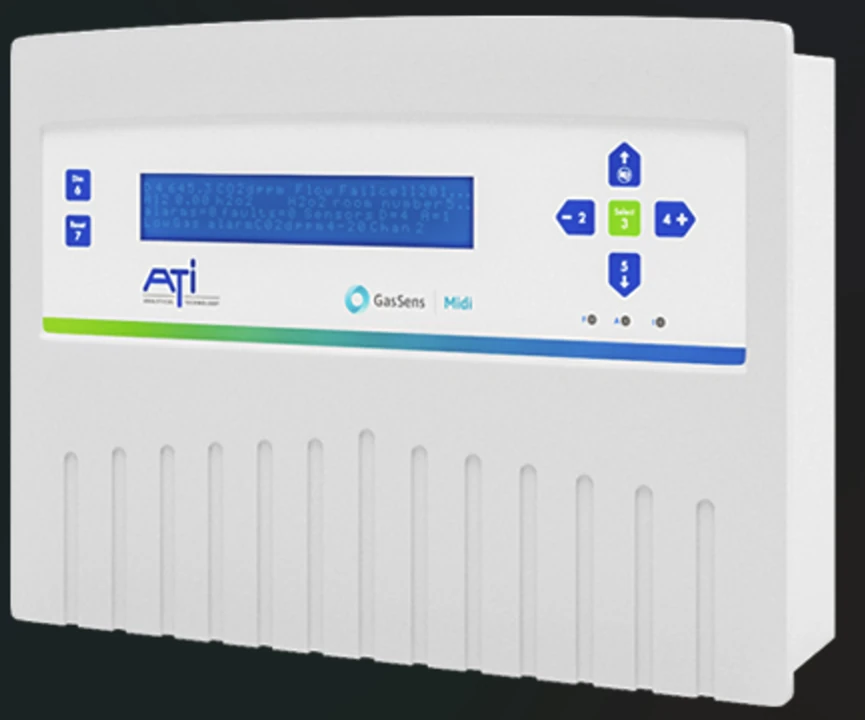
GasSens Midi Controller
64 sensors over CANbus — networkable to 1,024, Modbus RS‑485
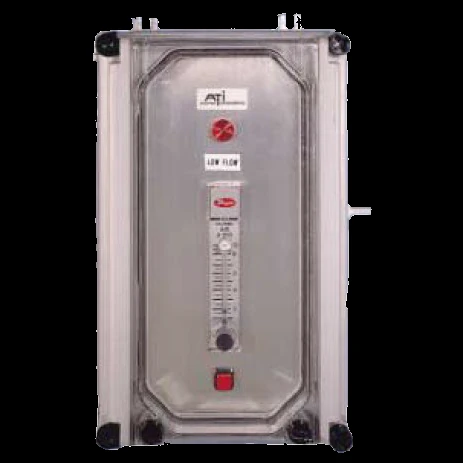
ATi A21 Gas Sampler
Diaphragm sample‑draw pump — duct/remote sampling, loss‑of‑flow alarm
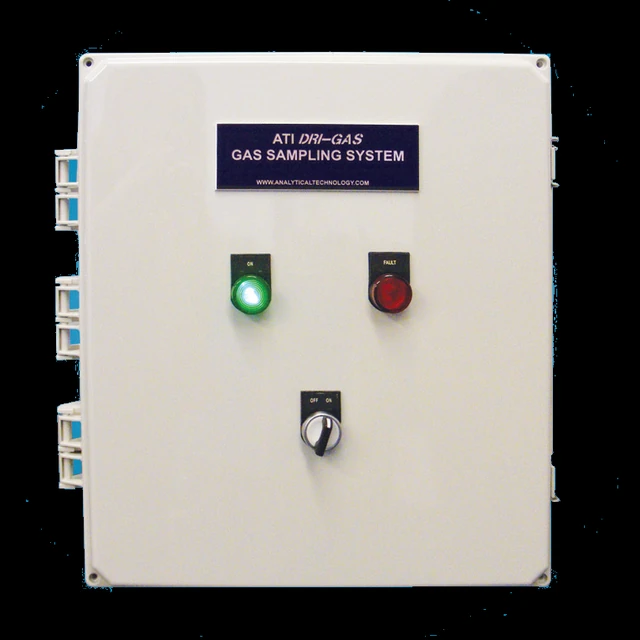
ATi C21 Dri-Gas
Sample + water‑vapor removal — cold‑plate dehumidify, stops blinding
Industries Served
Water & Wastewater
Semiconductor
Pharmaceutical
Chemical Processing
Refrigeration & Cold Storage
Food & Beverage
Oil & Gas
Power Generation
FAQ: Gas Detection & Hydrogen-Peroxide Monitors
How do I choose the sensor type — electrochemical, catalytic, or infrared?
The target gas sets the detection chemistry. Electrochemical sensors are the default for toxic gases — chlorine, ammonia, hydrogen sulfide, ozone, and roughly thirty others from parts-per-billion to percent levels — because they are specific and sensitive at low concentration. Catalytic-bead sensors (the C12-17) read combustible gases as a percentage of the lower explosive limit: methane, propane, hydrogen, and solvent vapors from 0 to 100% LEL. Infrared (NDIR) sensors (the D12Ex-IR and the E12-15 ammonia detector) measure combustibles, carbon dioxide, and high-level ammonia by light absorption, so they cannot be poisoned, do not need oxygen to work, and fail safe. The rule of thumb: electrochemical for toxics, catalytic for routine combustible-LEL monitoring, and infrared where the gas would poison a catalytic bead, where oxygen is absent, or where drift-free long life matters. Tell us the gas, its range, and the background atmosphere and the right sensor is matched to it.
What does the interchangeable H-Series smart sensor get me?
Every current ATi transmitter — the D12, D16, F12, and the modular system — uses the H-Series smart sensor: the sensing cell, its amplifier, and a calibration memory in one plug-in module. Calibration data lives in the sensor, not the transmitter, so a freshly calibrated sensor swaps into a live transmitter in the field with no recalibration and no downtime — you keep a spare calibrated module on the shelf and exchange it on a schedule. The same transmitter can also be re-tasked to a different gas just by fitting a different H-Series sensor. It is the single biggest reason the maintenance burden on an ATi system stays low.
Fixed or portable — which do I need?
Fixed transmitters (the B12, C12-17, D12, E12, and F12 families) mount permanently at a known leak or exposure point and wire back to a controller or alarm for continuous area and safety monitoring. The D16 PortaSens III is the portable: a hand-held detector with an internal pump and sampling wand that accepts more than sixty plug-in H-Series sensors, used for leak surveys, confined-space checks, spot verification, and tracking down the source a fixed unit flagged. Most plants run both — fixed coverage at the fixed hazards, a PortaSens III for everything that moves — and because both share the H-Series sensor, the portable can carry the same calibrated sensor types as the fixed network.
Can I use these in a classified (hazardous) area?
Yes. The D12 is explosion-proof for installation in classified areas, and the F12 family covers both schemes: the F12iS is intrinsically safe and loop-powered (12-28 VDC) for the lowest-energy approach, and the F12/D is the line-powered version with its own display and datalogger. The C12-17 combustible transmitter carries an explosion-proof 316 stainless sensor. Intrinsic safety depends on the right barrier and wiring on your side, so tell us the area classification (Class, Division or Zone, and gas group) and the protection method you prefer and the transmitter, sensor holder, and documentation are specified to suit.
How do the readings get displayed and alarmed — B14, A14/A11, or GasSens Midi?
Match the controller to how many points you have and how far they sit. The B14 is the simple end: a compact alarm receiver that takes a 2-, 3-, or 4-wire 4-20 mA transmitter up to 10,000 feet away, shows the reading, and drives alarm setpoints and a retransmit output — right for one or a few points. The A14/A11 modular system distributes display, isolated analog-output, four-relay, and power-supply modules on a backplane, with sensors up to 1,000 feet from the receiver — right for a mid-size multi-point installation that needs relays and analog outputs per channel. The GasSens Midi is the networked controller: up to 64 addressable sensors over a single four-core CANbus cable, networkable to 1,024 points across sixteen units, with Modbus RS-485, three alarm levels, and an event log — right for a large or plant-wide system. Tell us the point count, the distances, and whether you need Modbus and we size the controller.
My sample stream is wet or in a duct — what do I add?
Two accessories handle difficult sampling. The A21 gas sampler is a diaphragm sample-draw pump that pulls a sample from a duct or a remote point to the sensor and alarms on loss of flow — used when the gas will not come to the sensor on its own. The C21 Dri-Gas adds water-vapor removal: a cold plate dehumidifies the sample before it reaches the sensor, which stops the "blinding" that condensing or saturated streams cause on an electrochemical cell. For a permanently wet stream — a wet-scrubber outlet or chlorine storage — the B12 Wet transmitter instead uses corrosion-resistant sensors rated for 100% relative humidity. Tell us the stream temperature, humidity, and distance and the sampling train is built around it.
How is a gas detector calibrated?
Electrochemical and catalytic sensors are calibrated against a known gas concentration on a schedule. The H-Series smart sensor turns that into a module swap rather than a field procedure: because the calibration data lives in the sensor module, a freshly calibrated sensor exchanges into a live transmitter in the field with no recalibration and no downtime — you keep a spare calibrated module on the shelf and rotate it on a schedule. Tell us the gases you monitor and your calibration approach and we include the right calibration gas and a sensor-exchange plan.
What about hydrogen-peroxide vapor for pharmaceutical decontamination?
The IsoMon is the dedicated instrument for that. It is a dual-channel hydrogen-peroxide (H2O2) vapor monitor for validating isolator and chamber decontamination cycles — a high-range cell and a low-range cell, solenoid-switched, so one instrument follows the H2O2 concentration from the high vapor charge down to the parts-per-million aeration endpoint that releases the chamber. It is used in pharmaceutical and aseptic-processing isolators where the decontamination cycle has to be proven. Tell us the isolator volume and the cycle endpoints and the monitor and sampling are specified for it.
Have an application question? Talk to Scott — send directly to Scott Prater at scott@pratertechnical.com, or call him directly at 917-580-0878 during business hours.
Territory Coverage
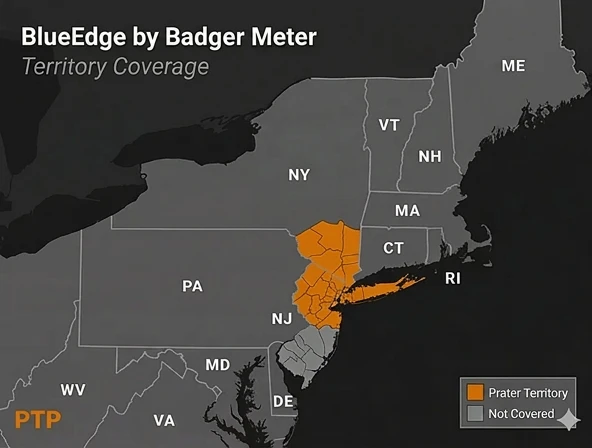
New York: New York City (all boroughs), Long Island, and the Hudson Valley — Westchester, Rockland, Putnam, Orange, Ulster, Dutchess, and Sullivan (ZIP 10000–11999 and 12400–12799). And Greene and Delaware counties that fall within ZIP 12400–12799
New Jersey: Northern NJ (07000–07999) and Central NJ (08500–08999)
New Jersey: Northern NJ (07000–07999) and Central NJ (08500–08999)
Territory above applies to ATi / GasSens as a regional Badger Meter line. Other Badger lines have their own coverage — see the Badger Meter family page.
Specifications compiled by Prater Technical Partners from ATi / GasSens product datasheets.