Product Overview
This is the balance-of-system catalog — the individual SunWize components and options that make up an off-grid power system, available for repair, expansion, or a build of your own design: PV modules (including a 445 W Class I Division 2 module), deep-cycle batteries in AGM and lithium (LFP), PWM and MPPT charge controllers, pole / ground / roof / skid mounts, and enclosures including sealed hazardous-location types. Stocked items carry unit pricing; engineered options are quoted. Reach for this page when you need a part or are scoping a custom build; for a complete engineered system, the Power Ready, Power Station, hybrid, and Power Online systems arrive sized and integrated.
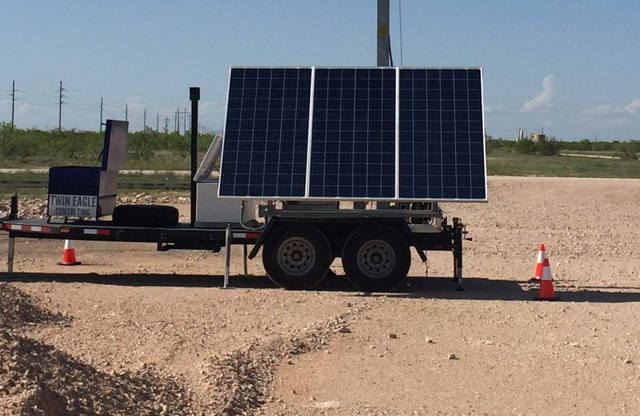
Key Features & Benefits
- Genuine balance-of-system parts for repair or expansion — modules, batteries, controllers, mounts, and enclosures are available individually — replace a failed part, grow an existing array, or add storage without re-engineering the whole system. Keep a deployed system running, or extend it.
- Hazardous-location parts on the shelf — a C1D2-rated module and sealed hazardous-area enclosures let a classified-area build use right-rated components at each point. The parts that let an oil-and-gas or pipeline site stay compliant.
- Unit-priced and stocked — not quote-only — modules, batteries, controllers, mounts, and enclosures carry published unit prices and ship as stocked goods, so a parts order doesn’t wait on a system quote. Order the part, not a project.
- Chemistry, controller, and mount chosen to your build — AGM or LFP batteries, PWM or MPPT controllers, and pole / ground / roof / skid mounts cover the range from a small instrument bundle to a large engineered array. The same component family that goes into our turnkey systems, sold à la carte.
Specifications
- System type / role
- Balance-of-system components & options — the individual parts of an off-grid power system, sold for repair, expansion, or a custom build: PV modules, batteries, charge controllers, mounts, and enclosures.
- PV array
- PV modules from compact panels up to a 445 W Class I Division 2 module, plus 12 V and 24 V modules with MC4 connectors across a range of wattages.
- Charge controller
- PWM and MPPT charge controllers — PWM for small, voltage-matched systems; MPPT for larger arrays, cold weather, and where there is a voltage gap to harvest across.
- Battery & autonomy
- Deep-cycle batteries in AGM and lithium (LFP) across 6 / 12 V and a range of amp-hour capacities — AGM for moderate cycling and value, LFP for high-cycle, cold-climate, or hard-to-reach sites.
- Enclosure
- Weatherproof enclosures in front- and top-opening, mill-finish and powder-coated styles, including sealed Class I Division 2 types and traffic-cabinet styles; solar heat-shield option.
- Mounting
- Side-of-pole, single-arm, ground, roof, and skid mounts for a range of pole diameters and array sizes; galvanized hardware (stainless for coastal / chloride sites).
- Hazardous-location capability
- Class I, Division 2 parts available — the 445 W C1D2 module and sealed C1D2 enclosures — so a classified-area build can use right-rated components at each point.
- Pricing
- Stocked components carry published unit pricing (modules, batteries, controllers, mounts, enclosures); engineered options and complete systems are quoted.
- Fulfillment & lead time
- Authorized distributor — Prater Technical is the vendor of record; stocked parts ship as catalog goods (factory drop-ship, optional Prater kitting) rather than waiting on a system quote.
Common Applications
- Replacing a failed module, battery, controller, or enclosure on a deployed SunWize system
- Expanding an existing array or battery bank to carry a grown load
- Sourcing hazardous-area parts — a C1D2-rated PV module and sealed enclosures — for an oil & gas, pipeline, or other classified-area build
- Specifying mounts — pole, ground, roof, or skid — and galvanized or stainless hardware for a site’s wind and snow load
- Building a custom off-grid system from balance-of-system parts where a standard package doesn’t fit
Design & Selection Considerations
- Match the controller type to the array-to-battery voltage gap — PWM is economical when module and battery voltages are close, which is typical of small systems; MPPT earns its cost once the array grows, the climate turns cold, or the two voltages diverge enough to harvest the difference. Voltage-matched and small → PWM; large, cold, or mismatched → MPPT.
- Pick battery chemistry on cycling, cold, and service cost — not just price — sealed AGM is the value choice for moderate cycling; LFP costs more up front but returns it on high-cycle, cold-climate, or hard-to-reach sites through far more cycles, better cold performance, and a longer life. On a daily-cycling or arctic site, LFP’s total cost of ownership often beats AGM despite the higher sticker.
- Choose the mount for the site, the wind, and the snow — pole-top and side-of-pole mounts suit small arrays on a single pole; ground and A-frame mounts suit larger arrays with ground space; skid mounts integrate the whole system for forklift / crane placement; roof mounts where that’s the surface. Hardware is galvanized, stainless for coastal / chloride sites. The structure is engineered to the site’s wind and snow load, not just the panel count.
- Keep classified-area parts inside the boundary correctly rated — in a Class I Division 2 area, the components sitting inside the classified boundary — the module, the battery enclosure, the electronics — must carry the right rating, while parts that can sit outside it are placed accordingly. Specify the area classification and the layout, and the right-rated parts are selected to it.
- A loose part is not a sized system — buying components à la carte puts the worst-month sizing, autonomy, and code responsibility on the buyer. For a load that matters, an engineered system removes that risk. If you’re not sure the parts add up to a system that carries the load, let us size it instead.
To select the right SunWize components:
Use the input form to send the load profile and we’ll scope the system to it. The most useful inputs are: the load in watt-hours per day (or the continuous wattage and duty cycle), the site location (which sets the available sun), the autonomy you need (2, 5, or 7 days of no-sun reserve, judged by how critical the load is), the system voltage (12 / 24 / 48 V DC, or AC via inverter), the environment and any area classification (Class I Division 2?), and the mounting the site allows (pole, ground, roof, or skid). With those, Prater Technical returns a system sized to carry your load through the worst month the site will see.
Remote Solar Power Application Sheet ›Talk to an engineer directly — Scott Prater, Principal · 917-580-0878 · scott@pratertechnical.com
Specifications compiled by Prater Technical Partners from SunWize Technologies published product literature.