Product Overview
A custom Solar Products infrared panel is an electric medium-wave radiant heater built to your drawing: the dimensions, emitter face, wavelength, watt density, and mounting are specified per job and integrated into OEM machinery, a production line, or a process fixture rather than sold off the shelf. Solar Products is the Aspeq Infrared Division — per the manufacturer, the largest maker of custom infrared electric heaters for the OEM market — building panels in the F, FBA, Q, T, M, G, and V series, each tuned to a different combination of wavelength, response, and target geometry. Use the input form to send us the substrate, process temperature, line speed, and area, and the panel is specified from there.
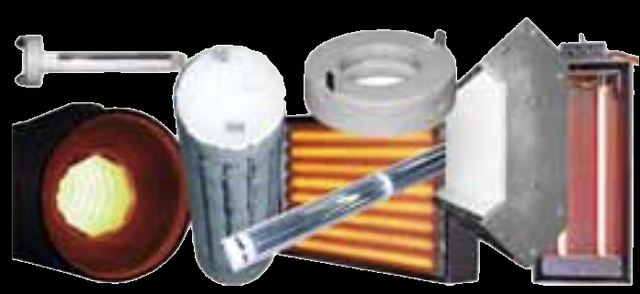
Key Features & Benefits
- Built to your drawing, not adapted from a catalog — the dimensions, emitter face, watt density, wavelength, and mounting are specified per job, so the panel drops into your OEM machine, production line, or fixture exactly as designed. The panel fits the application, not the other way around.
- Heats the part, not the air — a radiant panel puts its energy straight onto the workpiece, so heat-up is faster and the energy is concentrated where it counts instead of warming the whole oven. The reason IR beats a convection oven on a defined surface or web.
- Seven faces to match the material — quartz-composite (F / FBA), opaque fused quartz (Q), quartz tube (T), metal (M), black glass / neoceram (G), and stamped-element (V) faces let the wavelength and response be tuned to the substrate, from thermoforming to fast-response curing. The face is picked to the job, not forced on it.
- Configured down to the mounting and the controls — pre-mounted fans, multi-zone layout, view ports, thermocouples, housing or no housing, junction box or leads, and integrated SCR/PID controls are all part of the build (the full option list is in the specifications). One specified assembly, not a panel plus a parts list.
- Backed by a dedicated IR-OEM manufacturer — a one-off design is built by an established infrared specialist with, per the manufacturer, decades of IR-OEM experience behind it (the manufacturer background is in the specifications). The depth of a dedicated infrared house behind a custom panel.
Specifications
- Operating principle
- Electric radiant heating — a panel with an electrically heated emitter face radiates infrared energy directly onto the product or web, rather than warming the surrounding air the way a convection heater does. Because the energy lands on the surface, the part absorbs it directly while the surrounding air stays comparatively cool.
- Infrared band / wavelength
- Medium-wave infrared. Infrared energy is emitted across a spread of wavelengths set by the emitter temperature; the medium-wave band is well matched to the surface absorption of many plastics, coatings, paints, and organic materials, so the energy is converted to heat at the surface rather than passing through or reflecting away.
- Emitter / face construction
- Built to order in the Solar Products panel series, each face tuned to a different combination of wavelength, watt density, and response time: F and FBA — quartz-composite face (FBA is the F face drilled for forced-air through-flow); Q — opaque fused-quartz face for fast response; T — quartz tubes; M — metal face (hardcoat-anodized aluminum or porcelain steel); G — high-temperature black glass (neoceram glass-ceramic) face; V — stamped-element medium-wave panel. The face is chosen from the substrate, process temperature, and response the application needs.
- Response & control behavior
- Radiant panels respond quickly — turn the panel down and the radiant output drops almost immediately — which makes them well suited to proportional control. The opaque-quartz Q face is the fast-response option for processes such as paint and powder curing.
- Panel geometry & sizing
- Built to drawing — panel dimensions, footprint, and emitter layout are specified per job to match the oven zone or fixture. Parallelogram modules are available for zoning radiant heat across wide webs. Panel depth runs from 1¼″ to 6″ (3″ typical), set by the available space and the required back-temperature. Published fixed plan dimensions are not specified; the panel is sized to the application.
- Mounting / installation
- Configured to the fixture: ¼-20 mounting studs, stainless-steel housing or no housing (heater board only), with wire-lead or junction-box termination. Mounting and standoff are set so the radiant output reaches the workpiece at the intended distance.
- Watt density
- Watt density (watts per square inch of panel face) is matched to the substrate and the required heat-up — high enough to raise the product to temperature at the line speed, low enough that the substrate is not scorched. It is the governing selection factor and is set per application; a published fixed value is not specified.
- Wavelength / material matching
- The emitter face and wavelength are matched to the target material’s absorption: the right wavelength is absorbed at the surface and converted to heat efficiently, while the wrong wavelength wastes energy heating the air or the oven instead of the part. Solar Products specifies the series from the substrate, process temperature, and line speed.
- Voltage
- Voltages to 600 V, configured to the available service.
- Zone control
- Integrated control is available: an SCR power controller proportioning each zone continuously, a PID temperature loop reading panel or product temperature, and multiple independently controlled zones so the heat profile can be tuned across the oven width and length.
- Configurable options
- Solar Products is a custom IR-OEM & retrofit manufacturer, so the panel is built to the application. The documented configurable options are listed below.
Configurable Options on a Built-to-Order Solar Products Panel
| Option | What it does |
|---|---|
| Custom SCR / PID zone controls | Proportional SCR power control with PID temperature loops, tuned to the process |
| Back-mounted fans | Pre-mounted forced-air fans behind the heater (the FBA face is drilled for through-flow) |
| Multi-zone heaters | Multiple independently controlled zones across the oven width and length |
| Pyrometer view port | A port through the heater for a non-contact pyrometer to read product temperature |
| Replaceable Type-K thermocouple | Field-replaceable Type-K thermocouple for panel or process temperature feedback |
| Cool-down / drying air holes | Air holes through the face for fast cool-down or drying-air scrubbing |
| Option | What it does |
|---|---|
| Parallelogram modules | Parallelogram-shaped modules for zoning radiant heat across wide webs |
| Housing options | Stainless-steel housing, or no housing (heater board only) |
| Termination | Wire leads or an electrical junction box |
| Mounting | ¼-20 mounting studs |
| Voltage | Voltages to 600 V |
- Approvals & listings
- Solar Products is the Aspeq Infrared Division and, per the manufacturer, the largest manufacturer of custom infrared electric heaters for the OEM market, with over 60 years of infrared-heating experience. Panels are built to your drawing and integrated into OEM machinery and production lines. Panel radiant efficiency has been independently verified by Hydro-Québec’s LTEE certified test lab.
- Build & lead time
- Custom build-to-order — no published price list, quote-only. Lead times typically run about 3 to 14 weeks depending on configuration. The more complete the data up front (substrate, process temperature, line speed, oven dimensions, voltage), the faster and tighter the quote.
Common Applications
- Thermoforming oven top and bottom heating zones — the IR-OEM workhorse
- Paint, powder-coating, and e-coat curing ovens
- Screen-printing curing and drying systems
- Glass tempering furnace banks
- Semiconductor and electronics process heating
- Automotive fiberglass and composite curing
Design & Selection Considerations
- Match the wavelength to the material first — the single biggest efficiency lever is the emitter face / wavelength versus the substrate’s absorption; the wrong wavelength heats the air and the oven instead of the part. Use the input form to tell us the material and the face is chosen to it (see Emitter / face construction in the specifications). Get this wrong and no amount of extra wattage fixes it.
- Set the watt density to what the substrate can take — too high a W/in² scorches a heat-sensitive material; too low and the part never reaches temperature at the line speed. Watt density is set from the substrate and the required heat-up, so the substrate and the line speed have to be on the table at spec time. This is the make-or-break number on a radiant panel.
- Give us the line speed and dwell, not just the temperature — a radiant panel delivers a fixed flux; whether the part reaches setpoint depends on how long it sits in front of the panel. The wattage and panel count fall out of the area, the temperature rise, and the dwell time together. Temperature alone does not size the system.
- Plan standoff, reflectors, and losses into the layout — reflective and convective losses, the standoff distance from panel to product, and the number of zones all change the delivered energy. The oven-zone dimensions and the fixture geometry should be settled before the panel is finalized. The mechanical layout is part of the heat calculation.
- Decide the control resolution up front — a forgiving process runs on simple on/off zoning; a tight surface temperature or a heat-sensitive coating wants SCR proportioning with PID and multiple zones. Pick the turndown and the number of control points before the panel and its controls are built. The control scheme is specified with the panel, not bolted on after.
To spec the right Solar Products custom IR panel:
Use the input form to send the target material (substrate) and its size, the process temperature, the line speed or dwell time, the oven-zone or fixture dimensions, the number of zones and your control points (reading panel or product temperature), and the available voltage and phase — and we’ll spec the right Solar Products panel series, wavelength, watt density, and zone control for your application.
Electric Heating Application Sheet ›Talk to an engineer directly — Scott Prater, Principal · 917-580-0878 · scott@pratertechnical.com
Specifications compiled by Prater Technical Partners from Aspeq Heating Group published product literature.