Product Overview
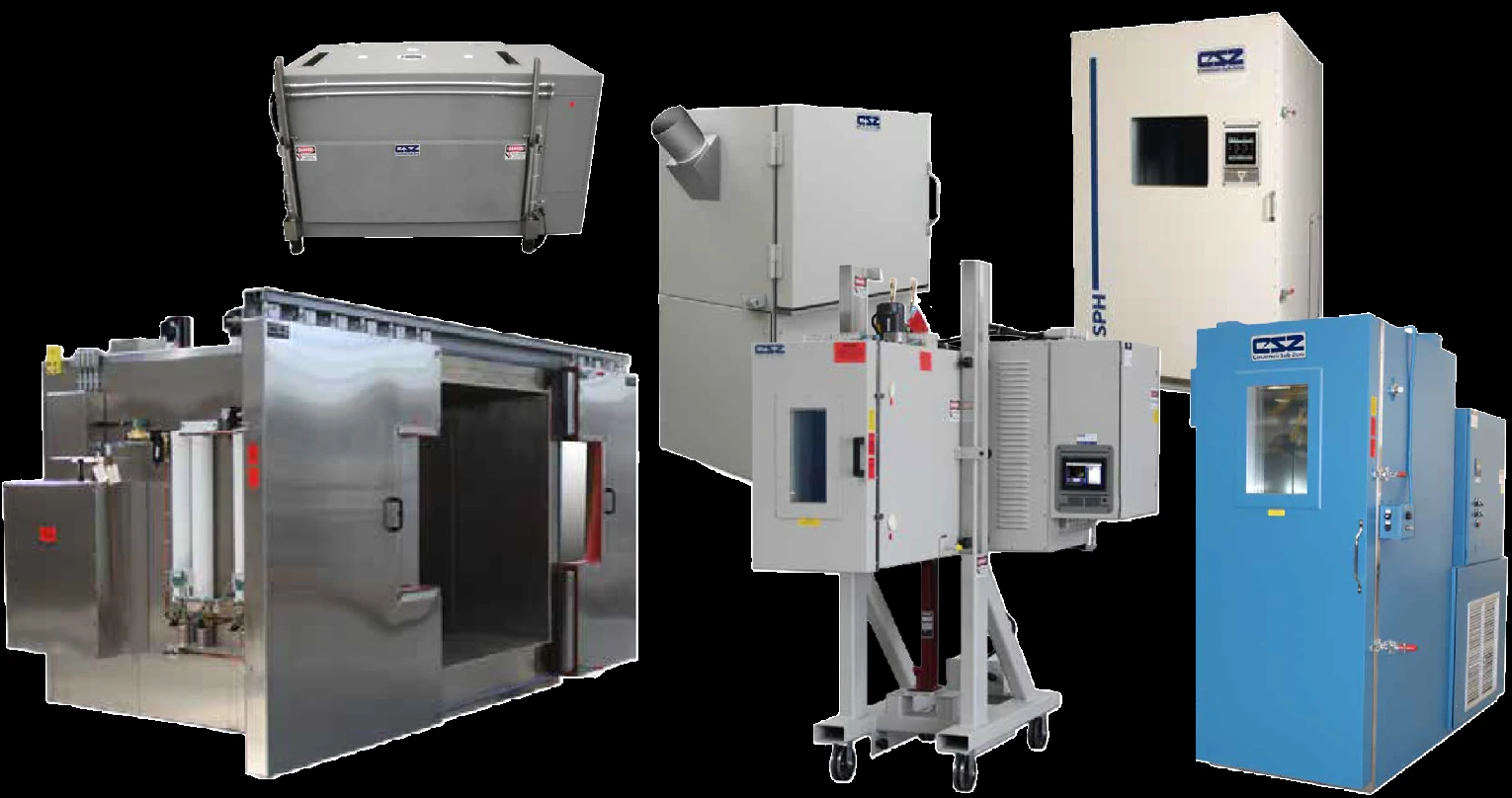
When a standard model does not cover the test, Cincinnati Sub-Zero builds the chamber to your specification. Specialty & custom-engineered chambers handle unusual environments and combined conditions — solar-panel PV cycling (IEC 61215 / 61646 / 61208, UL, ASTM), tensile and wire-bender chambers with mechanical-test interfaces, sand-and-dust and rain-and-ice exposure, explosion-proof (Class I Div 1/2 Group D) builds, and conveyor-integrated cycling. Many ride on the CT-Series high-HP, LN2-cooled, fast-change platform. Choose specialty when the standard catalog stops short of your test — CSZ engineers the rest.
Key Features & Benefits
- Built by the largest environmental-simulation manufacturer — Cincinnati Sub-Zero is a brand of Weiss Technik — over 80 years of environmental-simulation experience behind every chamber, from a benchtop reach-in to a full drive-in. The chamber is a reference platform, not a one-off.
- Configured to the test, not sold off a shelf — temperature range, refrigeration tier, humidity, size, controls, and combined environments are each specified to your standard and article, so you buy the capability the test needs and not a wider, costlier envelope. You pay for the cold you use, not the cold on the spec sheet.
- Fully welded, vapor-tight, built to last — fully welded ports and seams, double gasketing, and stainless interiors keep the workspace sealed against the leaks that wreck uniformity and shorten chamber life. The chamber outlasts several generations of the products tested in it.
- One touchscreen controller, remote access built in — the EZT touchscreen stores multi-step profiles, logs data with an audit trail, and sends email and text alarms — reachable from any device on the network with no extra software. Run, monitor, and pull data from your desk or your phone.
- A single source for the whole test floor — because the same controls, software, and engineering span reach-in, walk-in, drive-in, and custom builds, one CSZ relationship covers a lab that grows from a benchtop to a vehicle chamber. The chamber you add next speaks the same language as the one you have.
Specifications
- Chamber type
- Custom-engineered environmental chamber built to a specification a standard model does not cover — an unusual environment, a combined condition, a mechanical interface, or a non-standard size. CSZ leads the market in custom-designed chambers, with 80+ years of design experience behind the build.
- Workspace volume / size class
- Built to the article and test — from a reach-in chassis to a walk-in or drive-in room. Custom sizes throughout; the CT-Series custom temperature/humidity platform is the high-HP, LN2-cooled, fast-change-rate reach-in chassis underlying many specialty builds.
- Temperature range
- Specified to the application across the CSZ refrigeration tiers (single-stage, Tundra®, Tundra® II, cascade, and LN2 boost) and to +190°C standard. The CT-Series adds high-HP, LN2-cooled fast-change-rate capability for the most demanding profiles.
- Humidity range
- Configured to the test — standard 10% to 95% RH where humidity is required, with low-RH and dry-air options for marginal dew-point control.
- Controller
- EZT-570S programmable touchscreen across the line — multi-step profiling, data logging, audit trail, and email/text alarms; remote instrument consoles optional.
- Options & accessories
- Common specialty configurations: solar-panel test chambers (PV damp-heat / humidity-freeze cycling); tensile test chambers (temperature and humidity with destructive and non-destructive tensile-test interfaces); wire-bender chambers (sub-zero exposure with coil-bending fixtures for wire-coating and hose cold-bend specs); sand and dust chambers (airborne-particulate seal-integrity validation); rain and ice chambers (outdoor-exposure and ingress-protection simulation); explosion-proof chambers (Class I Div 1/2 Group D); and conveyor-integrated cycling chambers that interface with automated handlers and disk-drive test systems.
- Combined environments
- Specialty builds combine and add environments to order: solar simulation, altitude, sand and dust, rain and ice, vibration, and conveyor integration, matched to the test standard and the production line.
- Standards & compliance
- Solar-panel chambers run temperature/humidity cycling to IEC 61215, IEC 61646, IEC 61208, UL, and ASTM photovoltaic specifications (damp-heat and humidity-freeze cycles). Explosion-proof chambers adapt the platform to Class I, Division 1 or Division 2, Group D hazardous-environment installations. Per-application standards are engineered into each build.
- Build & lead time
- Engineered to your specification, with remote instrument consoles, custom-size doors, ramps, and heavy-duty floors as needed; quote-only (no published price list). A custom or large chamber carries a meaningful build lead time.
Common Applications
- Solar-panel / photovoltaic qualification — damp-heat and humidity-freeze cycling to IEC, UL, ASTM
- Tensile testing under controlled temperature and humidity — materials and structural validation
- Wire-coating and hose cold-bend testing — sub-zero exposure with coil-bending fixtures
- Sand-and-dust seal-integrity validation for automotive and electronic enclosures
- Rain-and-ice outdoor-exposure and ingress-protection testing
- Hazardous-area testing and automated production-line cycling integrated with handlers and disk-drive test systems
Design & Selection Considerations
- Size the load to about a third of the workspace — the chamber conditions the air, and the air has to reach every surface — a load packed wall-to-wall starves the airflow and breaks uniformity. A common guideline is to keep the test article (plus fixturing and cabling) under roughly a third of the workspace volume. Oversize wastes energy and slows ramps; undersize crowds the airflow.
- Specify the cold you actually need — each tier down costs more — reaching deeper cold is the single biggest cost and energy driver. Single-stage covers most ambient-band work; Tundra, Tundra II, and cascade buy progressively colder lows; LN2 boost buys the deepest cold and the fastest ramps. Match the refrigeration tier to the standard’s required extreme, not to the widest range available. Do not buy −70°C to run a −20°C test.
- Match the ramp rate to the thermal mass — a heavy or powered load slows the temperature change the chamber can deliver and may demand a larger refrigeration package and extra-heat option to hit your transition times. A live load (a powered DUT) dissipates heat the chamber has to remove on top of everything else. Use the input form to give us the article weight and powered heat load so the ramp spec is real, not nominal.
- Confirm the article — and the chamber — fit the site — check the doorway and ceiling clearance to get the chamber in, the floor loading for a heavy or loaded chamber, and the access to load the article (a reach-in door versus a walk-in entry versus a drive-in ramp). A heavy battery pack or vehicle assembly can exceed a standard reach-in and points to a reinforced-floor or walk-in build. Plan the site before the chamber arrives.
- Plan utilities and condensate up front — size the electrical service to the refrigeration and heater load (often three-phase), provide cooling water or airflow for the condenser, a floor drain for humidity condensate, and — where LN2 or CO2 boost is used — a bulk supply with safe venting and oxygen monitoring for personnel. The chamber is only as good as the services feeding it.
- Pick the humidity and dew-point range deliberately — a humidity system adds and removes moisture down to a low-RH floor; marginal dew-point control near the cold limit can call for a dry-air purge or GN2 to prevent condensation and frost flash. Only the humidity builds carry the water system, demineralizer, and drain. Specify the RH band the test needs — a temperature-only build skips the whole water system.
To engineer the right CSZ custom chamber:
Use the input form to send the test standard you are working to, the article size and weight, the temperature and humidity range, any combined environments (vibration, altitude, light), and the controller, software, and documentation you need. We size the chamber, refrigeration tier, and controls to the application and return a configured quote.
Environmental Test Application Sheet ›Talk to an engineer directly — Scott Prater, Principal · 917-580-0878 · scott@pratertechnical.com
Specifications compiled by Prater Technical Partners from Cincinnati Sub-Zero published product specifications.