Product Overview
The WIKA-ST Model 1502 Hammer Union pressure transmitter is built for high-pressure well service: it mates to a standard 1502 hammer-union connection on frac, cementing, and well-service lines and reads 0–5,000 to 0–20,000 psi at ±0.25% FSO on a 2-wire 4–20 mA loop. Wetted parts are Inconel X-750 per NACE MR0175-2009 for sour service, proof and burst ratings run to 22,500 psi, and zero/span adjust in the field. Have a legacy tecsis part number for this measurement? Send it — WIKA acquired tecsis and now ships these under WIKA Sensor Technology, and we cross-reference the tecsis p/n to the current WIKA-ST equivalent at the same spec.
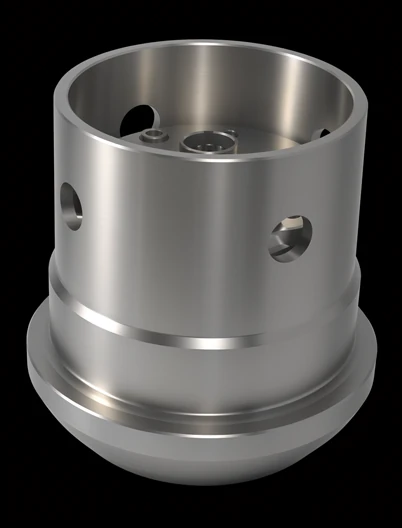
Key Features & Benefits
- Mates straight to a 1502 hammer union — the transmitter threads onto the hammer-union fitting already in the high-pressure manifold, so it goes in without cutting a new port or re-plumbing the line. It speaks the connection the wellsite already runs.
- Built for sour, high-pressure well service — Inconel X-750 wetted parts per NACE MR0175-2009 and proof / burst ratings to 22,500 psi suit the corrosive, 20,000-psi-class media of frac, cementing, and acidizing work. The materials and headroom the wellsite environment demands.
- Field-adjustable zero and span — zero and span adjust on the unit, and the HUP1000 accessory adds digital adjustment — so a transmitter that lives on rental iron can be re-zeroed in the field between jobs. Calibration touch-up without a bench.
- A connector program for the site standard — Bendix, Amphenol MS, Binder M12, Jupiter, and Glenair terminations are catalog options, so the transmitter arrives wearing the connector your data van expects. No adapter pigtails on the high-pressure line.
Specifications
- Sensing principle
- High-pressure well-service pressure sensing on the connection the wellsite already runs: the transmitter mates to a standard 1502 hammer-union fitting on the high-pressure manifold and reads out as a 2-wire 4–20 mA loop device.
- Pressure type
- Gauge — high-pressure well-service pressure.
- Measuring range
- 0–5,000 to 0–20,000 psi (ordering capacities 5,000 / 10,000 / 15,000 / 20,000 psi).
- Accuracy
- ±0.25% FSO BFSL (combined linearity, hysteresis, repeatability); span 16 mA ±1% FSO, zero 4 mA ±1% FSO, both adjustable. A digital zero-and-span adjustment is available with the HUP1000 accessory (sold separately).
- Thermal effects
- On zero ±0.01% FSO/°F; on span ±0.01% reading/°F.
- Output signal
- 4–20 mA, 2-wire.
- Excitation / supply
- 8–28 VDC (10–28 VDC on units with approvals); insulation resistance >100 megohms.
- Electrical connection
- Bendix PTIH-10-6P (or equal) with protective cap standard; the oil-and-gas connector program offers Amphenol/Bendix PT02E and MS3102E styles, Binder M12 (Eurofast), and optional Jupiter and Glenair connectors.
- Wetted parts material
- Inconel X-750 per NACE MR0175-2009 — selected for sour, high-pressure well-service media; other wetted materials optional.
- Process connection
- 1502 hammer-union connection (various pressure ports optional).
- Overpressure / proof
- Proof 1.5× full scale (22,500 psi max).
- Burst pressure
- 3× full scale (22,500 psi max).
- Operating temperature
- −40 to +185°F (−40 to +85°C).
- Compensated temperature
- +40 to +140°F (+5 to +60°C).
- Approvals & certification
- CSA (the brochure lists an intrinsically-safe CSA listing); FM, ATEX, and CE pending per the datasheet — confirm the current approval at order. Options: improved accuracy, various connectors, ports, and wetted materials.
- Configuration & lead time
- Configured per the pressure range, the connector, the wetted material, and the required area approval. Quote-only, no public price list.
Common Applications
- Hydraulic fracturing (frac) pump and manifold pressure
- Well cementing, acidizing, and pumping-service line pressure
- Choke-and-kill and blowout-preventer (BOP) line monitoring
- High-pressure well-service and pressure-control equipment
Design & Selection Considerations
- Confirm the current agency approval for the classified area — the datasheet lists CSA with FM, ATEX, and CE pending; the wellsite is a classified area, so confirm which approval the unit carries today and that it covers your zone and gas group before you order. “Pending” on the datasheet is not an approval on the wellsite.
- Match the wetted alloy to sour service — Inconel X-750 per NACE MR0175-2009 covers the standard sour-service case; if your service has its own H2S or chloride profile, tell us so the wetted material is confirmed against it. The wrong wetted alloy in sour service fails by cracking, not by drifting.
- FSO accuracy is a percentage of the range, not the reading — a ±0.25% FSO transducer rated for the full scale can be off by that fraction of full scale anywhere in its range — a larger relative error down at the low end. Size so the working pressure lands in the upper part of the range, and when you compare two sensors make sure both quote accuracy the same way. An oversized range quietly throws away resolution at the pressure you actually run.
- Respect the overpressure limit — the danger zone is below burst — proof / safe-overpressure is the pressure the sensor can see without losing calibration; burst is where it is destroyed. A unit driven past proof but short of burst keeps reporting plausible, wrong numbers. Size for the real worst case — including transients — and recalibrate after any suspected overpressure event. A spike that shifts calibration leaves no visible mark; the reading just drifts.
- Match the wetted material to the medium — the wetted parts see the process chemistry directly; the standard stainless suits most service, but corrosive, high-purity, or sour media want the right alloy specified up front. Use the input form to tell us the medium and we pick the wetted material to it. The wrong wetted alloy fails slowly and silently, not all at once.
To spec the right WIKA-ST hammer-union transmitter:
To size and select the right transducer, send us: the pressure range and whether it is gauge, absolute, sealed, or differential; for a differential measurement, the maximum line (static) pressure as well as the differential range; the accuracy class you need (standard industrial vs. high-accuracy); the output the receiving device expects (4–20 mA, 0–5 V, 0–10 V, or raw mV/V) and the cable run; the process medium and temperature (so the wetted material and any extended temperature compensation are right); the process connection and electrical termination; and any area classification or agency approval (Ex / intrinsic safety, CSA, FM) and NACE / sour-service material requirement. For a fast transient, give us the rise time or frequency of the event so the natural frequency is sized above it.
Force & Pressure Application Sheet ›Talk to an engineer directly — Scott Prater, Principal · 917-580-0878 · scott@pratertechnical.com
Specifications compiled by Prater Technical Partners from WIKA product datasheets.